Geopolitical risk, still-high U.S. interest rates and a second wave of AI spending are shaping up as the main forces steering Asia-Pacific markets in 2026, with the region’s technology and export-heavy stocks positioned to absorb both the upside from artificial intelligence and the downside from tighter global financing conditions.
APAC Markets Face Rates, Geopolitics and AI Spending

That mix matters because it links three variables that tend to move APAC asset prices in different directions: conflict and policy risk can trigger safe-haven flows, elevated rates keep pressure on valuations and capital-intensive sectors, while AI demand is reinforcing capital spending across semiconductors, cloud infrastructure and digital services. For investors, the result is a market built less around broad regional beta and more around stock selection, balance-sheet strength and exposure to the AI supply chain.
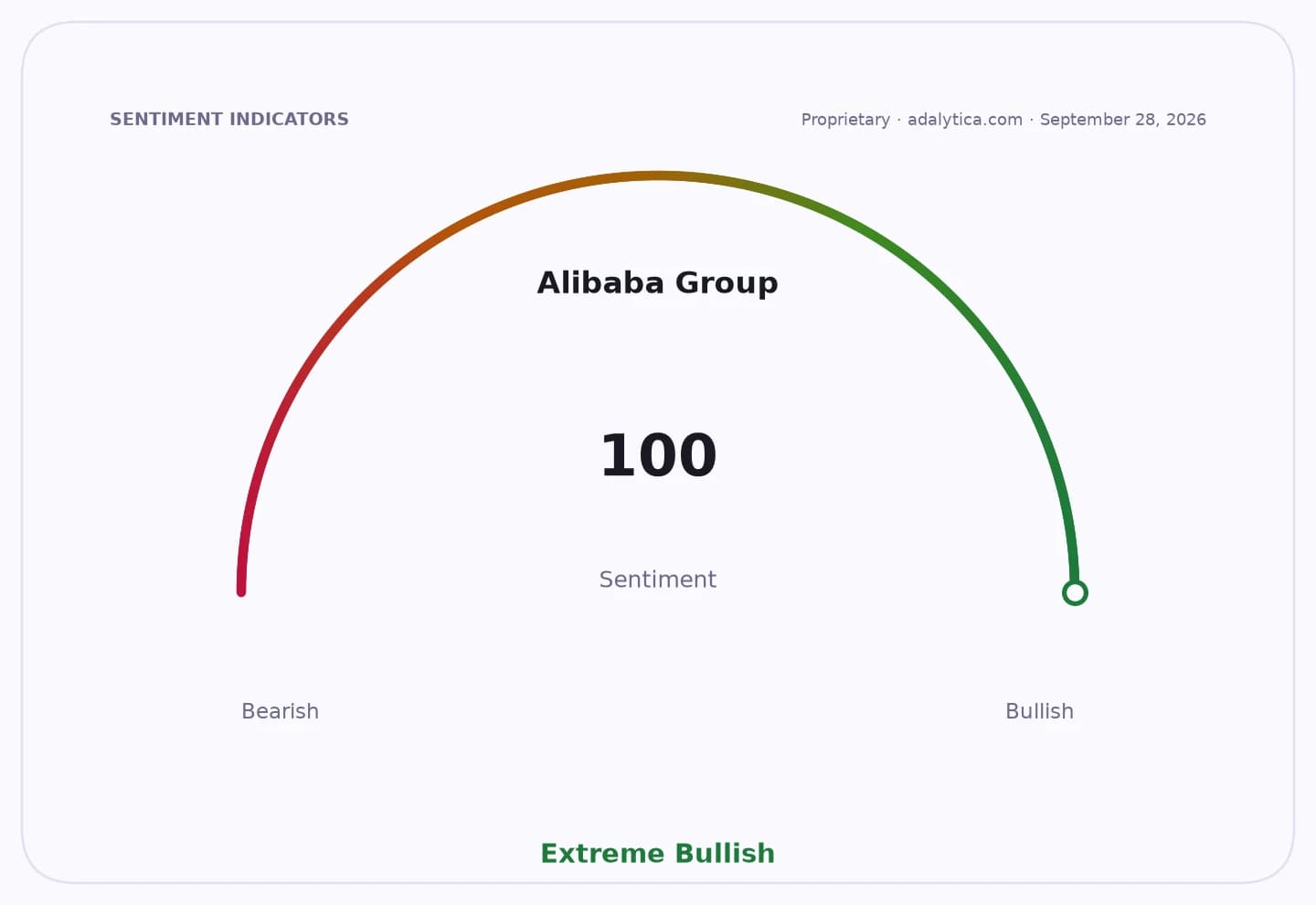
Sentiment IndicatorsⓘProprietary · adalytica.com · September 27, 2026
This is a snapshot — live sentiment, awareness and momentum for 130+ markets update continuously in the dashboard.Open AlphaPulse
The clearest market read-through is in the semiconductor complex. Taiwan Semiconductor Manufacturing Co. has climbed to about T$450.61, well above its 50-day moving average of T$419.24 and 200-day average of T$381.35, while its RSI reading of 62.0 suggests momentum remains firm without being stretched. Nvidia, another bellwether for AI demand, closed at $225.07, also above its 50-day and 200-day moving averages, as the company continues to benefit from demand for accelerators and data-center equipment. Apple has also regained traction, rising to $341.07 and trading above both key moving averages, though its move is less about pure AI capex and more about broader demand resilience in consumer hardware and services.
The bull case for APAC is that AI-related capital spending can partially offset weaker global cyclical demand. The region remains central to the AI hardware build-out, from chip fabrication in Taiwan to the wider electronics supply chain across South Korea, Japan and Southeast Asia. If demand stays strong, it supports manufacturing output, freight volumes and corporate earnings across a cluster of suppliers that are more levered to growth than many global peers.
DGS10 vs FEDFUNDS — macro contextadalytica.com
Explore this data interactively — full history, time series and cross-market comparisons.Open AlphaPulse

The bear case is that the financing backdrop remains restrictive. The 10-year U.S. Treasury yield is around 5.19%, while the Fed funds rate sits near 3.63%, levels that keep global discount rates elevated and complicate equity valuations, especially for long-duration growth assets outside the U.S. Higher rates also raise the cost of capital for Asian companies funding AI build-outs, supply-chain expansion and digital infrastructure upgrades. That makes earnings quality, cash generation and pricing power more important than narrative alone.
Geopolitics adds a second layer of risk. Adalytica’s Global Stability Sentiment gauge has surged to 100, labelled extreme greed, while awareness remains at 7, or extreme fear, pointing to a market that is pricing in a benign outcome even as underlying uncertainty stays elevated. In practice, that can leave APAC assets vulnerable to abrupt repricing if tensions flare in the Taiwan Strait, the South China Sea or other trade-sensitive corridors.
For investors, the implication is that 2026 is likely to reward exposure to AI enablers with resilient margins and strong balance sheets, while penalizing businesses that depend on cheap funding or uninterrupted trade flows. A stronger dollar is less of a dominant macro shock than earlier cycles, but it still matters for Asian borrowers and importers. The bigger question is whether AI demand proves broad enough to sustain earnings across the region, or remains concentrated in a handful of chip and cloud winners.
The next catalyst will be whether capital spending from hyperscalers and device makers keeps accelerating into year-end, and whether central banks ease enough to reduce the valuation burden without undermining growth. Until then, APAC markets are likely to remain a contest between geopolitical risk premiums, rate sensitivity and the market’s willingness to pay up for AI exposure.
| Entity | Gains | Losses |
|---|---|---|
| TSMC | ▲AI chip demand | ▼Rate-sensitive multiples |
| Nvidia | ▲Data-center spending | ▼Geopolitical supply risk |
| APAC exporters | ▲Tech cycle upside | ▼Stronger dollar costs |
| Borrowers/capital spenders | ▲Easier policy | ▼Higher U.S. yields |