Corporate bond investors are drawing a sharper line between AI-linked borrowers and the rest of the investment-grade market, demanding bigger concessions from hyperscalers and data-center financiers as a wave of new borrowing threatens to overwhelm demand.
Hyperscaler debt costs rise as AI borrowing surges

That shift matters because the biggest technology companies are moving from being cash-rich issuers to some of the most active users of the debt market, and investors are beginning to charge more for that supply even when credit quality remains strong. The result is a split market: AI-related paper is clearing at wider spreads, while conventional high-grade issuers are still meeting eager buyers.
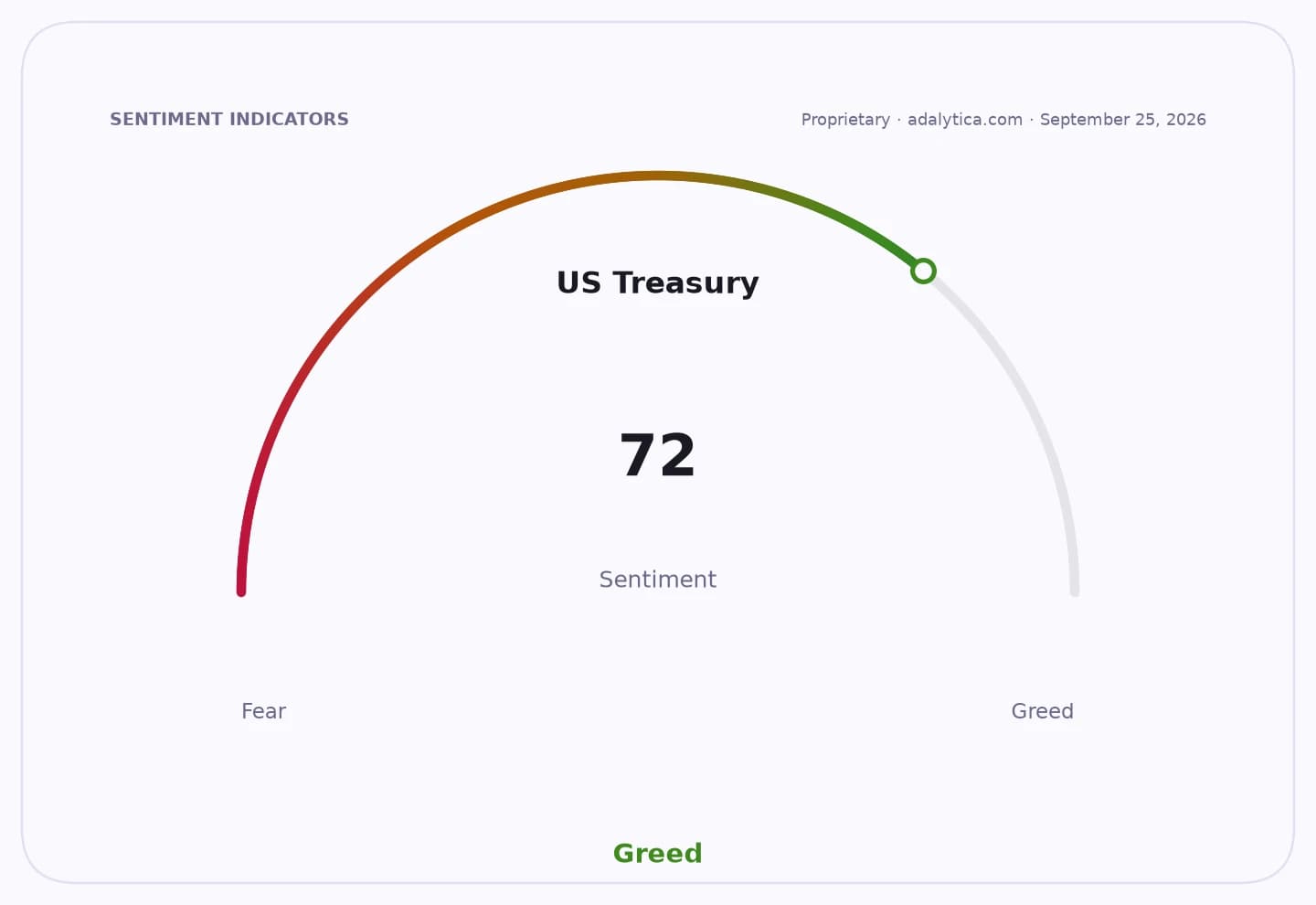
Sentiment IndicatorsⓘProprietary · adalytica.com · September 26, 2026
This is a snapshot — live sentiment, awareness and momentum for 130+ markets update continuously in the dashboard.Open AlphaPulse
Goldman Sachs expects gross borrowing by hyperscalers to hit a record $420 billion next year, up 60% from estimates for 2026. That compares with overall US corporate issuance rising 30% year on year to $1.9 trillion through August, according to Securities Industry and Financial Markets Association data. The imbalance has forced buyers to think more carefully about concentration risk, especially when debt raised through data-center vehicles or other related structures is effectively tied back to the same technology groups.
“We are very selective in how we invest in hyperscaler debt,” said Colby Stilson, head of fixed income at Brown Advisory in London. “Our conviction needs to be very high because of the supply coming and the lack of visibility on return on capital.”
The market’s message is not that AI borrowers are becoming fragile. Rather, it is that the sheer scale and unpredictability of their capital expenditure plans — on data centers, chips and infrastructure — are forcing lenders to demand a better entry point. AI-linked spreads have stayed around 115 basis points, compared with roughly 78 basis points for the broader investment-grade market, according to Goldman and ICE BofA data.
That premium has been visible in recent deals. Alphabet had to offer a meaningful concession to complete its August debt sale, according to BNY, while the $13.5 billion financing for Aon’s acquisition drew $65 billion of orders, underscoring how investors are still willing to crowd into rarer non-AI credits. In other words, demand has not vanished; it has become more selective.
Portfolio managers say the preference is increasingly for issuers outside the AI boom, even though spreads across the rest of corporate credit remain close to historic lows and new issues are often heavily oversubscribed. Loren Moran of Wellington Management said recent pharma and insurance financings attracted strong demand with little or no price concession, reflecting investors’ willingness to rotate away from hyperscalers when possible.
For tech-heavy borrowers, that selectivity raises the cost of capital at exactly the moment they are tapping markets more often to fund the AI buildout. Lon Erickson of Thornburg Investment Management said large AI names such as Meta Platforms and Alphabet regularly trade wider than similarly rated peers, despite strong balance sheets and heavy cash generation, because investors expect the borrowing to continue.
BlackRock’s Russell Brownback said the widening reflects classic supply-demand dynamics rather than a credit alarm. That is an important distinction for equity and credit investors: the market is not pricing imminent default, but it is insisting on a higher risk premium for duration, concentration and repeat issuance.
The implications reach beyond technology. If hyperscaler funding keeps expanding, it could reshape spread relationships across investment-grade credit, divert demand from other borrowers and create periodic dislocations whenever the AI names come back to market sooner than expected. For now, bond investors appear willing to finance the AI boom — just not cheaply.
| Entity | Gains | Losses |
|---|---|---|
| Traditional IG issuers | ▲Tighter spreads, stronger demand | ▼Less investor attention |
| Hyperscalers | ▲Access to capital for AI buildout | ▼Higher borrowing costs |
| Bond buyers | ▲Better concessions, wider yields | ▼Concentration risk |
| Data-center financiers | ▲Funding demand from AI expansion | ▼Pricing power under pressure |