Apple is exploring a return to the server market with AI data-center hardware built around its own chips, a move that could deepen its push into artificial intelligence while opening a new front against Nvidia and cloud rivals.
Apple explores AI server hardware with custom chips

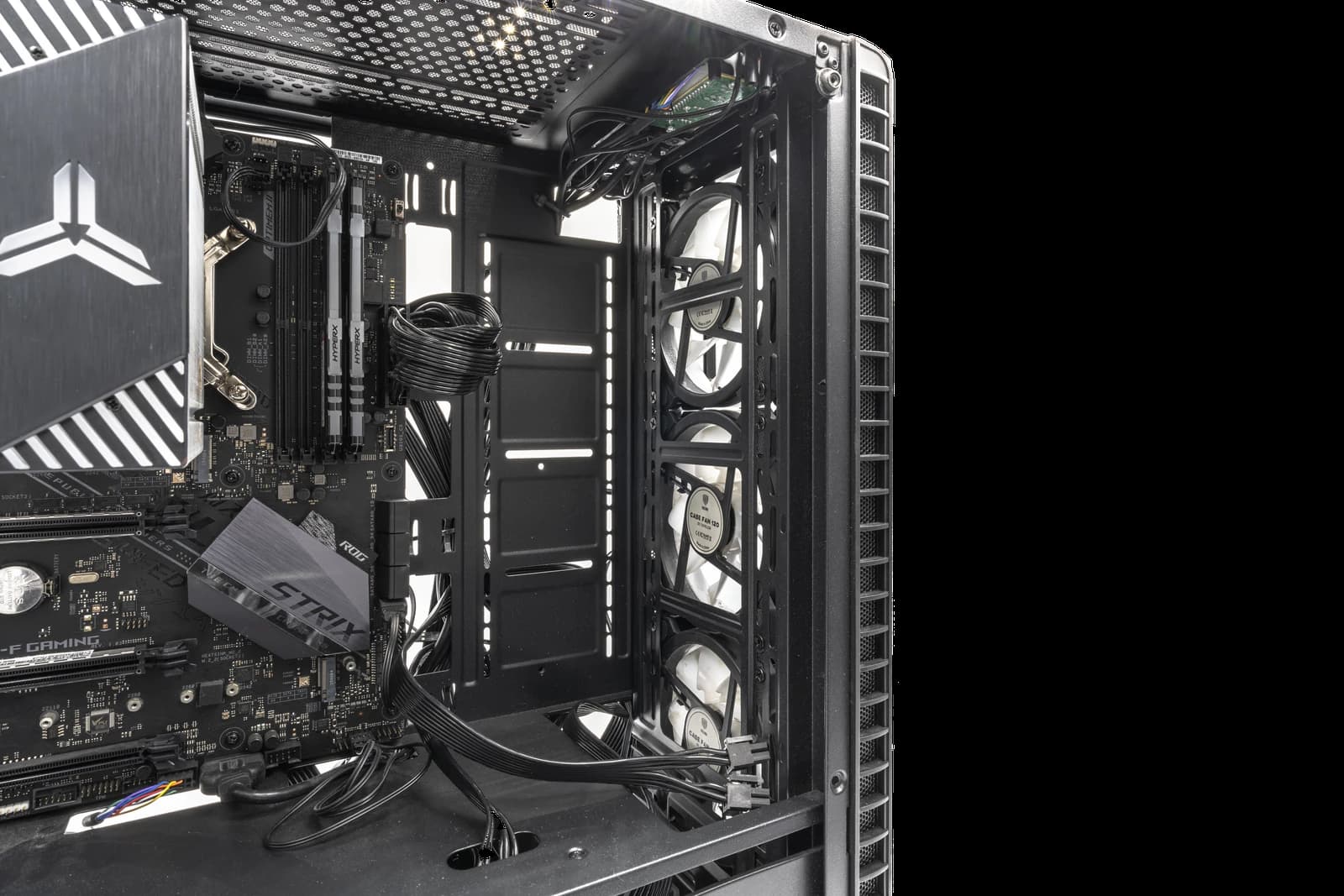
The project, first reported by The Information and echoed by Reuters, is still at an early stage and may never reach market, but it matters because it shows Apple is thinking beyond consumer devices and into the infrastructure layer that powers AI. A server designed around two or four of Apple’s custom M8 Ultra chips would mark a sharp expansion of its silicon strategy, which has already reshaped the Mac line and is now being extended inside Apple’s own Private Cloud Compute system.
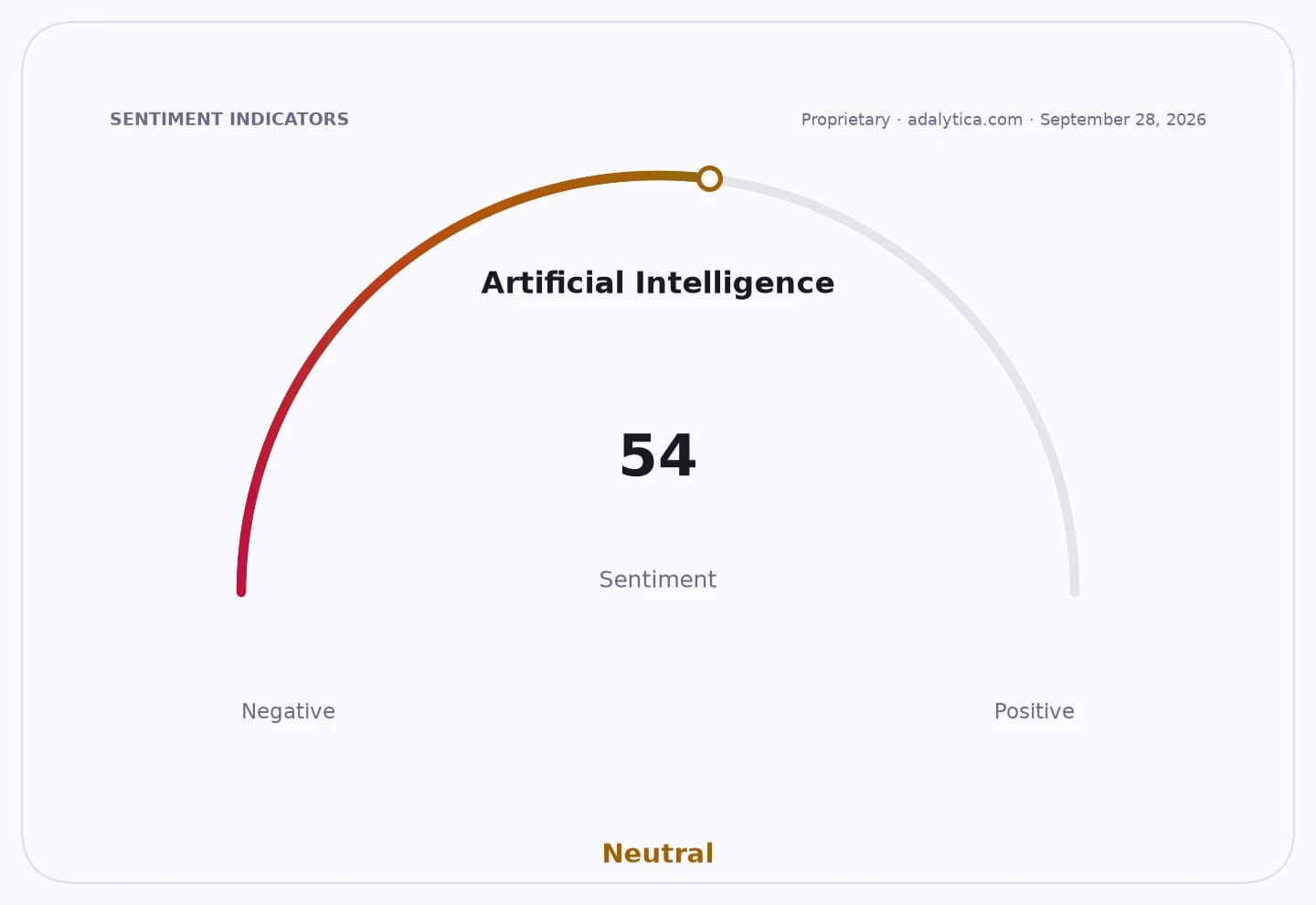
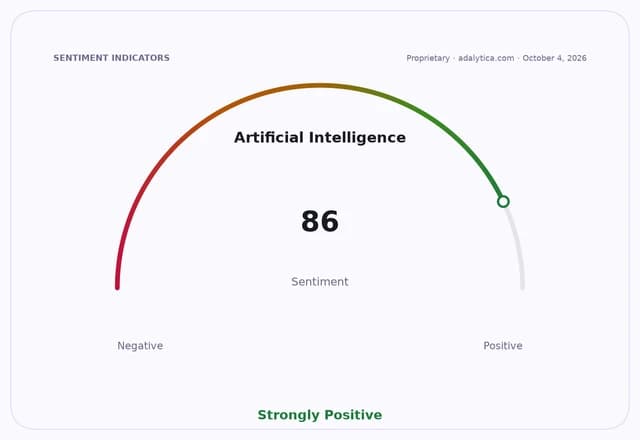
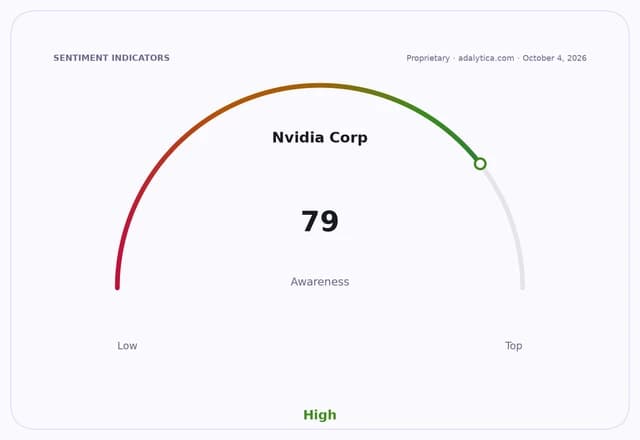
Sentiment IndicatorsⓘProprietary · adalytica.com · October 4, 2026
This is a snapshot — live sentiment, awareness and momentum for 130+ markets update continuously in the dashboard.Open AlphaPulse
For investors, the significance is twofold. First, it suggests Apple sees strategic value in controlling more of the AI stack rather than relying entirely on third-party cloud providers and accelerators. Second, it implies a longer-term effort to build enterprise-grade offerings around its chips, software tools and machine-learning framework MLX — a shift that could eventually create a new revenue stream, even if that is several years away. Apple has not sold servers since the Xserve line was discontinued in 2011.
The timing also reflects a broader change in demand. AI developers are already using Apple hardware for compute-heavy tasks: OpenAI has reportedly bought tens of thousands of Mac mini and Mac Studio machines for reinforcement-learning workloads, while Anthropic has rented Mac mini systems through Amazon Web Services. That demand highlights an unusual opening for Apple, whose high-memory, tightly integrated chips have become attractive in parts of the AI workflow despite the company’s late start in infrastructure.
The proposed hardware would not be straightforward to build. Apple’s unified-memory architecture, one of its chip platform’s advantages, also makes high-memory systems more expensive at a time when AI data-center memory is already scarce and costly. Apple would also have to decide how far to go in supporting business customers with developer tooling, service contracts and productization that it has historically not prioritized. The reported interest in Nvidia’s NVLink Fusion technology is especially notable, given the companies’ strained history after earlier problems with Nvidia graphics chips in MacBooks.
A collaboration with Nvidia would also be commercially practical, even if politically awkward. NVLink Fusion is designed to link multiple chips into a single compute system, which could help Apple scale its own processors into something closer to an enterprise server platform. That would matter in a market where Nvidia’s dominance in AI infrastructure has been built not just on chips, but on the surrounding software and interconnect ecosystem. Apple’s challenge would be to prove it can compete on that same terrain without diluting the tight control that has defined its hardware strategy.
The market reaction is likely to stay tied to Apple’s broader AI execution rather than this project alone. Apple shares have been buoyed by optimism around its device franchise and AI rollout, while Nvidia remains at the center of investor enthusiasm for AI infrastructure. But the fact that Apple is even studying a data-center server underscores how quickly AI spending is spreading beyond the usual cloud names and into companies with the scale to internalize more of the stack.
If Apple proceeds, the nearer-term message is not that it is about to become a major server vendor. It is that the company is positioning itself for a world where AI performance, memory architecture and chip-to-chip connectivity matter as much as consumer-device design. That could benefit suppliers and customers linked to Apple’s silicon roadmap, but it also raises the stakes for Nvidia, which already faces the risk that large customers will increasingly build bespoke infrastructure rather than buy every workload off the shelf.
| Entity | Gains | Losses |
|---|---|---|
| Apple | ▲Deeper AI stack control | ▼Higher infrastructure complexity |
| Nvidia | ▲Potential NVLink demand | ▼Custom-chip substitution risk |
| AI developers | ▲More server options | ▼Higher memory costs |
| Legacy server rivals | ▲None | ▼Apple re-entry pressure |