Aramco has pulled remaining staff out of its Dhahran headquarters and told them to work from home, a sign that the wave of drone and missile attacks reaching into Saudi Arabia is now disrupting the kingdom’s most important company.
Aramco staff work from home after attacks
That matters far beyond one office. When the world’s biggest oil exporter starts limiting on-site work at its nerve center, investors have to think about operational continuity, security costs and the chance that conflict pressure in the Gulf could eventually touch oil flows, shipping routes or production discipline.
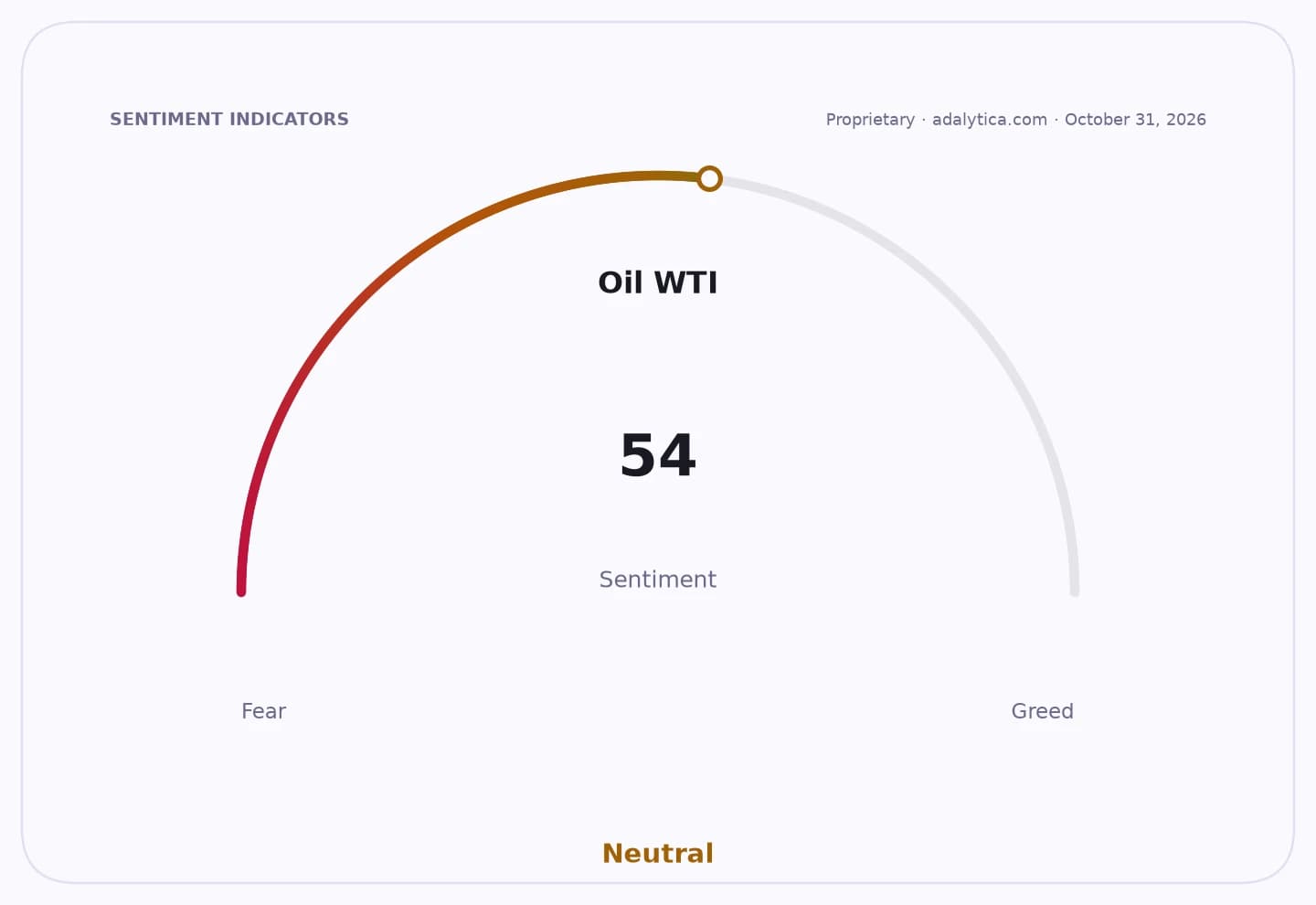
Sentiment Indicators
The move came after attacks in eastern Saudi Arabia and near strategic energy assets, including a strike over the Shaybah oil field that the Saudi Energy Ministry said killed two people and injured others. The kingdom also said it intercepted several drones, including ones aimed at the east and at Medina, while U.S. officials ordered non-essential staff out of their embassy in Riyadh and families to leave posts elsewhere in the region.
For oil investors, the immediate issue is not whether Aramco can keep pumping — Saudi production remains the backbone of global supply — but whether the security premium on crude begins to rebuild. Adalytica’s USO trade signals show sentiment turning neutral after a sharp recent jump in activity, while its global stability gauge has pushed to an extreme reading of fear, a reminder that markets are again pricing geopolitics as a live risk rather than a background noise.
Aramco has long been built to withstand regional shocks, and the company’s scale, redundancy and state backing make it more resilient than most peers. But even resilient businesses can face higher costs, more cautious staffing and greater scrutiny from customers and partners when the security environment deteriorates. That is especially true in Saudi Arabia, where every hint of disruption carries outsized importance for energy supply, infrastructure and foreign investment.
The broader investment takeaway is straightforward: this is not yet a supply shock, but it is a warning shot. Long-term investors in energy should watch whether attacks remain localized or start threatening export facilities, transport corridors or sustained operations at key industrial sites. For now, Aramco remains an essential holding for anyone watching the energy market, but the stock and the sector deserve a closer eye until the regional risk picture improves.
| Entity | Gains | Losses |
|---|---|---|
| Aramco rivals | ▲Relative attention | ▼Security premium pressure |
| Oil bulls | ▲Higher risk backdrop | ▼Clear supply stability |
| Saudi government | ▲Security focus | ▼Investor confidence |
| Consumers and airlines | ▲None | ▼Potentially higher fuel costs |