Argentina’s market is pricing a year of slower disinflation, a weaker peso and only modest reserve accumulation as the country heads into its 2027 presidential election, underscoring how political risk still sits at the center of the macro outlook.
Argentina 2027 outlook: inflation, peso and reserves
Long-term Inflation Expectations
The clearest message from the latest LatinFocus survey is that investors and economists do not expect Javier Milei’s stabilization plan to deliver a clean break from Argentina’s familiar cycle of inflation, currency pressure and external fragility. More than 40 banks and consultancies surveyed by the research house see consumer prices rising 23.3% on average in 2027, a 0.2 percentage point upward revision from the prior poll, while the peso is expected to weaken to 1,963 per dollar by December 2027.
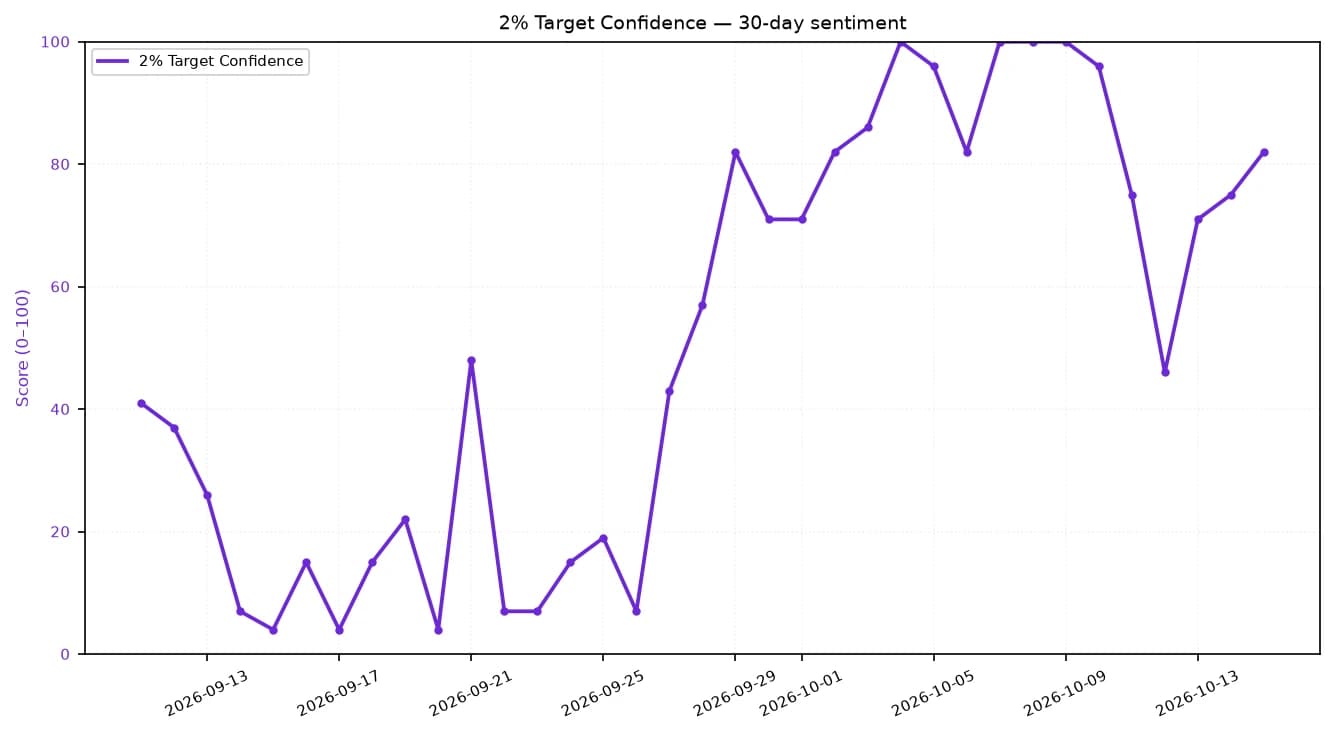
Sentiment Indicators

That combination matters because it implies the economy is likely to remain in a controlled but still vulnerable equilibrium. Inflation is forecast to ease from the far higher levels of previous years, but not enough to remove indexation, wage demands or pricing caution from business decisions. A projected 27.6% nominal depreciation from late 2026 levels to the end of 2027 also suggests the exchange rate will continue to do part of the work of restoring competitiveness — at the cost of keeping imported inflation alive.
For investors, the key issue is not just the level of the forecasts but the direction of travel. A higher-than-expected dollar path can feed directly into prices in Argentina, where pass-through from the exchange rate remains a market staple. FocusEconomics warned that a sharper peso decline than assumed could complicate disinflation, a risk that becomes more acute in an election year when traders tend to test the central bank’s resolve.
The reserve picture is equally important. Analysts now see the central bank’s international reserves rising to $52.4 billion in 2027, down from a previous estimate of $53.4 billion a month ago. The downgrade is small in absolute terms, but it reflects the market’s view that rebuilding external buffers remains slow and politically exposed. The range of forecasts is wide: FMyA sees only $40.9 billion, while Fitch Solutions puts reserves at $58.9 billion, with Goldman Sachs close to the consensus at $52.5 billion.
That divergence speaks to a deeper uncertainty over whether Argentina can sustain enough hard-currency inflows to defend its policy framework through the electoral cycle. LatinFocus still expects a trade surplus of $23.2 billion in 2027, helped by energy and primary exports, but that may only be enough to support gradual reserve accumulation rather than a decisive strengthening of the central bank’s balance sheet.
Markets also appear to be pricing in a more difficult funding environment ahead of the vote. The survey points to potential volatility before and after the October election, and says interest rates could rise if the government’s electoral prospects weaken. The Badlar benchmark is seen ending 2027 at 19.64%, implying monetary conditions may need to stay tight even as growth improves only modestly.
The growth outlook itself offers little room for complacency. Economists trimmed their 2027 GDP forecast to 2.5%, a 0.3 percentage point cut, suggesting the economy could still struggle to convert stabilization into a stronger expansion if confidence wobbles or the currency slides too far. For now, the consensus message is straightforward: Argentina may be moving away from crisis, but the market does not yet see it escaping the constraints of inflation, a weakening peso and thin reserves.
For holders of Argentine assets, that means the trade remains highly conditional on policy discipline and election outcomes. A benign political backdrop could let the government keep inflation on a downward path and rebuild reserves gradually. A deterioration in polling or credibility, by contrast, could force a faster depreciation, higher rates and renewed pressure on prices and bonds.
| Entity | Gains | Losses |
|---|---|---|
| Argentine exporters | ▲More peso revenue | ▼Higher domestic costs |
| Importers and consumers | ▲— | ▼Higher dollar prices |
| Central bank reserves | ▲Trade surplus support | ▼Election-year outflows |
| Local bondholders and equity investors | ▲Policy stability | ▼Currency and rate volatility |