Argentina’s inflation likely eased in October, with private consultant Orlando J. Ferreres & Asociados estimating monthly consumer prices rose 1.7%, a step down from September’s 1.9% reading and below most private forecasts.
Argentina inflation eases to 1.7% in October
The estimate matters because it points to a modest but broadening deceleration in price pressures ahead of the official INDEC release due in mid-November. For policymakers and investors, the key question is not whether inflation is still elevated — it is — but whether the recent cooling can persist without a renewed surge in core prices, regulated tariffs or food.
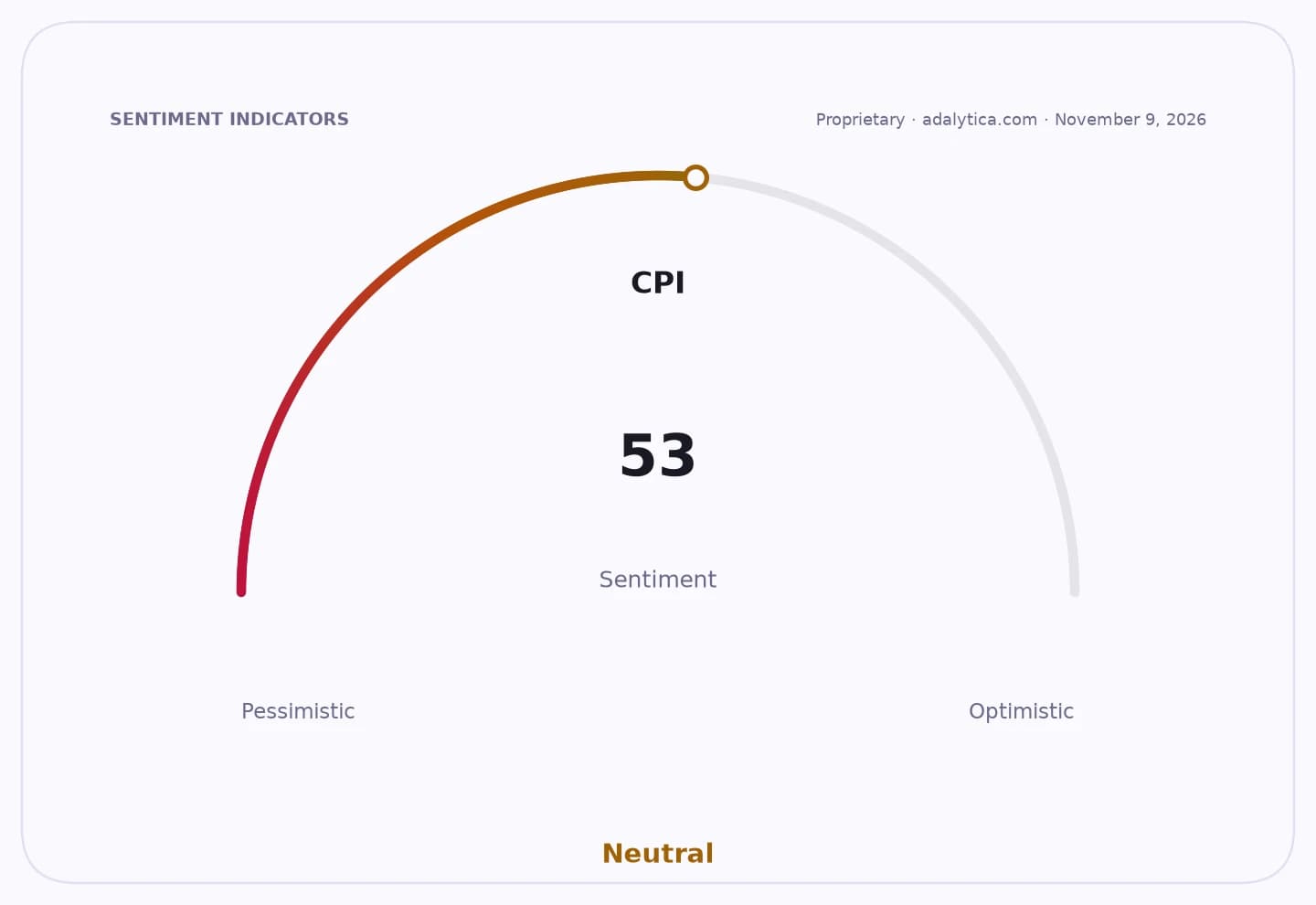
Sentiment Indicators
Ferreres’ report suggests the October slowdown was driven more by a drop in seasonal inflation than by a deeper easing in underlying trends. Seasonal prices rose 3% in the month, down sharply from 5.8% in September, while regulated prices barely changed pace, edging down to 2.1% from 2.2%. Core inflation, which strips out seasonal and regulated items, held at 1.3% for a second straight month.
That split is important for markets because it shows the disinflation process remains uneven. A stable core rate implies that underlying demand and cost pressures have not weakened materially, even if headline inflation has eased. In year-on-year terms, Ferreres put overall inflation at 30.4%, with core inflation at 26.9%, underscoring how far prices still are from anything resembling stability.
The composition of the October reading also matters for the outlook. Housing led monthly increases at 2.6%, followed by miscellaneous goods at 2.5% and transport and communications at 2.1%. Food and beverages rose a more modest 1.2%, but still contributed 0.4 percentage point to the monthly index, making it one of the main drivers of the headline figure.
For Argentina’s central bank and fiscal authorities, a softer monthly print would help reinforce the case that inflation has passed its peak of recent months. But the fact that core inflation was flat rather than lower means authorities may still face limited room to ease policy quickly. For investors, that reduces the odds of a clean, rapid normalization in local rates and pricing, even as the headline path improves.
The broader narrative is one of partial relief rather than victory. October’s data, if confirmed by INDEC, would support the view that inflation is moderating, but the underlying pace remains stubborn enough to keep pressure on wages, consumption and sovereign policy. Markets will be watching the official release for evidence that the slowdown is becoming structural rather than merely seasonal.
| Entity | Gains | Losses |
|---|---|---|
| Consumers | ▲Slight relief in monthly prices | ▼Real purchasing power still eroded |
| Government / central bank | ▲Better inflation optics | ▼Limited room to claim victory |
| Fixed-income investors | ▲Lower near-term inflation risk | ▼Core inflation still sticky |
| Retailers and households | ▲Slower food price increases | ▼Housing and transport costs remain high |