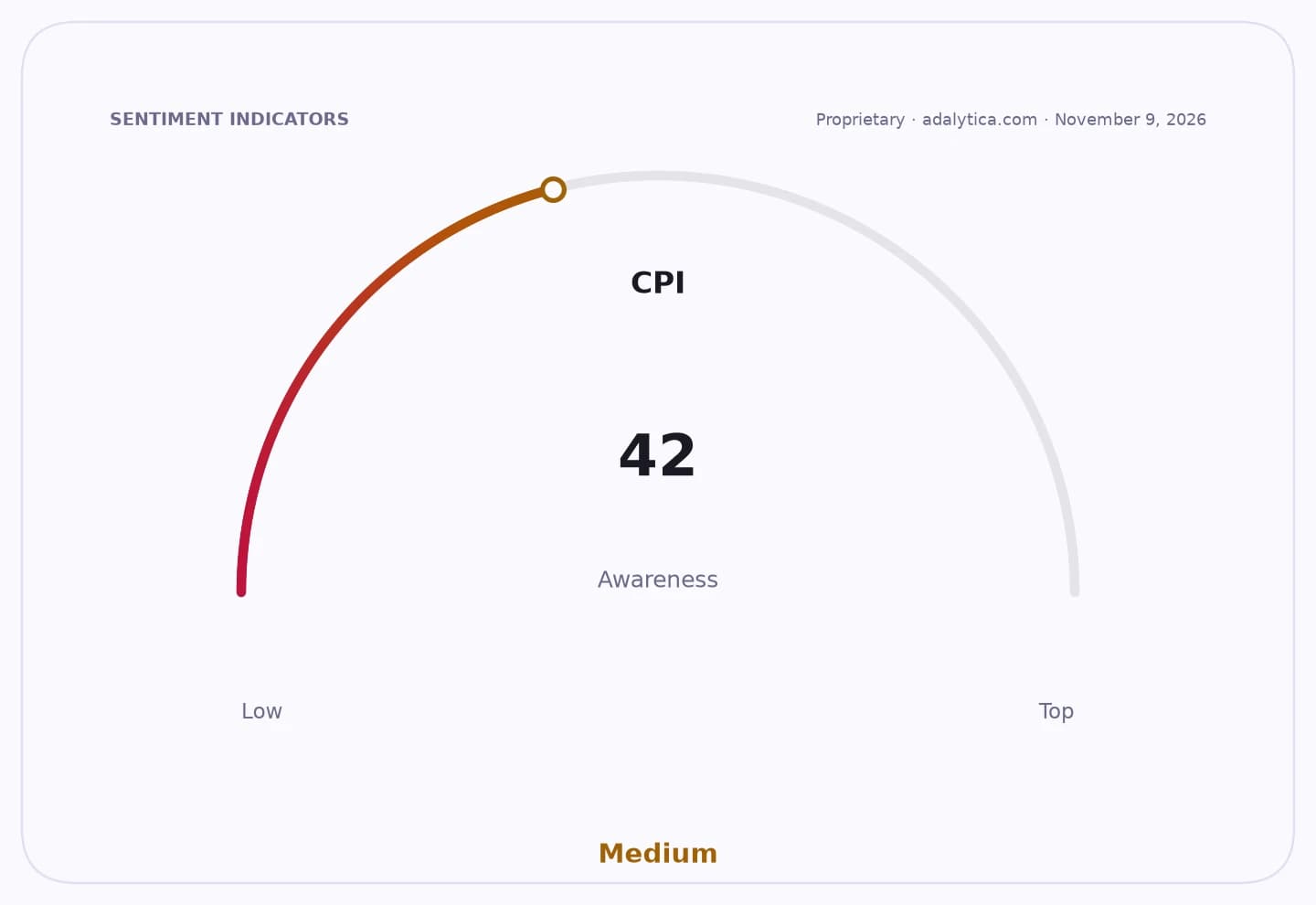
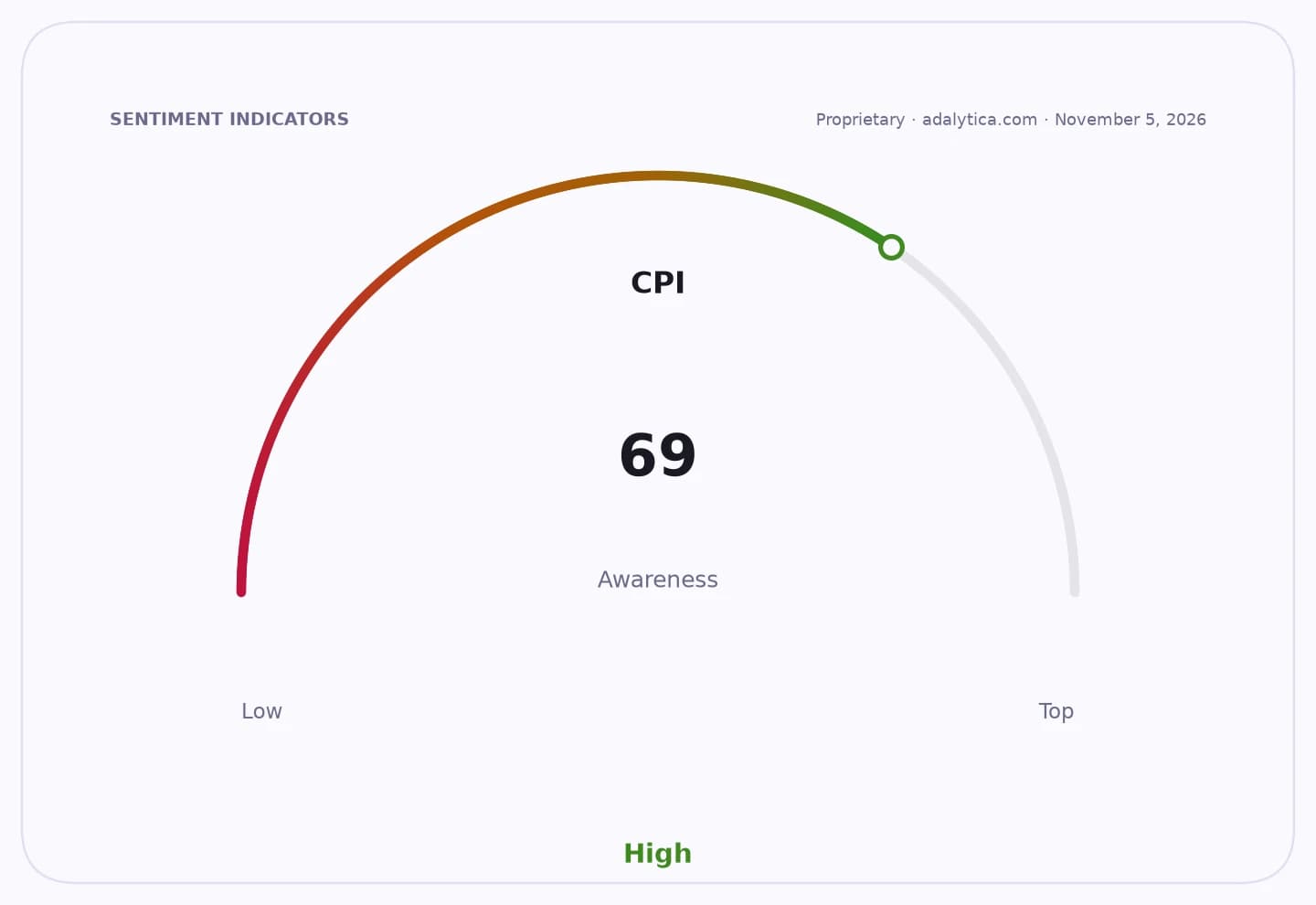
Inflation held at 5.6% in October, with faster food price increases offsetting easing pressure in restaurants, hotels and leisure, keeping the case for tighter monetary policy alive.
Inflation Holds at 5.6% as Food Prices Rise
CPI
The reading matters because inflation remains well above levels that would normally give policymakers room to cut borrowing costs, and the biggest driver was still food and beverage prices, which rose 8.5% from a year earlier. That makes the cost-of-living squeeze more persistent for households and keeps input and wage pressures elevated for businesses tied to consumer demand.
Sentiment Indicators
Fresh fruit prices jumped 20%, while sheep meat rose 14.7%, poultry 14.5%, beef 13% and fresh vegetables 12.9%. Food oils were one of the few soft spots, falling 4.8%, but the broader basket still showed little relief.
Core inflation, excluding energy and food, eased only slightly to 4.8% from 4.9% in September, underscoring that price pressure is broad-based rather than confined to volatile items. Manufactured goods rose 4.8% year on year, led by clothing and footwear at 9.1%, while services increased 4.1%, helped by a 14.1% rise in hotel services.
On a monthly basis, consumer prices rose 0.7% in October, driven mainly by a 6.3% jump in clothing and footwear as summer sales ended and by a small increase in food prices. That monthly move suggests inflation is not yet losing momentum fast enough to remove pressure from the policy outlook.
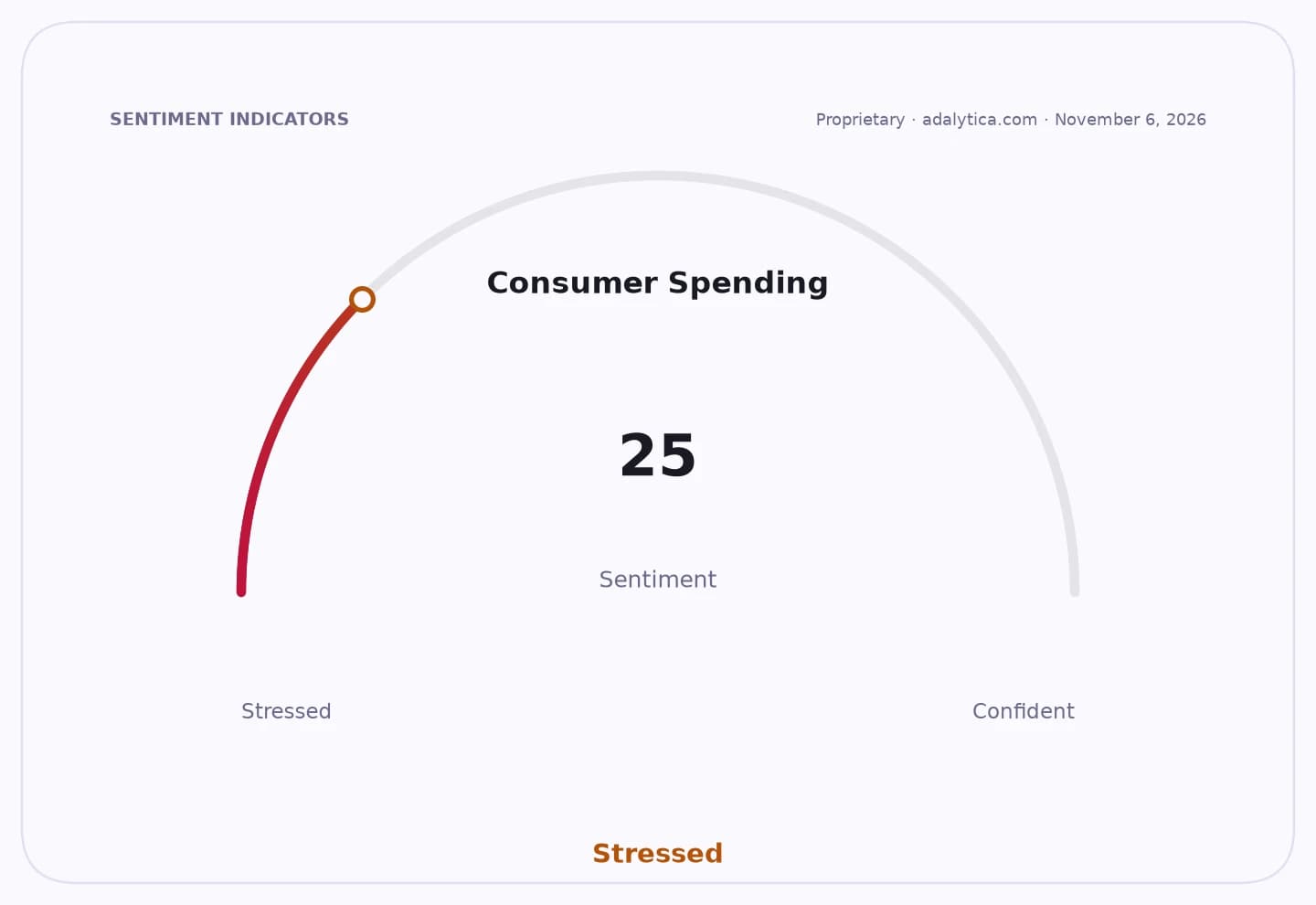
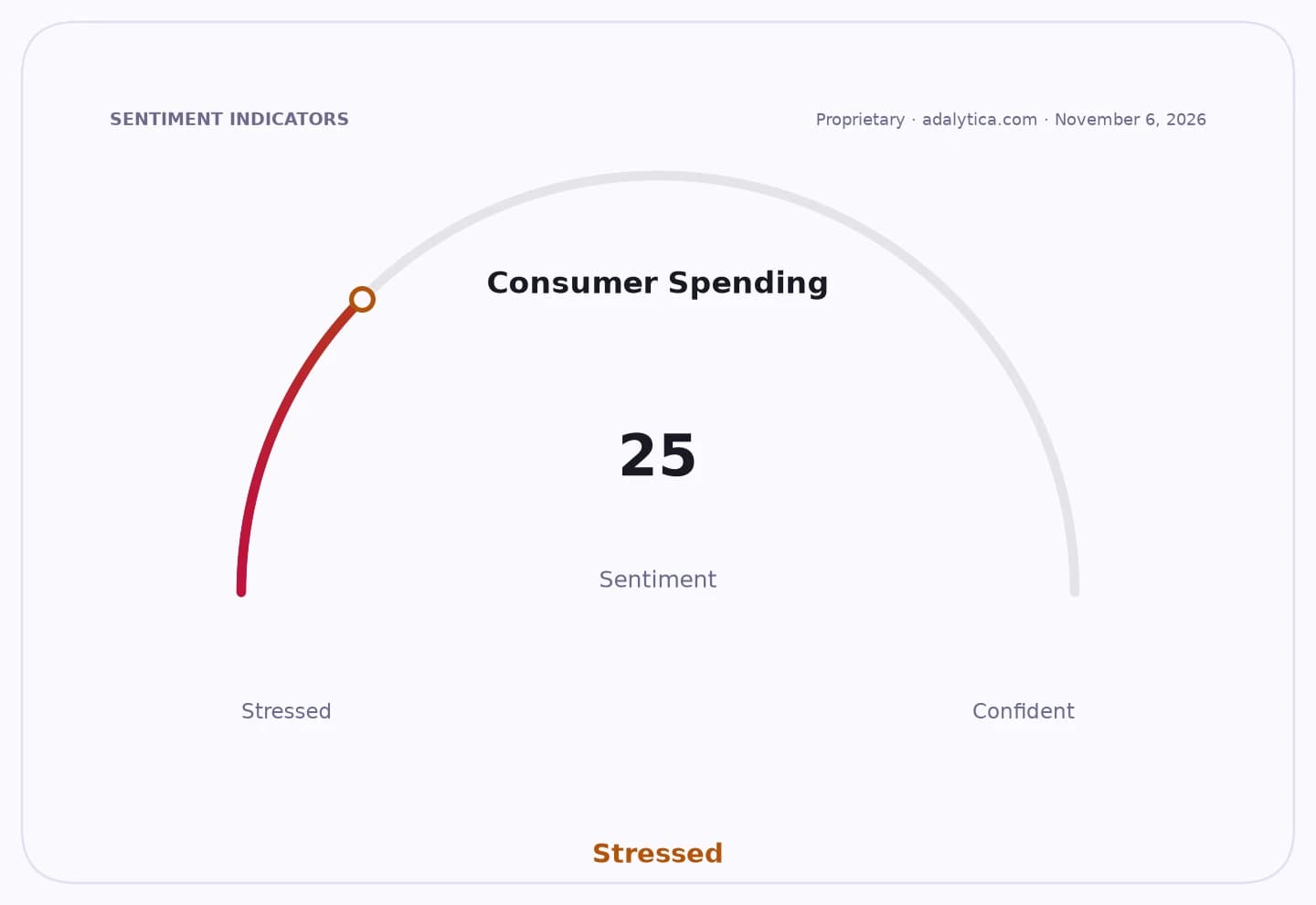
For investors, the report argues for higher-for-longer rates, firmer bond yields and continued sensitivity in rate-exposed assets. It also points to ongoing strain on discretionary spending, retailers and consumer-facing companies, while producers of essentials and pricing power-heavy businesses may remain relatively insulated.
The next focus is whether policymakers treat the October print as evidence that inflation is becoming entrenched, or as a temporary spike linked to food and seasonal clothing costs. Either way, the burden on households and the policy debate around interest rates are likely to stay front and center.
| Entity | Gains | Losses |
|---|---|---|
| Central bank hawks | ▲Stricter policy case | ▼Easier-cut argument |
| Savers / fixed income holders | ▲Higher yields | ▼Lower real returns if easing comes later |
| Consumers | ▲— | ▼Higher food and clothing costs |
| Consumer staples / food producers | ▲Pricing power | ▼Demand-sensitive retailers |