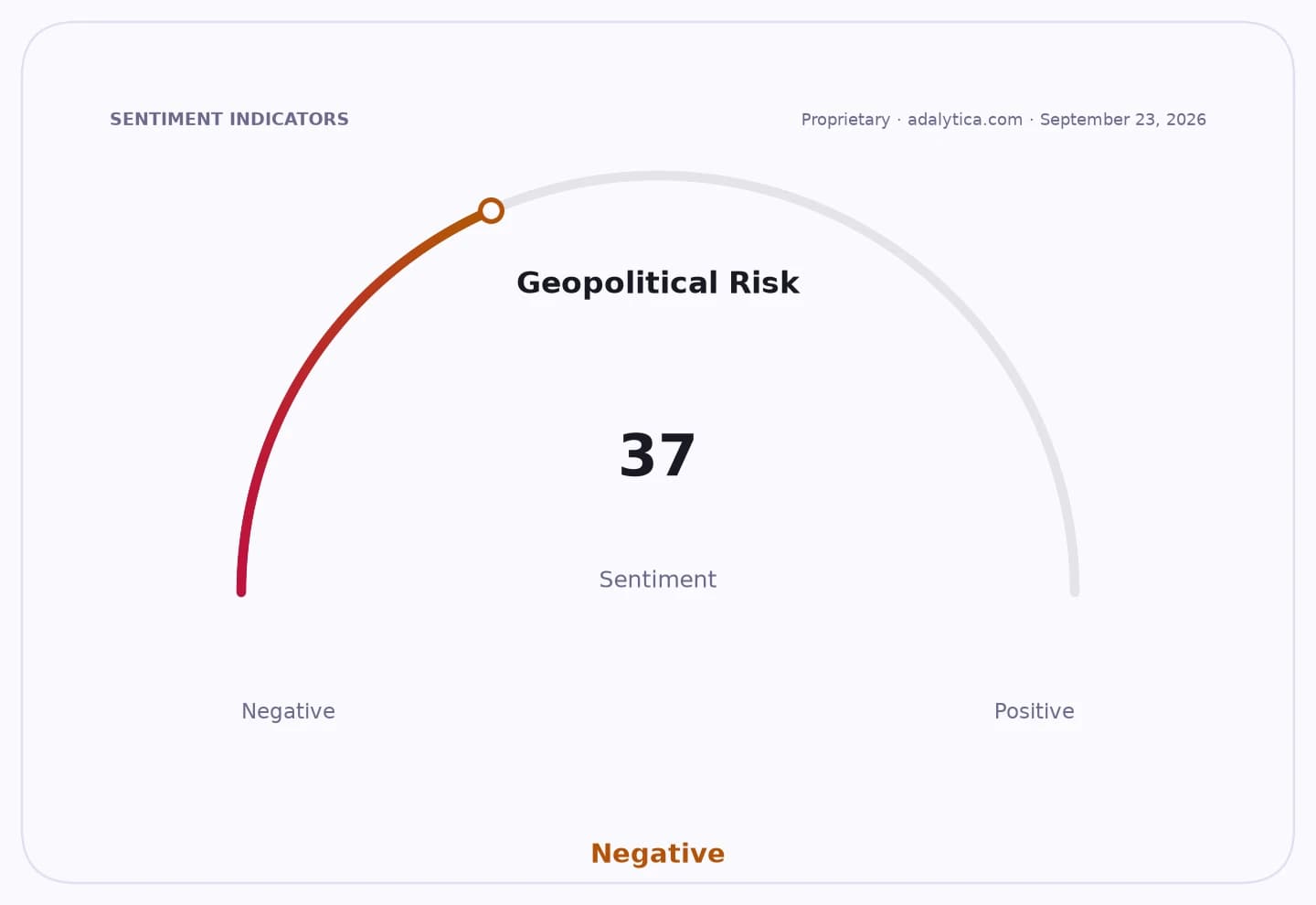
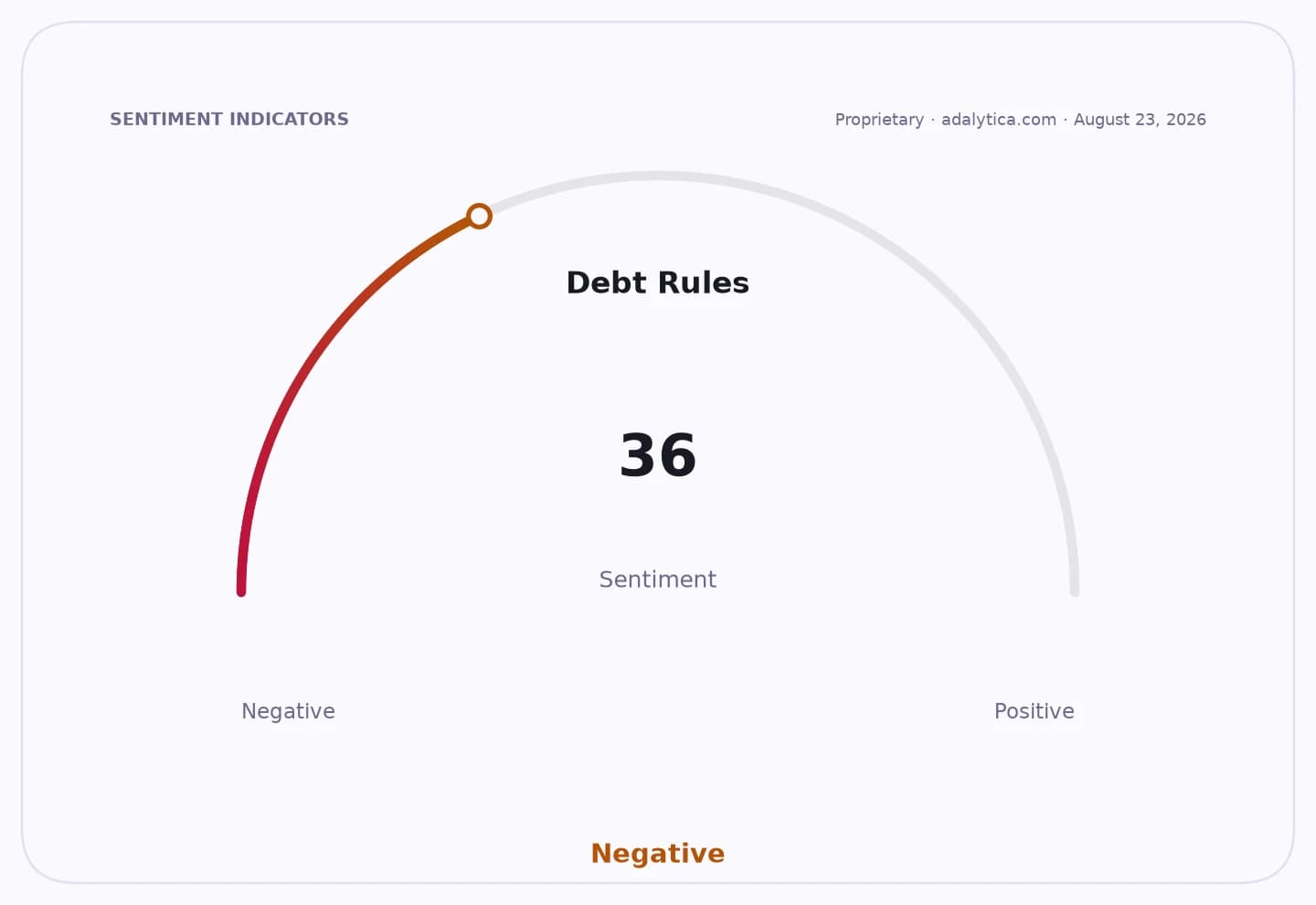
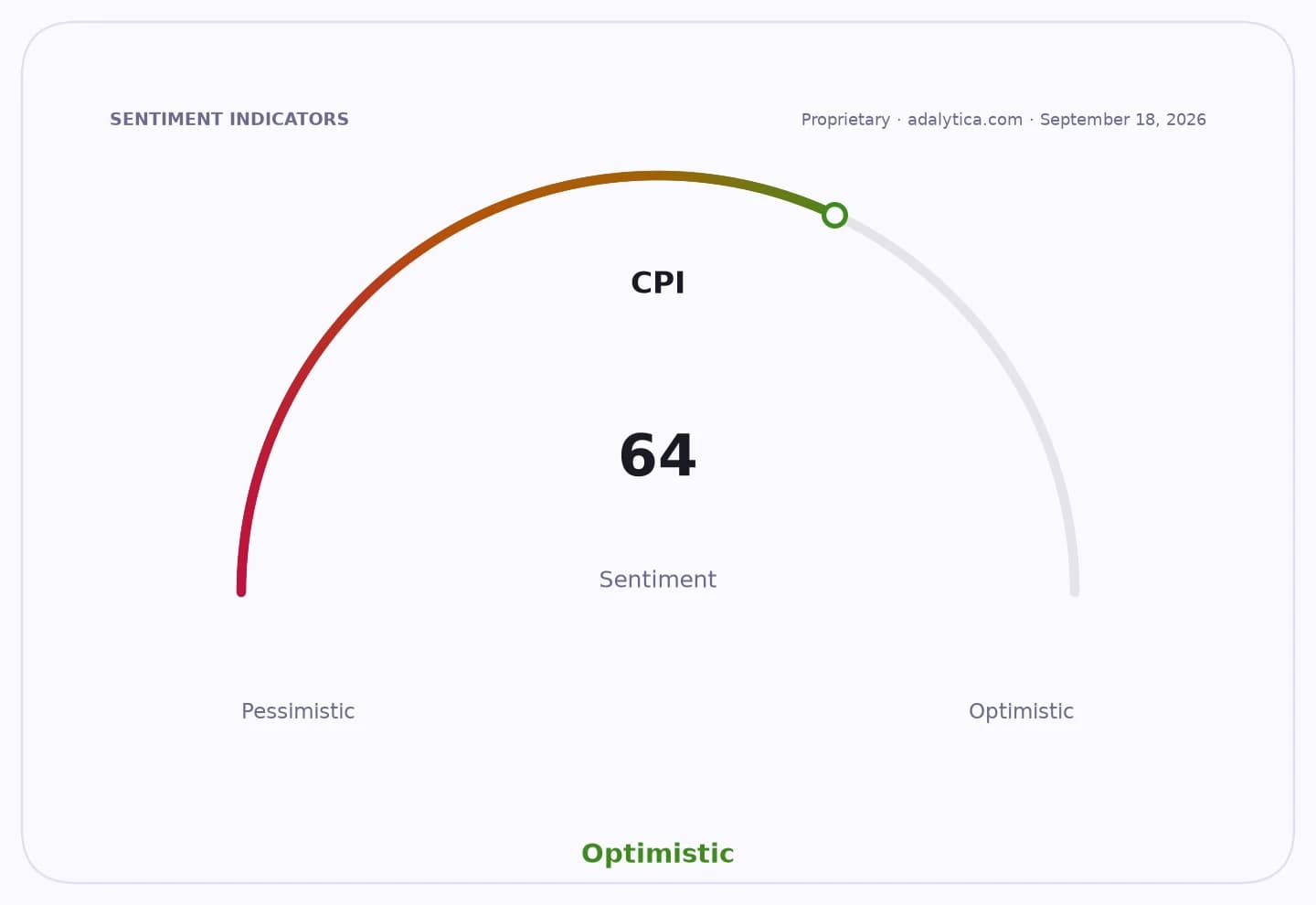
Javier Milei has done the hard part of a reformer: he has changed Argentina’s economic conversation, restored a measure of fiscal discipline and kept markets focused on the country’s turnaround story, but the bigger test is still ahead — turning stabilization into something households and investors can actually feel.
Argentina assets as Milei tests reform momentum

That matters because Argentina is no longer being priced only as a crisis. It is being priced as a country trying to break with its old inflationary model, and that shift has real implications for stocks, bonds, the peso and the energy sector. When a government can force fiscal surplus, push inflation lower and narrow the gap between policy and markets, it can re-rate assets fast. When it cannot translate that into wages, jobs and political stability, the rally can stall just as quickly.
Sentiment IndicatorsⓘProprietary · adalytica.com · September 17, 2026
This is a snapshot — live sentiment, awareness and momentum for 130+ markets update continuously in the dashboard.Open AlphaPulse
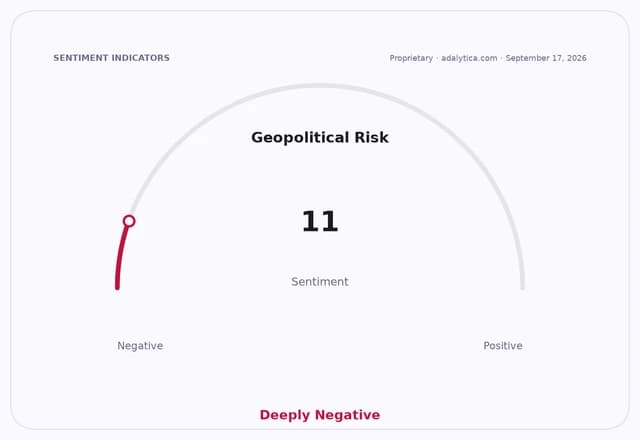
Milei’s first 1,000 days, as his supporters like to frame them, have produced seven clear strengths. He stayed relentlessly focused on the economic agenda, including fiscal order, exchange-rate calm, the IMF relationship and a sharp drop in country risk. He also reasserted control over the streets, made agenda-setting a political weapon, and showed he can build power quickly by pulling voters and figures away from the old opposition blocs. Internationally, he has chosen a blunt alignment with the United States and the Western camp, giving Argentina a clearer geopolitical identity than it has had in years.
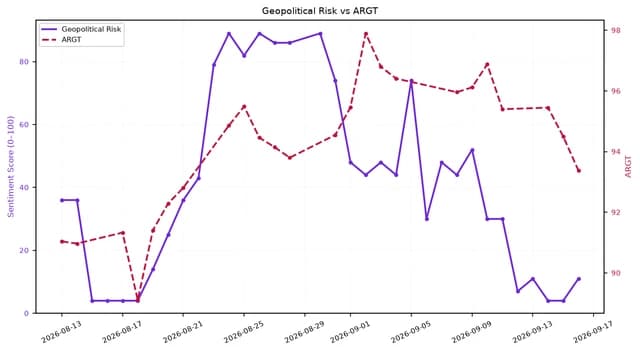
That clarity has helped markets understand the playbook. Argentina investors do not need to guess where Milei stands on spending, central bank independence or reform. They know he wants austerity, deregulation and a friendlier business climate, and that is part of why Argentine assets have had periods of powerful momentum. The country ETF ARGT still trades above both its 50-day and 200-day moving averages, while YPF has held up near the mid-$50s despite volatility in recent weeks, showing that long-term investors remain willing to pay for reform optionality.
But the seven negatives are just as important for anyone thinking beyond the next headline. The government has been plagued by internal fights, mishandled crises and a president who remains too solitary to run a durable coalition. The rhetoric that once looked refreshingly irreverent can now look like overreach. Allies have drifted away, and the biggest economic risk of all is the gap between macro stabilization and daily life. Lower inflation on paper does not automatically mean real wages, consumption or employment are healing fast enough to secure a second phase of reform.
That is the central narrative for investors. Milei has been better at destruction than construction so far. He has shown he can break the old order, keep fiscal promises and preserve initiative, but the market will eventually care less about shock value and more about whether Argentina can produce sustained growth, predictable institutions and enough political trust to keep reform going after the initial burst of austerity fades.
There is also a geopolitical layer that should not be ignored. Argentina’s renewed posture on Malvinas comes as the UK reiterates support for firms operating in the islands, reminding investors that the South Atlantic dispute can still spill into diplomacy and business sentiment. For energy names such as YPF, that adds another source of uncertainty even as the broader investment case for Argentine hydrocarbons remains tied to policy stability and access to capital.
For long-term investors, the lesson is not to chase every swing in Argentine stocks or currency proxies. It is to watch whether Milei can convert a credible stabilization program into an economy people actually trust. If he does, the upside for Argentina-linked assets could be substantial over the next three to five years. If not, the country may keep producing rallies without delivering durable compounding. That makes Argentina worth watching — and, for patient investors, worth keeping on the watchlist.
| Entity | Gains | Losses |
|---|---|---|
| Milei and La Libertad Avanza | ▲Political control, reform momentum | ▼Coalition stability |
| Argentine assets | ▲Re-rating potential, lower risk premium | ▼Volatility, policy setbacks |
| YPF and energy investors | ▲Reform upside, export opportunity | ▼Geopolitical and execution risk |
| Opposition and old-party blocs | ▲— | ▼Agenda control, influence |