Thousands of Argentines are taking to the streets as the political cost of President Javier Milei’s economic overhaul collides with a debt burden that remains the central constraint on his recovery plan.
Argentina protests weigh on Milei reform outlook
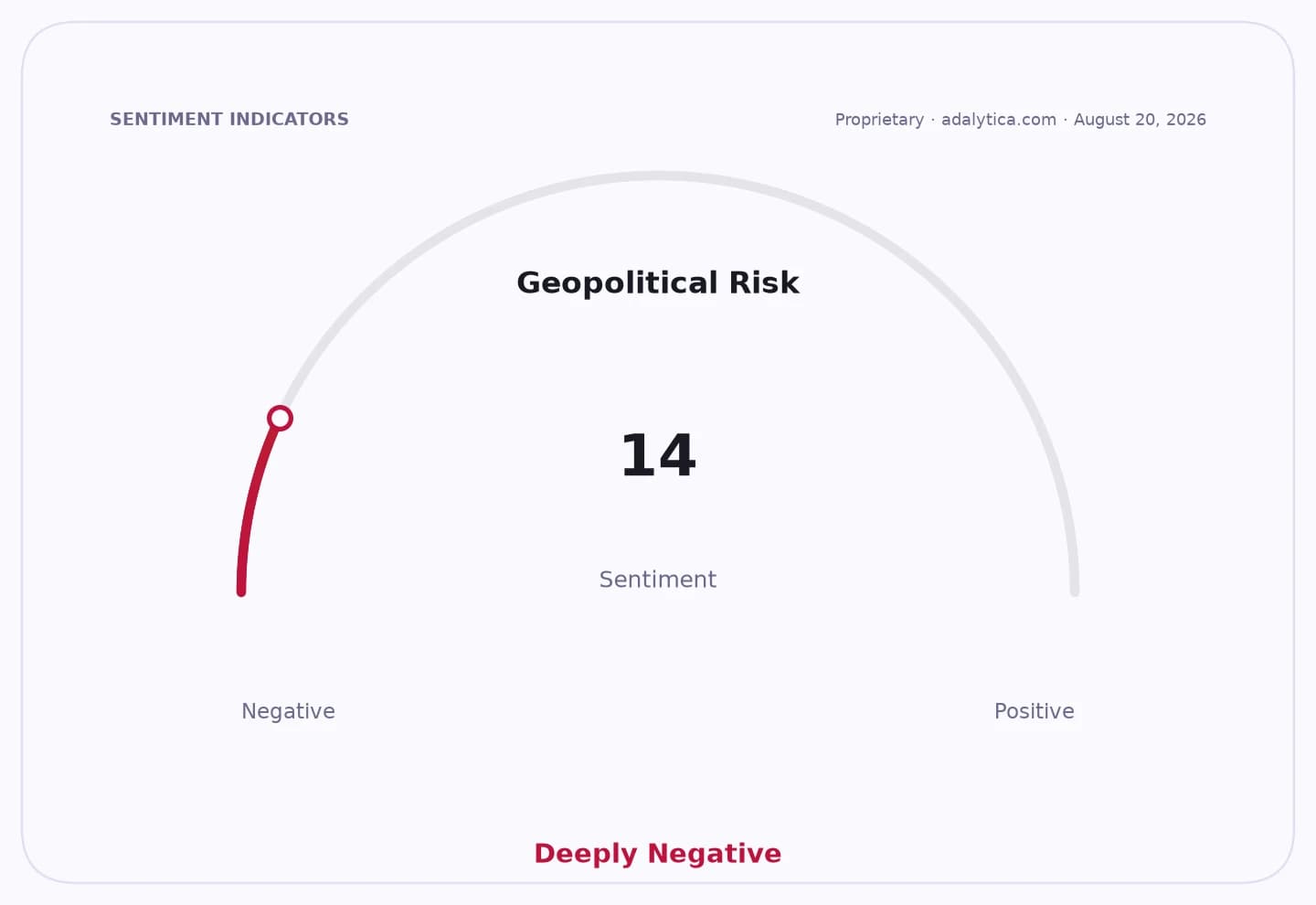
The protests matter because Argentina’s problem is no longer only inflation or fiscal austerity. It is the credibility of the state’s financing model. Milei has made deficit reduction the anchor of his programme, but the public backlash underscores how hard it is to sustain spending cuts, debt servicing and social support at the same time. For investors, that makes the next phase of the reform story less about ideology and more about whether Argentina can keep borrowing costs contained while rebuilding growth.
Sentiment IndicatorsⓘProprietary · adalytica.com · August 20, 2026
This is a snapshot — live sentiment, awareness and momentum for 130+ markets update continuously in the dashboard.Open AlphaPulse
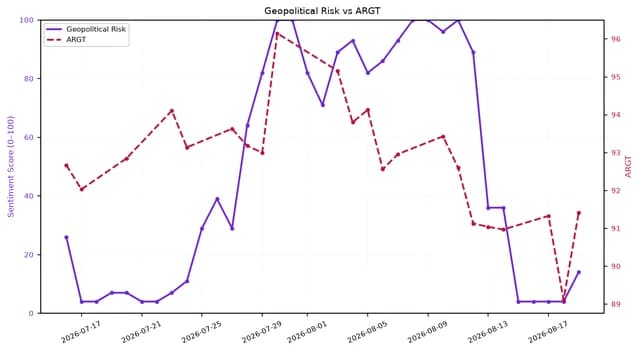
The market backdrop is telling. Argentina’s country-risk gauge from Adalytica shows extreme fear, while FX volatility signals also sit in the fear zone, suggesting investors still see the peso and policy execution as fragile despite the government’s reform push. In the equity market, that caution has already shown up in Argentine listings. Banco Macro’s U.S.-traded shares were at $91.41 on Aug. 19, below a recent 50-day moving average of $93.22, while Grupo Financiero Galicia slid to $41.47, well under its 50-day average of $49.67 and below its 200-day average of $48.17. YPF, the state-controlled oil producer and one of Argentina’s most important dollar earners, traded at $50.06, just above its 50-day average but still below recent highs, indicating the rally in Argentine assets has lost momentum.
That matters economically because Argentina’s financial system is still highly sensitive to sovereign stress. Banks such as Macro and Galicia are exposed to local funding conditions, government debt dynamics and the broader direction of the peso. If street protests deepen political resistance to austerity, the government may find it harder to maintain primary surpluses and roll over debt at acceptable rates. That would quickly feed into bank valuations, credit growth and the cost of capital for the wider economy.
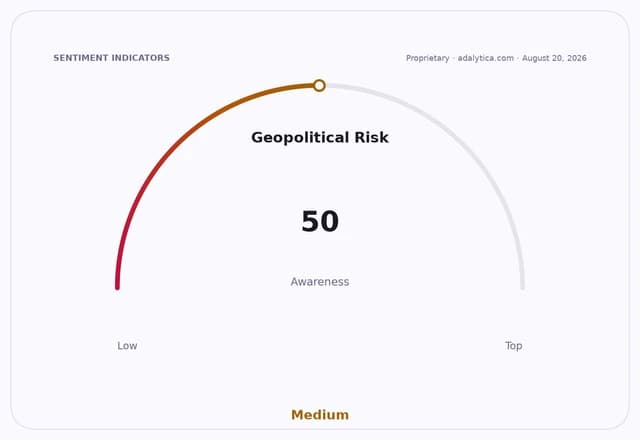
The irony is that the country’s macro narrative has improved enough to tempt investors back, but not enough to remove the risk premium. YPF’s relative resilience reflects the market’s preference for exporters and hard-currency earners in a fragile domestic setting. By contrast, the weaker tone in bank shares suggests investors are still discounting the possibility that fiscal consolidation could slow, or that social unrest could force policy compromises that weaken the reform agenda.
The political message from the protests is therefore bigger than a one-day demonstration. Milei’s austerity drive can still win market support if it stabilises debt and inflation, but the trade-off is harsher for households and politically harder to sustain. The next test for investors will be whether the government can preserve fiscal discipline without triggering a broader backlash that revives doubts over financing, currency stability and the durability of the recovery.
| Entity | Gains | Losses |
|---|---|---|
| Milei government | ▲Fiscal credibility if reforms hold | ▼Political support amid austerity backlash |
| Argentine banks | ▲Lower inflation and steadier policy | ▼Softer credit demand and sovereign stress |
| YPF and exporters | ▲Hard-currency earnings advantage | ▼Domestic demand weakness |
| Bondholders and long investors | ▲Reform-led stabilization | ▼Resurgent country-risk premium |