President Javier Milei’s government is asking the Trump administration to reopen a bilateral trade pact after admitting it lacks the votes in Argentina’s Congress to ratify the agreement, a setback that threatens to delay one of the most important economic prizes of his pro-market overhaul.
Argentina seeks to reopen US trade pact

The standoff matters because the accord was meant to deepen Argentina’s access to the US market and cement Washington’s backing for Milei’s reform agenda. Instead, it has become a test of whether Buenos Aires can convert political alignment with Donald Trump into durable trade gains at a time when growth is weak, congressional resistance is rising and Milei’s approval has fallen sharply.
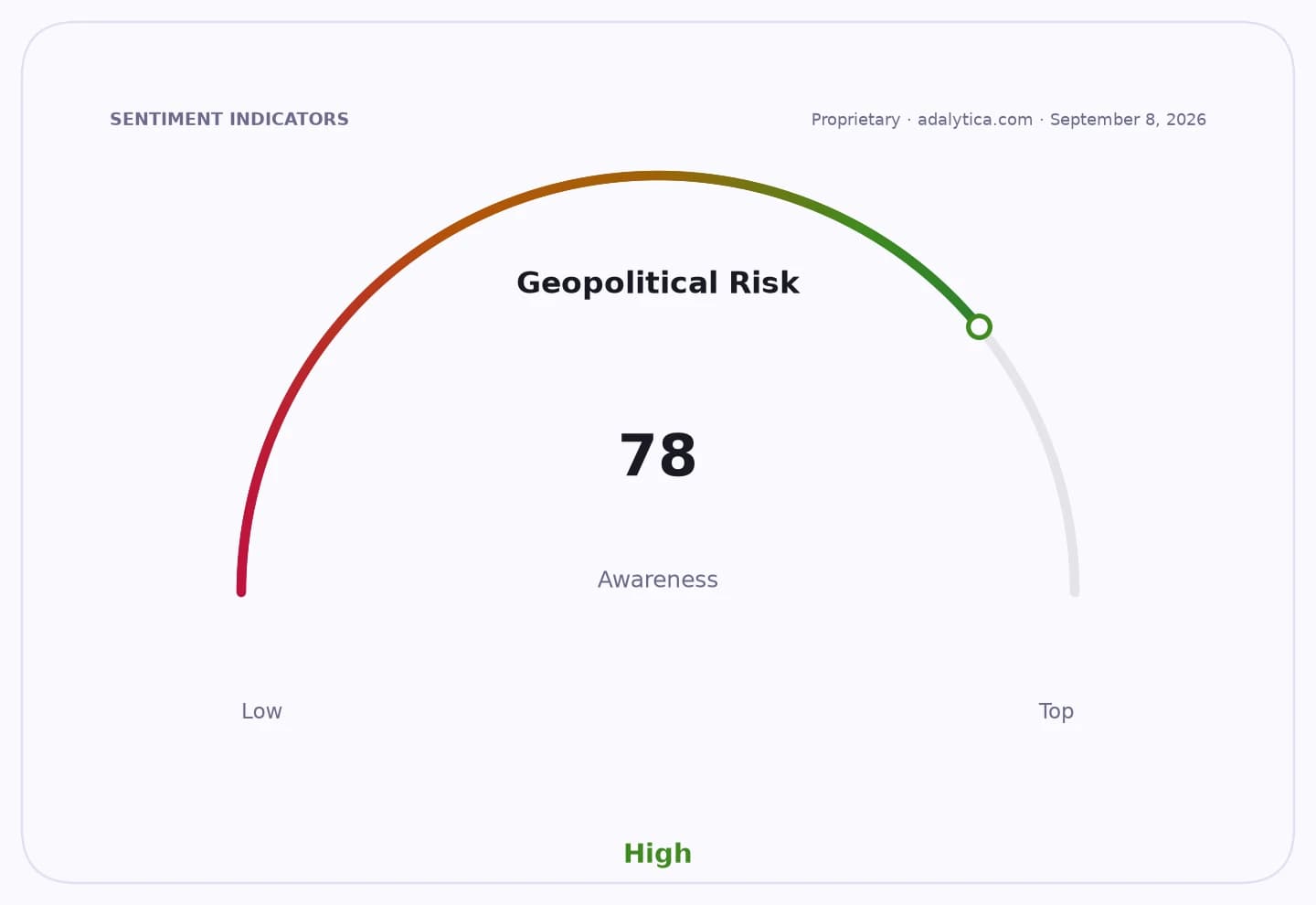
Sentiment IndicatorsⓘProprietary · adalytica.com · September 28, 2026
This is a snapshot — live sentiment, awareness and momentum for 130+ markets update continuously in the dashboard.Open AlphaPulse

According to people familiar with the talks, Argentine advisers told US officials they do not have the legislative numbers to approve the deal signed in February. Buenos Aires is now seeking new terms after the US Supreme Court struck down Trump’s global tariffs, arguing the legal basis for the pact has changed.
Washington is pushing back. US officials who visited Buenos Aires in recent weeks said reopening the agreement would set a precedent for other countries to seek better terms, and they are urging Argentina to ratify the pact as signed. The dispute comes despite Trump’s warm political support for Milei, whom he has called “my favorite president.”

For investors, the issue is less about diplomacy than execution. Milei’s administration had sold the deal as a landmark that would support exports, ease trade barriers and reinforce confidence in Argentina’s reform story. The agreement included a 10% US tariff on Argentine imports, below the 12.5% applied to Chile under the same framework, along with an 80,000-ton increase in Argentina’s beef quota and more than 1,600 tariff exemptions.
Markets have already shown how much of Milei’s rally was tied to expectations of policy follow-through. The ARGT exchange-traded fund has fallen to $88.60 from $96.39 in July, while the broader EEM emerging-markets ETF has also eased, though less sharply. Argentina’s political drift is also feeding caution around the peso and local assets, even as Washington’s broader stance on the country remains supportive.
The deal’s fate is complicated by timing. Argentina’s legislative year ends in November, and Milei is prioritizing other measures and his 2027 re-election campaign, making a hard push for a contentious trade accord riskier. The government has still started implementing some non-tariff parts of the pact, including changes to patent rules and some import liberalization, but core tariff provisions remain stuck.
Pharmaceutical companies are lobbying hard against deeper patent changes, and the Patents Cooperation Treaty remains pending in the Senate. The omission of the trade pact from a recent US embassy event in Buenos Aires underscored how politically sensitive the issue has become.
If Milei and Trump discuss the matter on the sidelines of the UN General Assembly in New York this week, the talks could put the pact back on track. Until then, the episode is a reminder that Argentina’s market-friendly turn still depends on Congress, and that even strong ideological alignment with Washington does not guarantee quick economic delivery.
| Entity | Gains | Losses |
|---|---|---|
| Milei government | ▲More time to renegotiate | ▼Credibility on ratification |
| Trump administration | ▲Leverage on original terms | ▼Speed of pact implementation |
| Argentine exporters | ▲Possible better market access | ▼Delay in tariff relief |
| US lawmakers/trade officials | ▲Preservation of precedent | ▼Risk of broader concessions pressure |