Argentina’s country risk has blown back above 1,000 basis points, a painful reminder that investors still do not see a clear path to cheaper financing or stable access to global debt markets.
Argentina risk tops 1,000 basis points

That matters because Argentina’s borrowing costs are not just moving higher in a chart; they are moving farther out of reach for an economy that needs confidence, refinancing options and, eventually, a normal return to capital markets. The J.P. Morgan country-risk gauge jumped 10.1% on Friday to 1,025 basis points after touching 1,038 intraday, its first move above the 1,000-point mark in more than a year. Dollar bonds issued under New York law fell more than 3% in some cases, while locally issued Bonares slipped as much as 2.8%, showing the pressure is broad rather than confined to one part of the curve.
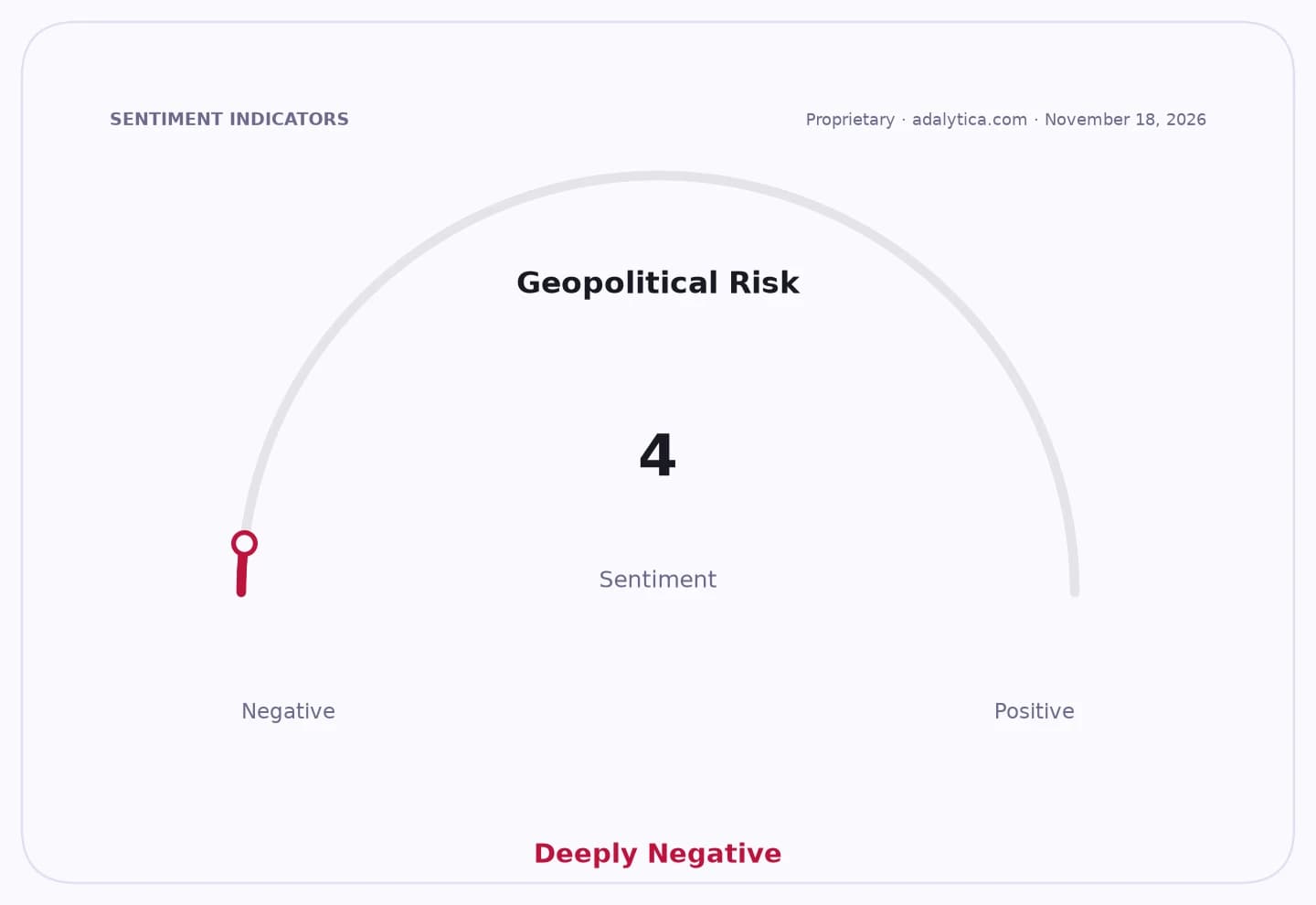
Sentiment Indicators

For investors, this is the sort of sell-off that can change the investment case quickly. When sovereign bonds weaken this sharply, the cost of rolling debt rises, refinancing windows narrow and equity sentiment usually follows lower. Argentine stocks and ADRs were mixed after Thursday’s rout, but the domestic market is already feeling the strain: the MSCI Merval rebounded slightly on Friday, yet it still has an 11.5% loss for November. In U.S.-dollar terms, the index remains weak, which tells you foreign investors are still demanding a steep discount for political and macroeconomic risk.
The deeper problem is that the market is now pricing a feedback loop. As country risk rises, the government gets farther from reopening international debt markets or refinancing large maturities at acceptable rates. That makes next year’s funding plan look less secure and keeps investors focused on 2027, not just the next few weeks. The concern is also visible in the currency market, where the blue-chip swap rate widened the gap with the wholesale exchange rate to 11%, a sign that companies and investors are looking for dollar coverage rather than leaning into pesos.

This is why the sell-off matters beyond Argentina’s borders. A weaker Argentine risk profile can pressure the peso, distort corporate behavior and keep local capital parked defensively, especially when global markets are already unsettled. The latest slide came as international risk appetite deteriorated and after a rough stretch in global stocks, which only amplified the caution around Argentine assets. Outlier, a local consultancy, described Thursday’s move as a wholesale sell-off of pesos rather than a simple rotation across maturities, a sign that investors were rushing to protect capital rather than reprice duration.
For long-term investors, the takeaway is straightforward: Argentina remains a high-beta market where political visibility, fiscal credibility and external financing access can matter more than isolated rallies. Until the bond market stabilizes, any rebound in stocks is likely to be fragile. For now, this is a watchlist story, not a buy-the-dip story.
| Entity | Gains | Losses |
|---|---|---|
| Argentine government | ▲none | ▼higher funding costs |
| Bondholders | ▲potential rebound buyers | ▼mark-to-market losses |
| Peso holders | ▲exchange-cover demand | ▼currency pressure |
| Argentine equities | ▲bargain hunters | ▼risk-averse investors |