Argentina’s Treasury debt is on track to top $500 billion as inflation-linked CER bonds and the capitalization of interest keep swelling the sovereign balance sheet even after debt payments and a stronger peso trim part of the total.
Argentina Treasury Debt Nears $500 Billion

That matters because the headline fiscal surplus the government touts is not being matched by a genuine reduction in liabilities. The debt burden is still rising in real terms, increasing the amount the state must roll over, refinance or pay at higher cost, and leaving less room for policy flexibility if inflation, rates or the exchange rate turn less favorable.
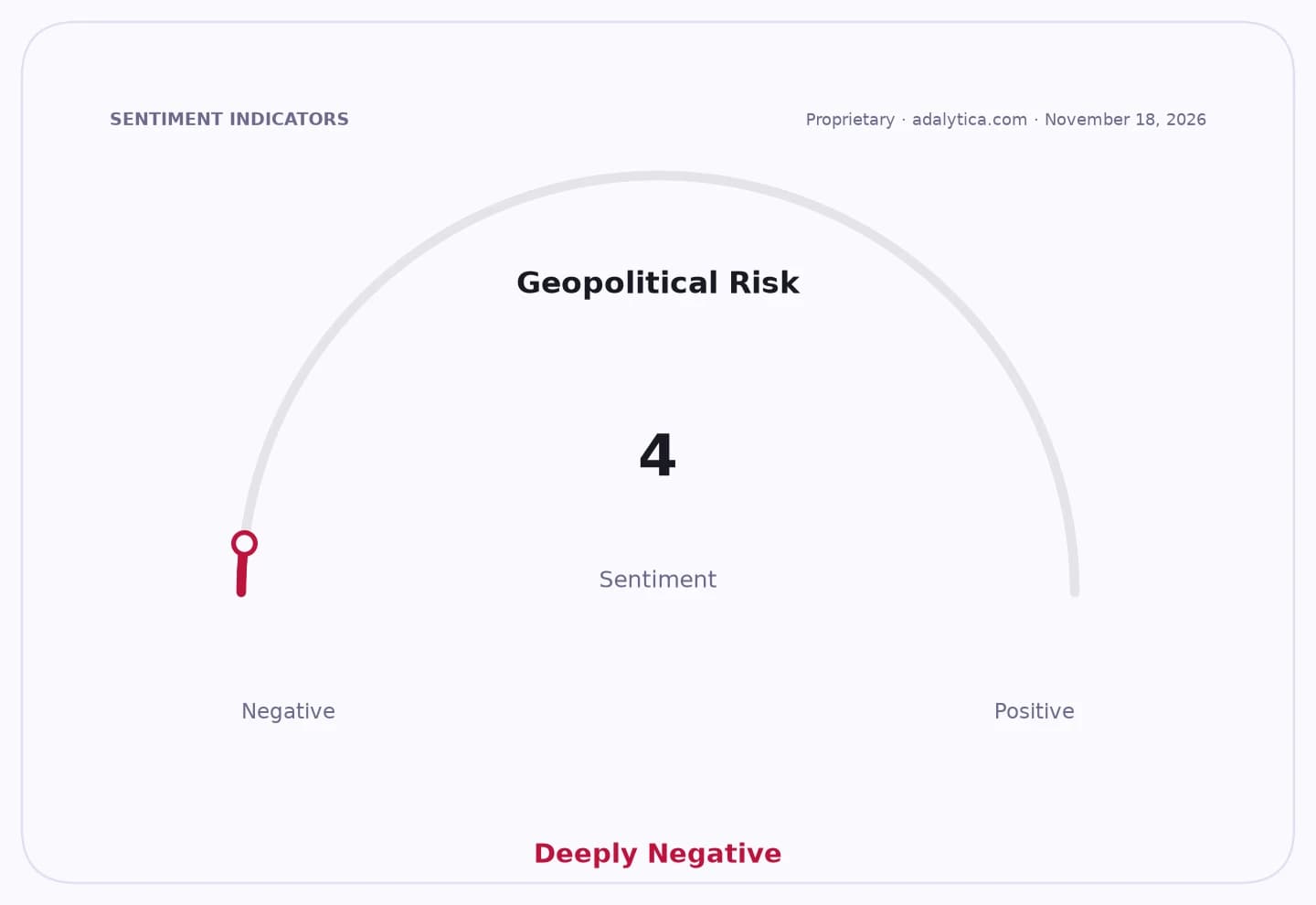
Sentiment Indicators
Economist and consultant Martín Polo said the net debt of the national Treasury rose by the equivalent of $34.558 billion in the first 10 months of the year. He said $29.242 billion came from interest capitalization on bonds and bills, while another $22.082 billion came from CER-adjusted debt, more than offsetting $10.5 billion in payments and $5.832 billion in relief from peso appreciation.
Even after that currency effect, Polo said the consolidated Treasury debt, including earlier transfers of liabilities from the central bank, is heading toward the symbolic $500 billion mark. On the finance ministry’s gross measure, debt in normal payment status reached $487.143 billion in October, up $3.019 billion from September, with peso-linked obligations accounting for the bulk of the increase.
The data underscore a core risk for Argentina’s sovereign story: inflation-linked funding can stabilize near-term financing, but it also compounds the stock of debt when interest is rolled over into principal. For investors, that means the apparent progress on the primary balance may not translate into a lower debt ratio, especially if growth slows or the peso weakens again.
The backdrop is also unfavorable for fixed-income investors more broadly. US Treasury yields remain elevated, with the 10-year around 5.17% in the latest projection, while short-end and long-end market signals still point to a nervous rates environment. Against that backdrop, Argentina’s reliance on indexed local-currency debt keeps the sovereign exposed to higher refinancing costs and a more fragile maturity profile.
Polo said Argentina would need a much stronger fiscal position — not just a primary surplus — to actually bring debt down. For markets, the next focus is whether the government can keep rolling over pesos at acceptable rates without deepening indexation, and whether October’s slower pace of gross debt growth is a temporary lull or the start of a more durable deceleration.
| Entity | Gains | Losses |
|---|---|---|
| Argentine government | ▲Near-term financing rollover | ▼Debt stock and future interest burden |
| Bondholders in CER-linked debt | ▲Principal indexed to inflation | ▼Sovereign credit risk if refinancing worsens |
| Peso holders / local savers | ▲Short-term currency support limits dollar debt impact | ▼Real debt servicing pressure via inflation |
| Treasury investors / fixed income markets | ▲More clarity on debt dynamics | ▼Higher rollover risk and weaker debt sustainability |