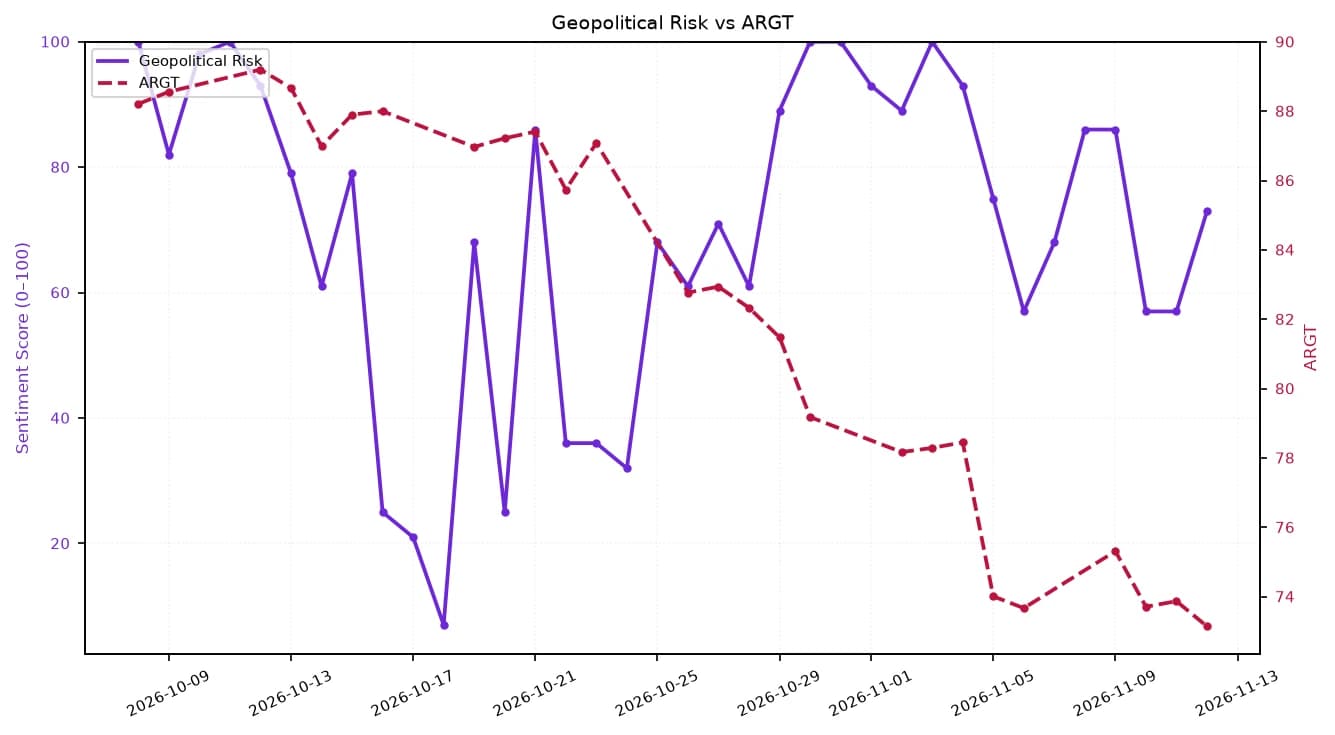
Argentina’s disinflation is now being driven by something more durable than a strong peso or a temporary freeze: Javier Milei has rebuilt the state’s balance sheet enough to stop the Treasury and central bank from feeding inflation.
Argentina inflation falls as Milei rebuilds balance sheet

That is the economic significance of Milei’s program. In less than three years, monthly inflation has dropped from 25.5% in December 2023 to 1.7% in August 2026, while year-on-year inflation has slowed to 33.5% from 211% in 2023. Sovereign spreads touched eight-year lows around 400 basis points in July before widening again toward 600 as investors priced the 2027 election, and the central bank’s gross reserves climbed above $50 billion in early September, the highest since 2019. For a country that was drifting toward hyperinflation, that is not a cyclical improvement. It is a regime change.
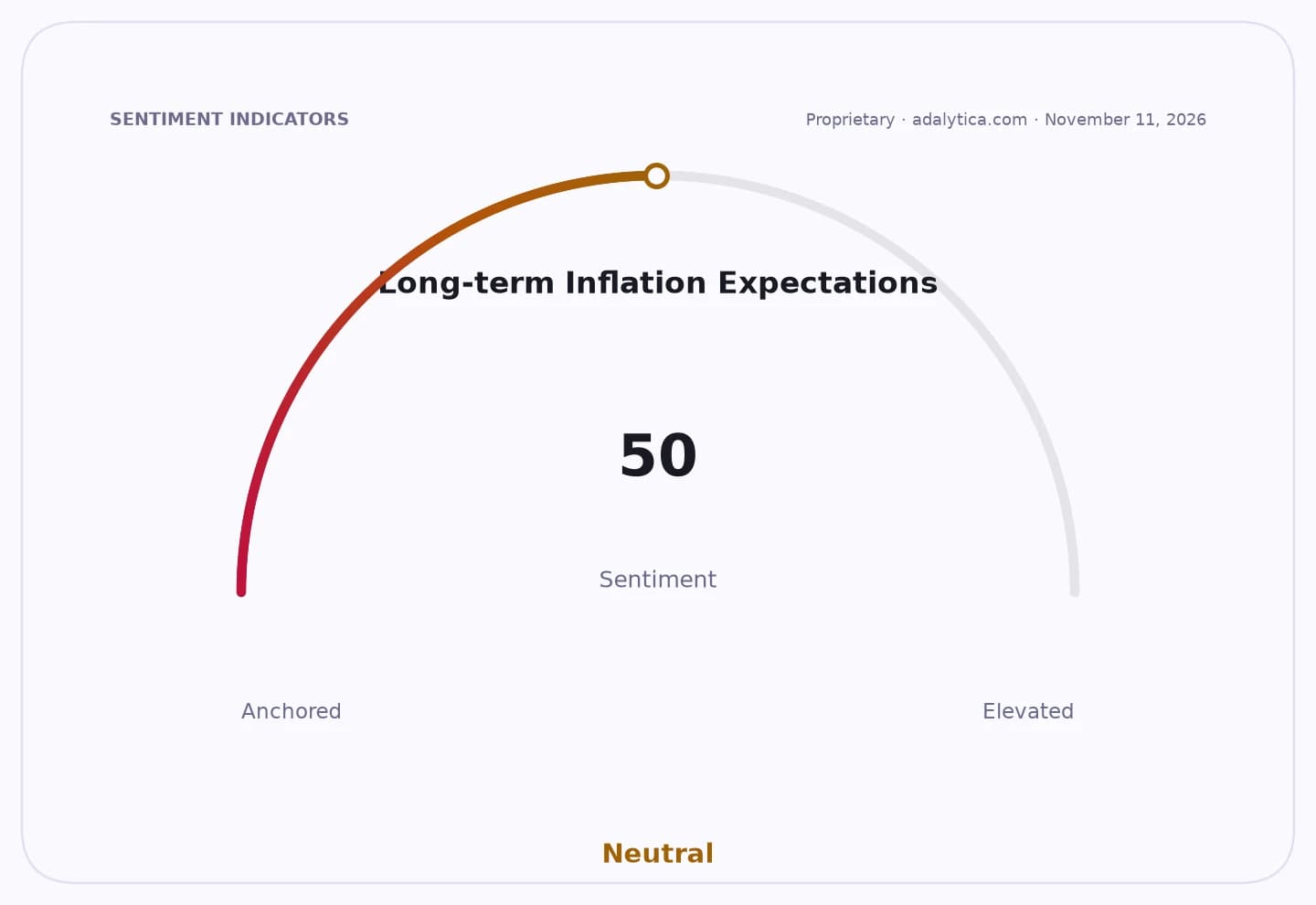
Sentiment Indicators
The key point for investors is that Argentina’s inflation problem was never just about prices. It was about insolvency. The state had lost access to voluntary credit, the Treasury was running a deficit of roughly 5% of GDP, the central bank was carrying a quasi-fiscal deficit near 10%, and net reserves were about negative $11 billion when Milei took office. In that setup, deficits were financed through money creation, while the central bank tried to suppress the consequences with exchange controls and very high interest rates on its own liabilities. The result was the classic feedback loop: weaker demand for pesos, faster money printing, higher inflation, and more pressure on the currency.
Milei’s policy mix attacked that mechanism in the right order. He cut spending sharply, including public works, subsidies and transfers, and allowed some nominal spending to erode in real terms. National primary spending fell by about a quarter in real terms in his first year, taking the budget back to surplus and removing the need for direct monetary financing. He then devalued the official exchange rate, narrowed the gap with parallel markets and, after stabilizing the fiscal side, lifted most exchange restrictions in April 2025. That sequencing mattered: lifting controls before restoring solvency would likely have accelerated capital flight rather than ended it.
Just as important, the central bank’s own balance sheet was defused. Lower inflation allowed lower nominal rates, which cut the interest bill on remunerated liabilities and reduced the need for future money creation. Those liabilities were shifted onto Treasury instruments, making the cost of stabilization more transparent and forcing the burden back into the fiscal accounts. As confidence improved, Argentina’s state could refinance itself at longer maturities and lower rates. The Treasury also rebuilt access to dollars, buying more than $14 billion in the FX market in 2026.
Markets have rewarded that turnaround, but not unconditionally. The peso and Argentine assets remain highly sensitive to political risk, as shown in late 2025 when the opposition surge in Buenos Aires and fears of a policy reversal pushed country risk from about 700 basis points to nearly 1,500 and drove heavy retail dollarization. The episode underscored that Argentina’s stabilization is real but not yet fully institutionalized. Investors are not pricing a return to hyperinflation, but they are still pricing the possibility that the next election could reopen the same financing trap.
That is why the story is bigger than the latest inflation print. Milei has shown that Argentina can escape hyperinflation without dollarization, a currency board or a new currency, but the durability of that achievement still depends on politics. If fiscal discipline holds and reserves keep rebuilding, sovereign risk should continue to compress and local assets could re-rate further. If the policy coalition fractures, the market will quickly revisit the old question: whether Argentina’s balance sheet has truly been repaired, or merely delayed.
| Entity | Gains | Losses |
|---|---|---|
| Argentine government | ▲Lower inflation, fiscal surplus | ▼Less room for patronage |
| Argentina bondholders | ▲Lower default risk | ▼Still exposed to election risk |
| Peso holders | ▲Currency stabilization | ▼Ongoing volatility |
| Consumers and pensioners | ▲Slower price rises | ▼Past real-income squeeze |