Buenos Aires inflation rose 1.9% in October, reinforcing the view that Argentina’s disinflation trend is still alive and keeping the next national reading on track to land below 2%.
Buenos Aires inflation rises 1.9% in October

That matters because inflation has been the central macro variable driving everything from rate expectations to consumer spending, wage bargaining and valuations on Argentine assets. A sub-2% monthly print, even from the City of Buenos Aires rather than the national statistics agency, suggests price pressure is no longer running away from policymakers — and that is exactly the kind of data investors need to see before betting on a cleaner macro stabilization story.
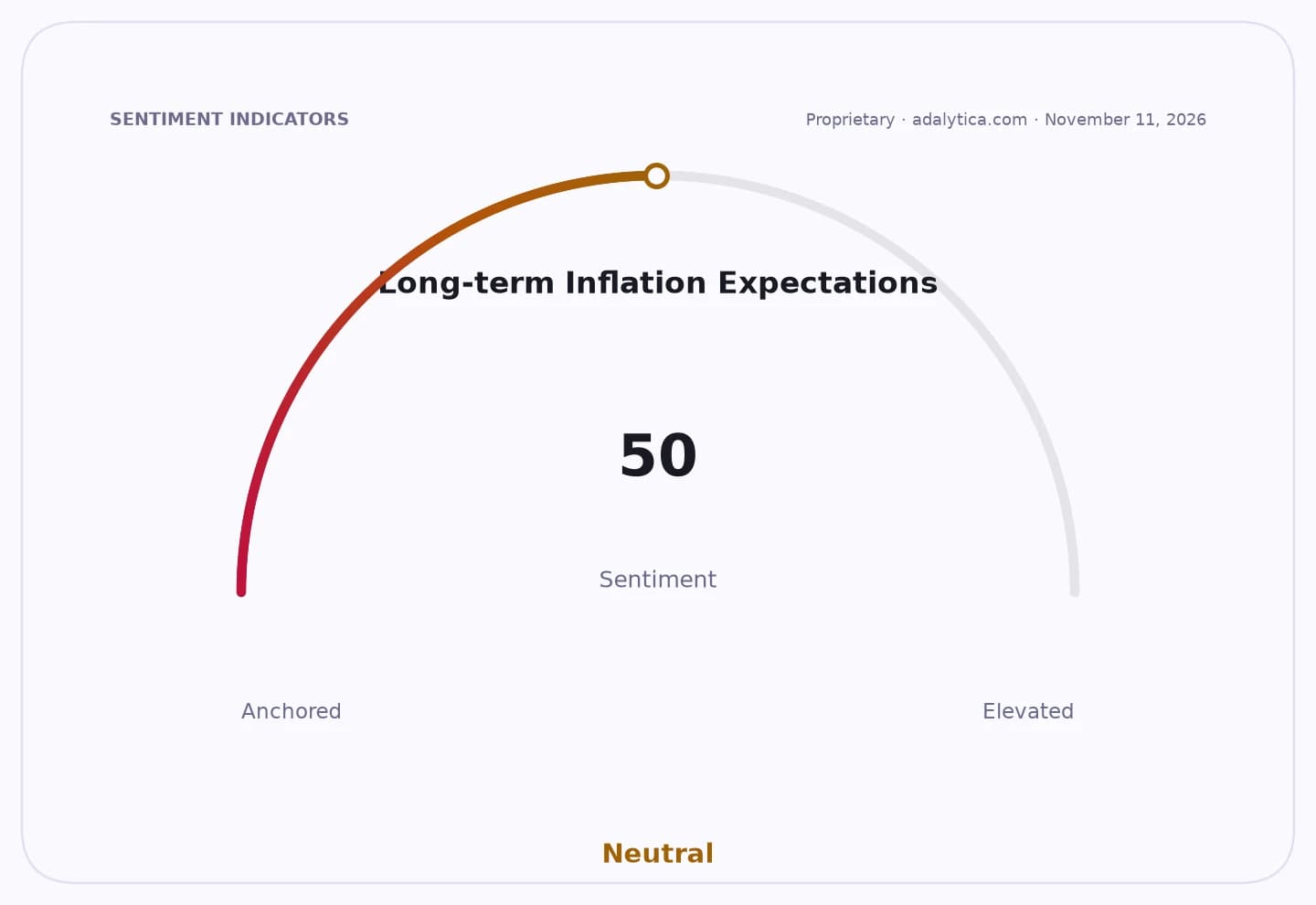
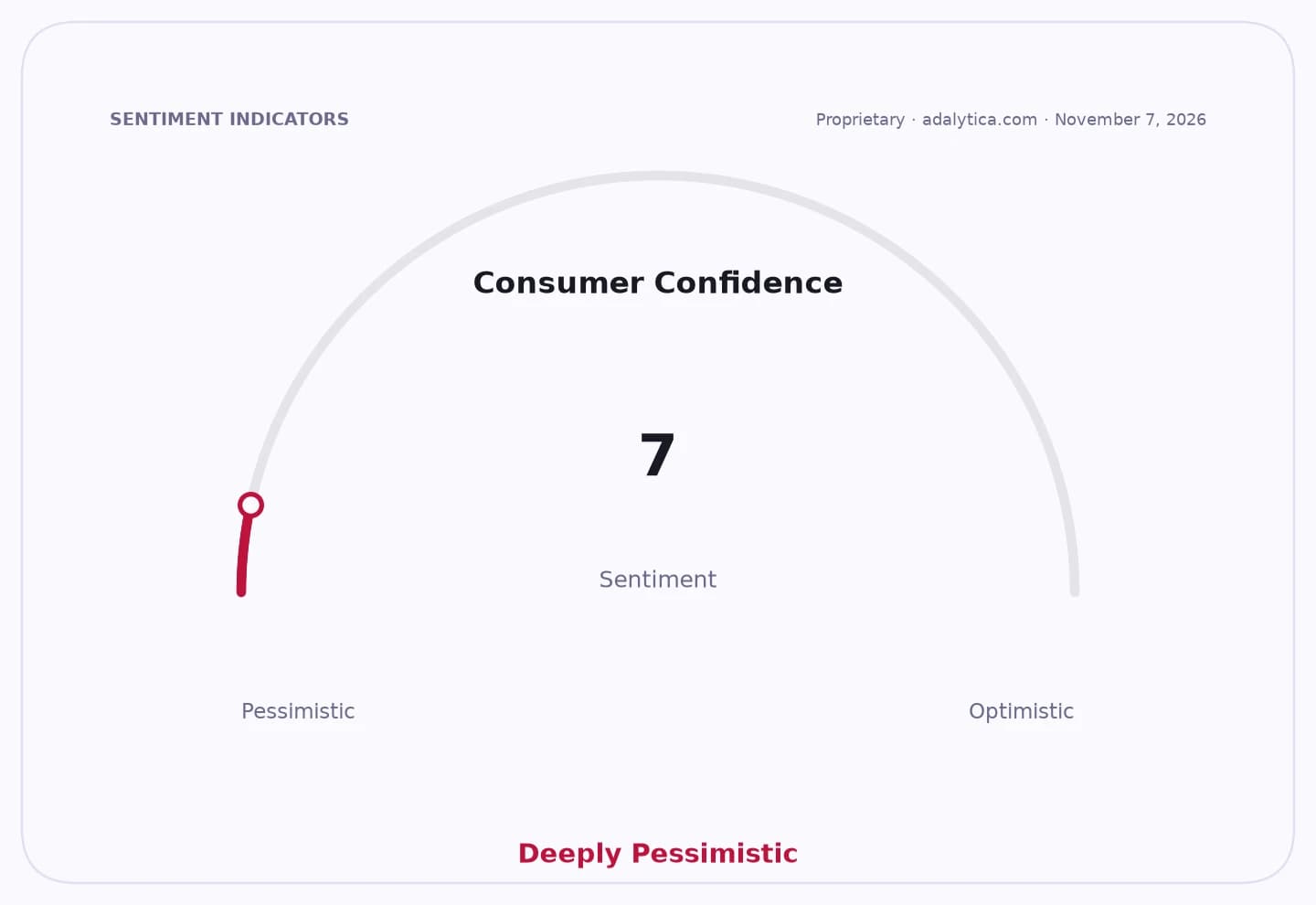
Sentiment Indicators
The city’s reading was slightly hotter than September’s 1.8%, but the bigger signal is that inflation has remained relatively contained after Argentina spent years trapped in extreme price instability. October prices are up 26.1% so far this year and 32.5% over 12 months, a pace that is still high by global standards but far below the crisis-level inflation that once dominated Argentine markets.
The composition also matters. Housing, food, health care and restaurants accounted for the bulk of the monthly increase, showing that inflation is still being pushed by essential household costs rather than by a broad-based acceleration across the economy. That leaves policy makers with a narrower fight: they are no longer battling an economy-wide pricing spiral, but they still have to manage regulated costs, rents and services that keep pressure on consumers’ real incomes.
For investors, that distinction is crucial. If disinflation continues, it supports the case for lower volatility in local financial assets, more predictable earnings translation for companies with Argentine exposure and a more credible path for the central bank to ease policy over time. That is why every inflation print now has second-order implications for Argentine equities, dollar-denominated credit and even regional ETFs with exposure to the country.
The market is already watching for the national October CPI report due Thursday, with private economists expecting a reading below 2% and the central bank’s market survey pointing to 1.8%. A confirmation would deepen confidence that Argentina’s inflation fight is moving in the right direction, even if the hard part — restoring durable growth without a fresh price surge — is still ahead.
For now, the trade is straightforward: as long as inflation stays anchored near 2% a month rather than reaccelerating, the upside belongs to investors positioned for a slower, steadier Argentine normalization.
| Entity | Gains | Losses |
|---|---|---|
| Argentine equities | ▲Lower macro volatility | ▼Hyperinflation hedge premium |
| Consumers | ▲Slower price growth | ▼Wage erosion |
| Central bank | ▲Policy credibility | ▼Need for emergency tightening |
| Inflation-linked assets | ▲More predictable returns | ▼Crisis volatility playbooks |