Transportation costs are still climbing fast enough to squeeze freight operators, feed through into prices and complicate Argentina’s already fragile recovery, with the industry’s benchmark index up 30.3% in the first nine months of the year and 41% over the last 12 months.
Argentina transport costs rise 41% in 12 months
That matters because trucks are the arteries of a country where road freight carries most goods. When diesel, tolls, wages and financing costs rise this quickly, the pressure does not stop at carriers’ balance sheets. It gets passed along to shippers, wholesalers and ultimately consumers, while also narrowing already thin margins in sectors that depend on logistics to move grain, fuel, industrial inputs and consumer goods across a large and costly geography.
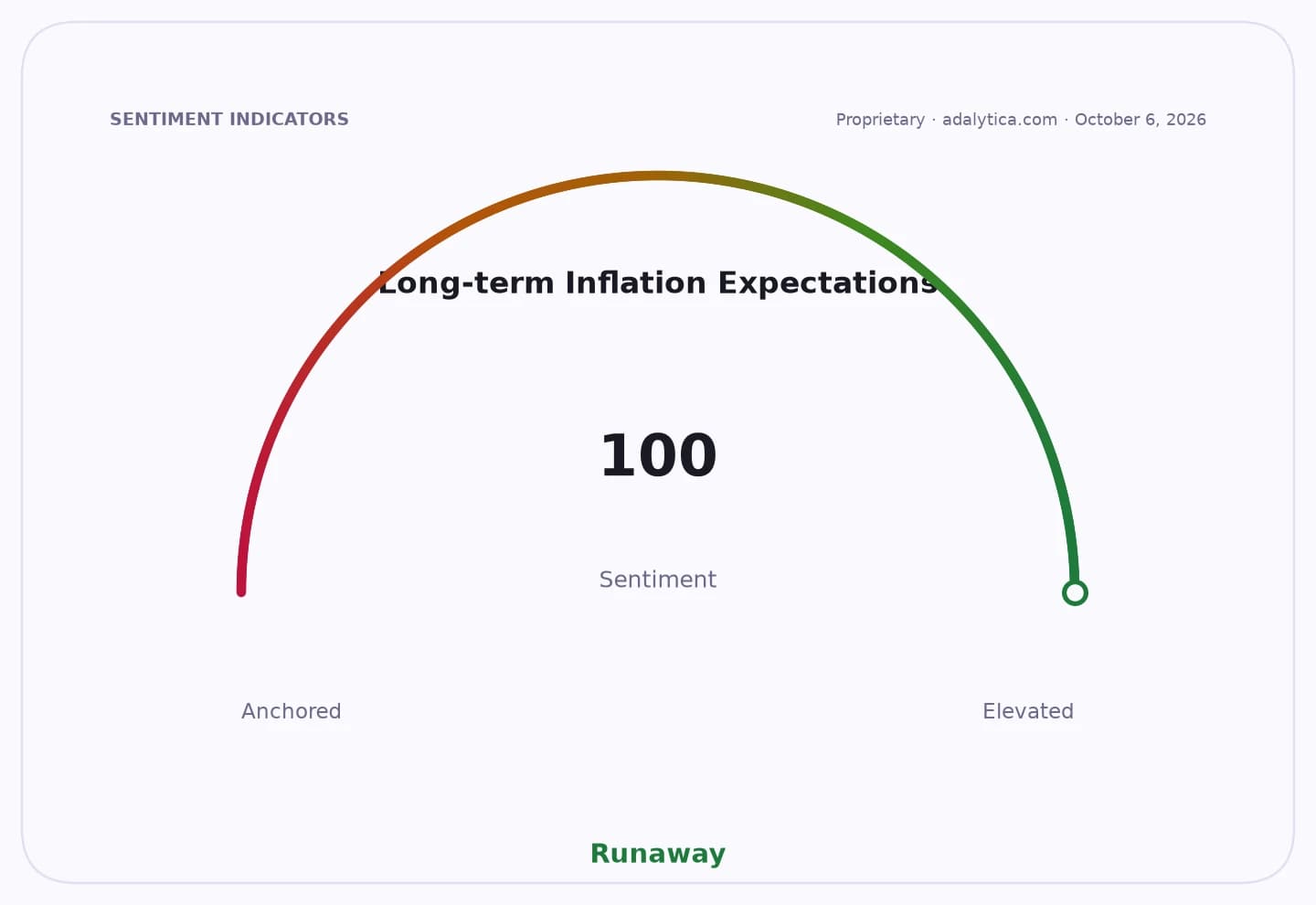
Sentiment IndicatorsⓘProprietary · adalytica.com · October 7, 2026
This is a snapshot — live sentiment, awareness and momentum for 130+ markets update continuously in the dashboard.Open AlphaPulse
The latest reading from the transport cost index, compiled by Argentina’s Fadeeac and audited by the University of Buenos Aires, showed a 2.55% rise in September alone, faster than the 1.7% to 2.4% monthly increases seen in the prior few months. Fuel remains the key culprit: it rose 2.87% in September and has climbed 38% so far this year. That is especially important because fuel is the biggest single cost line for most carriers.
Other pressures also kept the index hot. General expenses rose 5.05% and tolls 5% in September, while tires advanced 3.08%. Labor costs increased 2.49% after the first installment of the new collective bargaining agreement took effect. Financing costs were also up 2.59%, a reminder that high rates continue to bite across the real economy.
For investors, the story is bigger than one industry. Persistent transport inflation is another sign that Argentina’s disinflation process remains uneven and that input costs can stay sticky even when activity is soft. That creates headaches for companies with heavy domestic distribution networks, from consumer staples and retail to industrials and agriculture-related businesses. It also helps explain why road freight operators are pushing for tariff adjustments: without them, profitability erodes quickly.
There is some short-term relief from the government’s decision to keep deferring the full fuel tax pass-through, but that only postpones the pain rather than removing it. With the economy showing clear splits between stronger sectors like agriculture, energy and mining and weaker ones such as mass consumption, industry and public investment, freight demand may not be strong enough to offset the cost shock for long.
For long-term investors, the message is simple: transportation costs remain a live inflation channel in Argentina, and until fuel pricing, road quality and operating expenses stabilize, logistics-sensitive businesses are likely to face continued margin pressure. Worth watching closely.
| Entity | Gains | Losses |
|---|---|---|
| Freight operators | ▲Higher tariff case | ▼Margin compression |
| Shippers and retailers | ▲Better supply certainty if resolved | ▼Higher logistics bills |
| Fuel suppliers | ▲Stronger diesel demand | ▼Tax deferrals limit pass-through |
| Argentine consumers | ▲None | ▼Higher goods prices |