TRIPP, the proposed transit route through Armenia’s south, is emerging as more than an infrastructure project: it is becoming a test of whether the South Caucasus can shift away from a Russian-centered security order without provoking a sharper regional confrontation.
Armenia TRIPP Corridor and South Caucasus Security
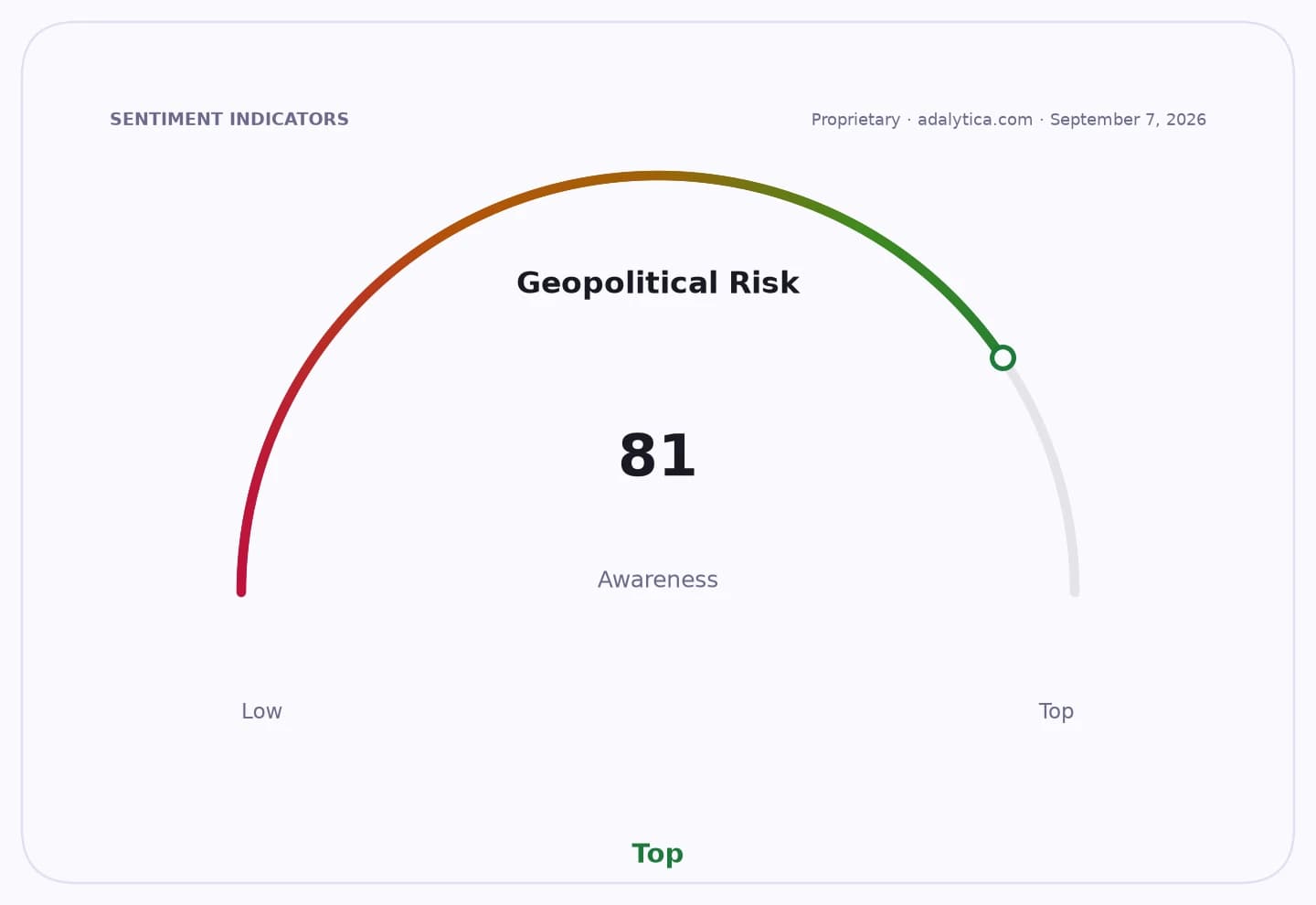
The immediate significance is geopolitical. Russian Security Council deputy secretary Alexei Shevtsov’s warning that the project could allow the U.S. to deploy troops and intelligence infrastructure near Iran’s border suggests Moscow views TRIPP as a strategic encroachment, not a commercial corridor. That matters because it signals Russia is hardening its position just as Armenia tries to present the project as a non-security venture.
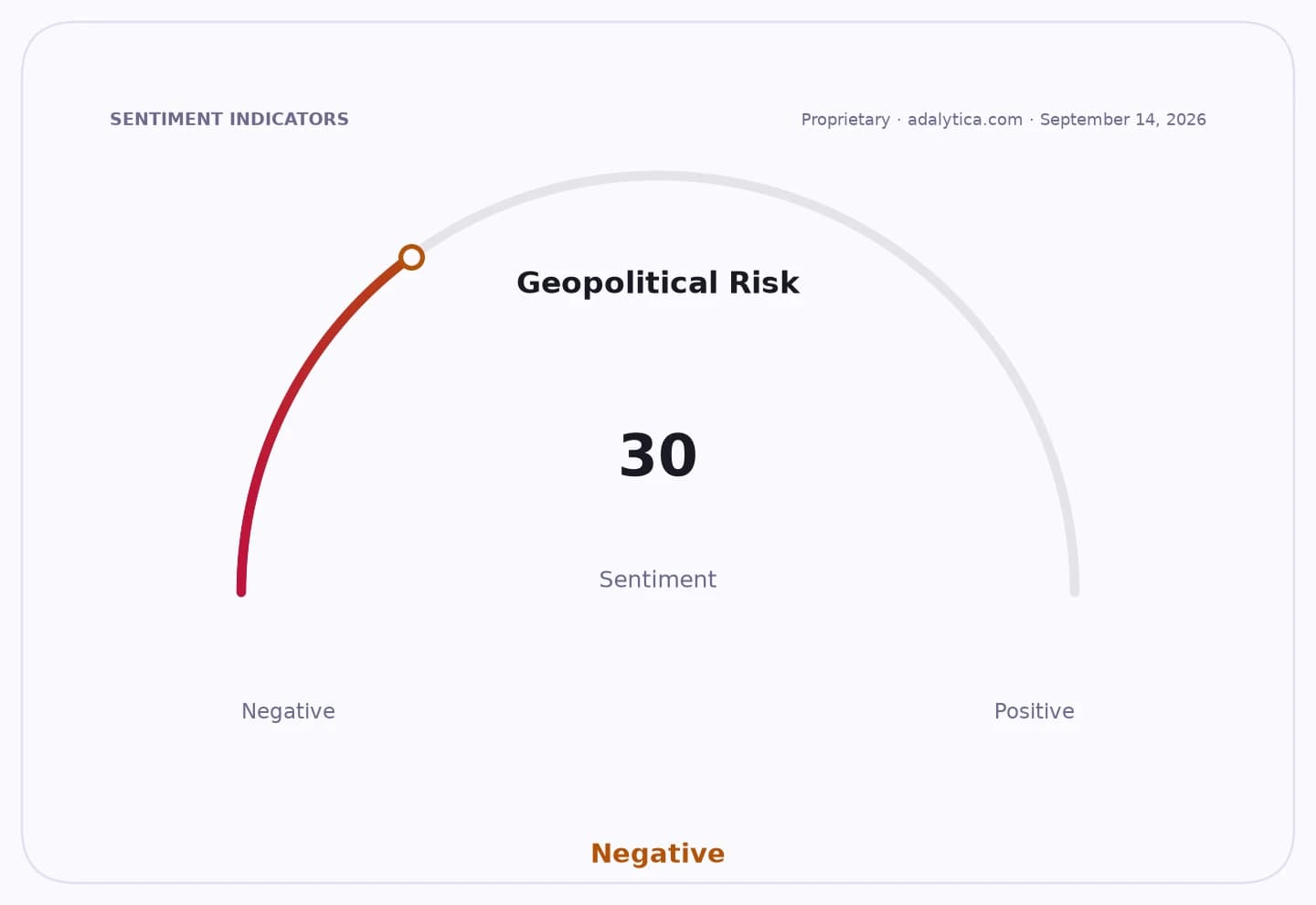
Sentiment IndicatorsⓘProprietary · adalytica.com · September 7, 2026
This is a snapshot — live sentiment, awareness and momentum for 130+ markets update continuously in the dashboard.Open AlphaPulse
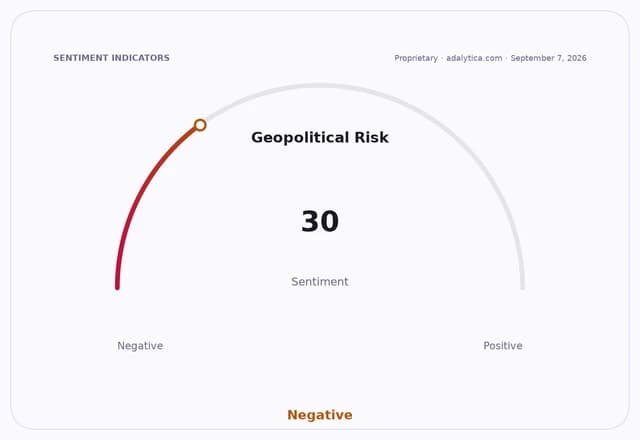
The project, known as the “Trump route,” is designed to operate for at least 49 years and is expected to break ground in spring 2027, with construction of the 43-kilometer road and associated infrastructure likely taking at least 1.5 years, according to Armenian political scientist Benjamin Poghosyan. In his reading, the 2025 Washington declaration effectively pushed Russia out of the communications-unblocking process that had been envisioned under the November 2020 ceasefire framework, replacing Russian involvement with an American one.
That shift matters economically because transport links in the South Caucasus are not just local roads; they shape trade routes, customs power, and the strategic value of the Armenia-Azerbaijan-Turkey corridor. If TRIPP advances with U.S. backing, it could redraw who controls regional connectivity, which in turn affects leverage over energy transit, logistics, and investment flows across a region long constrained by conflict risk.
Geopolitical Risk vs TURadalytica.com
Explore this data interactively — full history, time series and cross-market comparisons.Open AlphaPulse
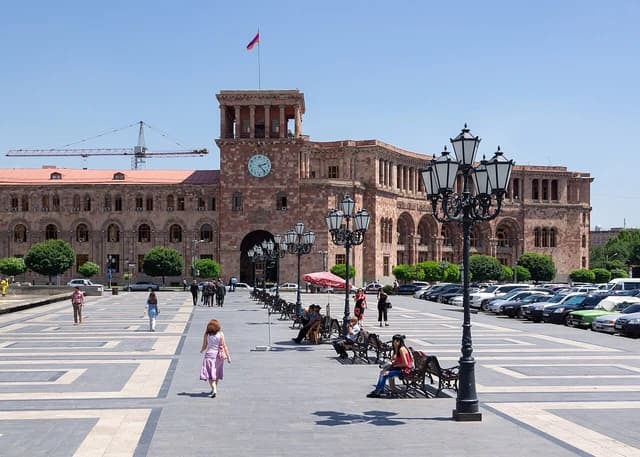
For investors, the story is less about immediate revenue than about risk pricing. A corridor that runs near the Armenian-Iranian border and is seen in Moscow and Tehran as potentially useful to Washington raises the probability of diplomatic pushback, delays, or retaliatory moves. That kind of uncertainty tends to keep capital cautious in the South Caucasus even when the political rhetoric points toward peace.
Poghosyan said Armenia insists TRIPP is not a security project and would not host American military assets, but he also noted that neither Russia nor Iran appears to trust those assurances. He argued that the outcome will depend on a wide range of hard-to-forecast factors, including the war in Ukraine, Russia-U.S. ties, Iran-U.S. relations and developments in the Middle East.
The broader narrative is that the South Caucasus is being pulled between two competing frames: one presented by Baku and regional optimists as a zone of peace and economic integration, and another in Moscow and Tehran as a sensitive frontier where Western presence could upset a long-standing balance. How that tension is managed will determine whether TRIPP becomes a trade artery or another fault line.
| Entity | Gains | Losses |
|---|---|---|
| Armenia | ▲Connectivity leverage | ▼Security ambiguity |
| United States | ▲Regional influence | ▼Trust deficit with Russia/Iran |
| Russia | ▲None if sidelined | ▼Transit control |
| Iran | ▲Stable border outcome if project is constrained | ▼U.S. proximity near border |