ARMOUR Residential REIT’s preferred stock has been pushed back into strong-buy territory as a quick jump in U.S. Treasury yields lifted the income investors demand from mortgage REIT securities.
ARMOUR Residential REIT Preferred Shares Fall on Yields
The move matters because preferred shares from agency mortgage REITs trade less like traditional equity and more like rate-sensitive income instruments. When the 10-year Treasury climbed from 4.88% to above 5.10% in about a week, investors re-priced ARMOUR’s ARR-C issue lower, wiping out roughly a year of dividends from the share price even though the $1.75 annual payout stayed unchanged.
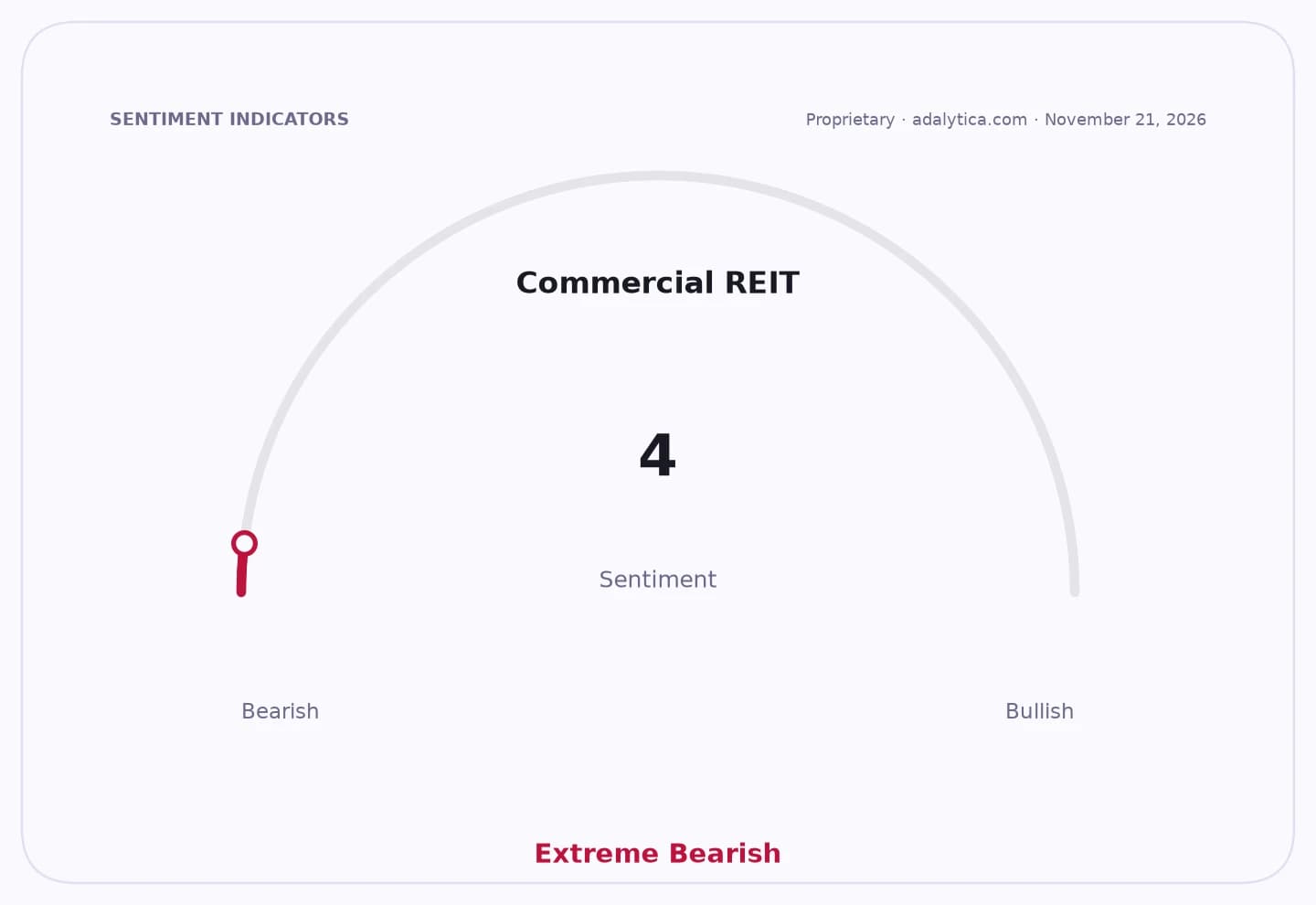
Sentiment Indicators
ARR-C recently traded around $17.12, just below the REIT Forum’s strong-buy threshold of $17.13 and well under its broader buy range of $18.67. That puts the stripped yield at 10.24%, with the issue carrying a risk rating of 2 on a 1-to-5 scale, according to the publication’s framework.
For investors, the attraction is simple: a monthly dividend stream and a wide cushion above the preferred layer. ARMOUR’s common equity to preferred liquidation ratio stands at 11.91, giving preferred holders a sizable buffer before any losses would hit their claim in a worst-case scenario.
The downside is that ARR-C is fixed-rate, so it remains exposed to moves in longer-term rates. If Treasury yields keep rising, new buyers can demand more income for the same security; if rates fall, the preferred could recover quickly while continuing to pay the same dividend.
That rate sensitivity is now front and center across the mortgage REIT complex. AGNC Investment and Annaly Capital, the sector’s bigger peers, have also seen their shares pressured, with their common stocks sitting below recent technical levels and showing weak relative performance as financing costs, spread risk and Treasury volatility keep investors cautious.
ARMOUR’s own stock has been under pressure too, trading at $10.81 on Nov. 20 versus a 50-day moving average of $12.77 and a 200-day average of $14.75. The weak tape underscores how quickly sentiment can turn against leveraged real-estate income names when bond yields move higher.
For income investors, the question now is whether the latest pullback is enough compensation for the rate risk. The next catalyst is whether Treasury yields stabilize or climb further, which will likely decide if ARR-C stays in the strong-buy zone or gets repriced again.
| Entity | Gains | Losses |
|---|---|---|
| Income investors | ▲10.24% stripped yield | ▼Price volatility |
| ARMOUR preferred holders | ▲Larger yield cushion | ▼Treasury yield spikes |
| Treasury buyers | ▲Higher income returns | ▼Mortgage REIT valuations |
| ARMOUR common stockholders | ▲Potential future recovery | ▼Weak price momentum |