Asian currencies mostly weakened this week as a stronger US dollar and rising Treasury yields put fresh pressure on the region’s foreign exchange markets, with the Japanese yen and Chinese yuan among the biggest losers while the Indonesian rupiah managed a modest gain. The move matters because it raises the cost of imported goods, tightens financial conditions across Asia and can force central banks to defend their currencies just as the Federal Reserve looks set to keep policy restrictive.
Asian currencies weaken as dollar rises on jobs data

The dollar index rose 0.4% for the week to 102.291, then jumped 0.73% on Friday in its biggest daily gain in nearly five months after stronger-than-expected US payrolls revived bets on another Fed rate hike next month. Nonfarm payrolls increased by 165,000, well above the 65,000 expected by economists polled by Reuters, while unemployment slipped to 4.1%, underscoring a US labor market that remains resilient enough to support higher-for-longer rates.
Sentiment Indicators
That stronger dollar left five of the nine Asian currencies tracked weaker on the week. Taiwan’s dollar fell 0.61% to TWD32.803 per dollar, the yen dropped 0.6% to JPY158.47 and the yuan slid 0.33%, while the Singapore dollar and Malaysian ringgit also eased. The rupiah was one of the few regional gainers, up 0.22% at Rp18,080 per dollar, and the Korean won outperformed with a 2.24% rise.
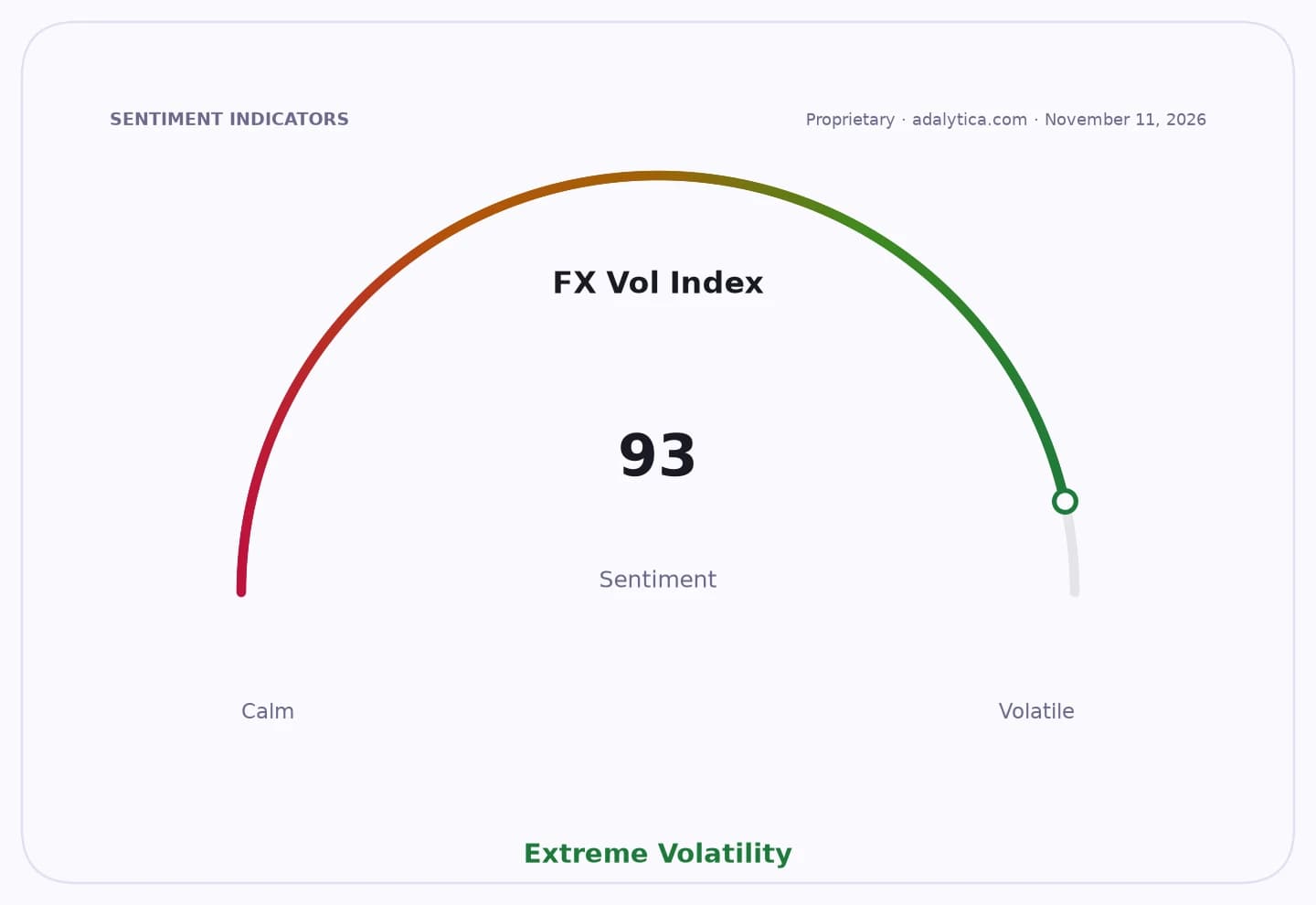
For investors, the message is that the dollar’s grip on Asia remains firm even as risk appetite swings between safe-haven demand and expectations for US rate cuts. The Reuters foreign-exchange gauge for the dollar showed extreme greed in the latest Adalytica snapshot, while the FX volatility signal pointed to extreme fear, a combination that suggests traders are still bracing for sharp moves rather than a clean trend reversal.
US rates added to the pressure, with the 10-year Treasury yield rising 1.6 basis points to 4.85% and the 2-year climbing 4.1 basis points to 4.52% after the jobs data. Several Fed officials reinforced the hawkish tone on Friday, saying inflation remains too high and that rates may still need to rise further, even as US stocks steadied later in the session after a bruising selloff in technology shares.
The broader narrative is that Asia’s currencies are being pulled in opposite directions by a still-powerful dollar, uneven domestic conditions and shifting global risk sentiment. That leaves the yen and yuan vulnerable if US data keep surprising to the upside, while the rupiah and other regional currencies may only find relief if the Fed’s tightening path cools and volatility in global equities eases.
| Entity | Gains | Losses |
|---|---|---|
| US dollar | ▲Higher yields, safe-haven demand | ▼Asian FX buyers |
| Japanese yen | ▲— | ▼Importers, yen bulls |
| Chinese yuan | ▲— | ▼Chinese exporters hedging costs |
| Indonesian rupiah | ▲Mild weekly relief | ▼Dollar borrowers in Indonesia |
| Fed hawks | ▲Stronger case for tightening | ▼Dovish rate-cut bets |