The rupiah weakened to IDR 18,089 per dollar as a broad bid for the U.S. currency swept through Asian foreign exchange markets, underscoring how quickly global risk sentiment can spill into emerging-market currencies.
Rupiah Falls to IDR 18,089 as Dollar Strengthens
That matters because a weaker rupiah raises the local cost of imports, can complicate inflation management and increases pressure on Bank Indonesia if depreciation persists. For investors, it also raises the currency risk on Indonesian assets, from government bonds to equities with dollar-linked liabilities or imported inputs.
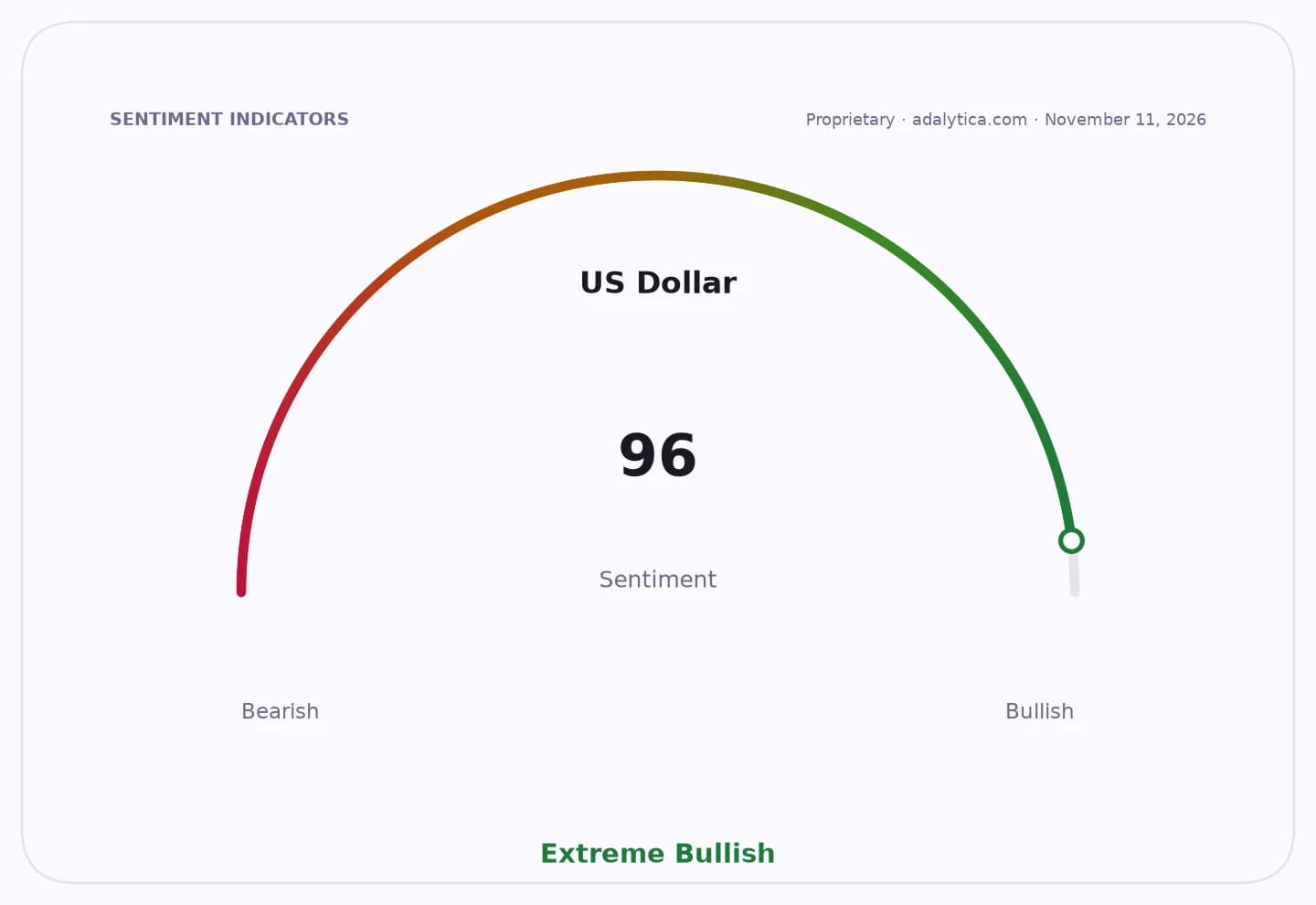
Sentiment Indicators
The move comes as the U.S. dollar stays firmly supported across the board. The U.S. Dollar ETF, UUP, closed at 29.15 on Nov. 10, above its 50-day and 200-day moving averages, while its relative strength index sat at 60.2, reflecting a still-strong trend rather than a short-lived bounce. The Japanese yen also remained under pressure, with FXY closing at 57.72 and below both its 50-day and 200-day averages, while the Australian dollar proxy FXA fell to 68.01, near its 200-day moving average and with a weaker RSI reading of 34.2.
Adalytica’s US Dollar Trade Signals show extreme greed in the greenback, with sentiment at 92, up 7 points in a day and 79 points over a week, while FX volatility signals also point to elevated demand for dollar protection. That combination suggests traders are favoring liquidity and safety over higher-yielding Asian currencies, even before any fresh policy move by the Federal Reserve or Bank Indonesia.

The broader narrative is one of dollar strength overpowering local fundamentals. When the dollar advances in this kind of environment, currencies across Asia tend to absorb the pressure unevenly, with those carrying external financing needs or trade deficits often hit hardest.
For now, investors will be watching whether the rupiah’s slide triggers official intervention, and whether further dollar strength forces a reprice across Asian FX, import-sensitive stocks and local bond markets.
| Entity | Gains | Losses |
|---|---|---|
| U.S. dollar | ▲Safe-haven demand | ▼None |
| Indonesian importers | ▲None | ▼Higher costs |
| Asian exporters | ▲More competitive pricing | ▼Currency volatility |
| Bank Indonesia | ▲None | ▼Pressure to defend rupiah |