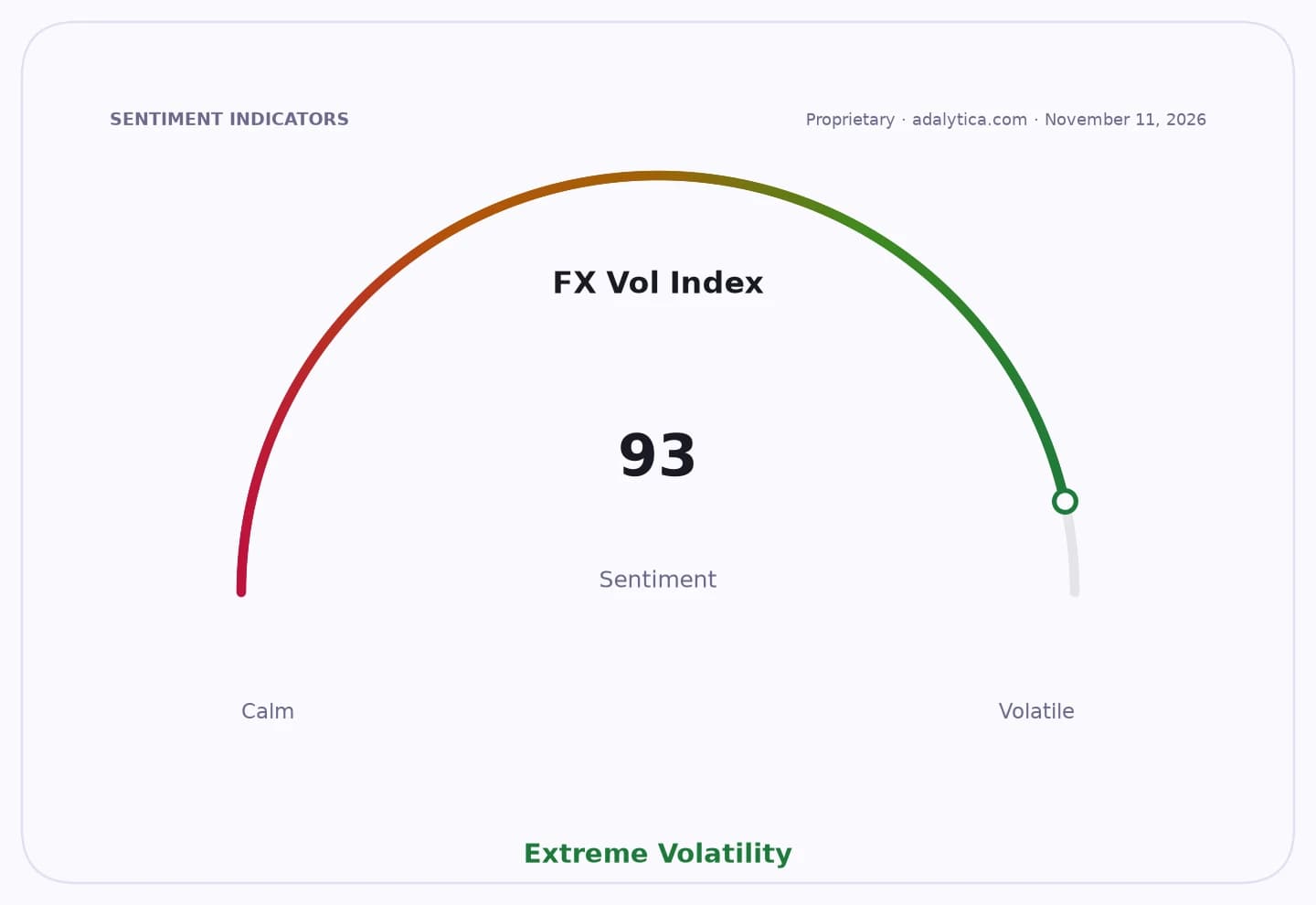
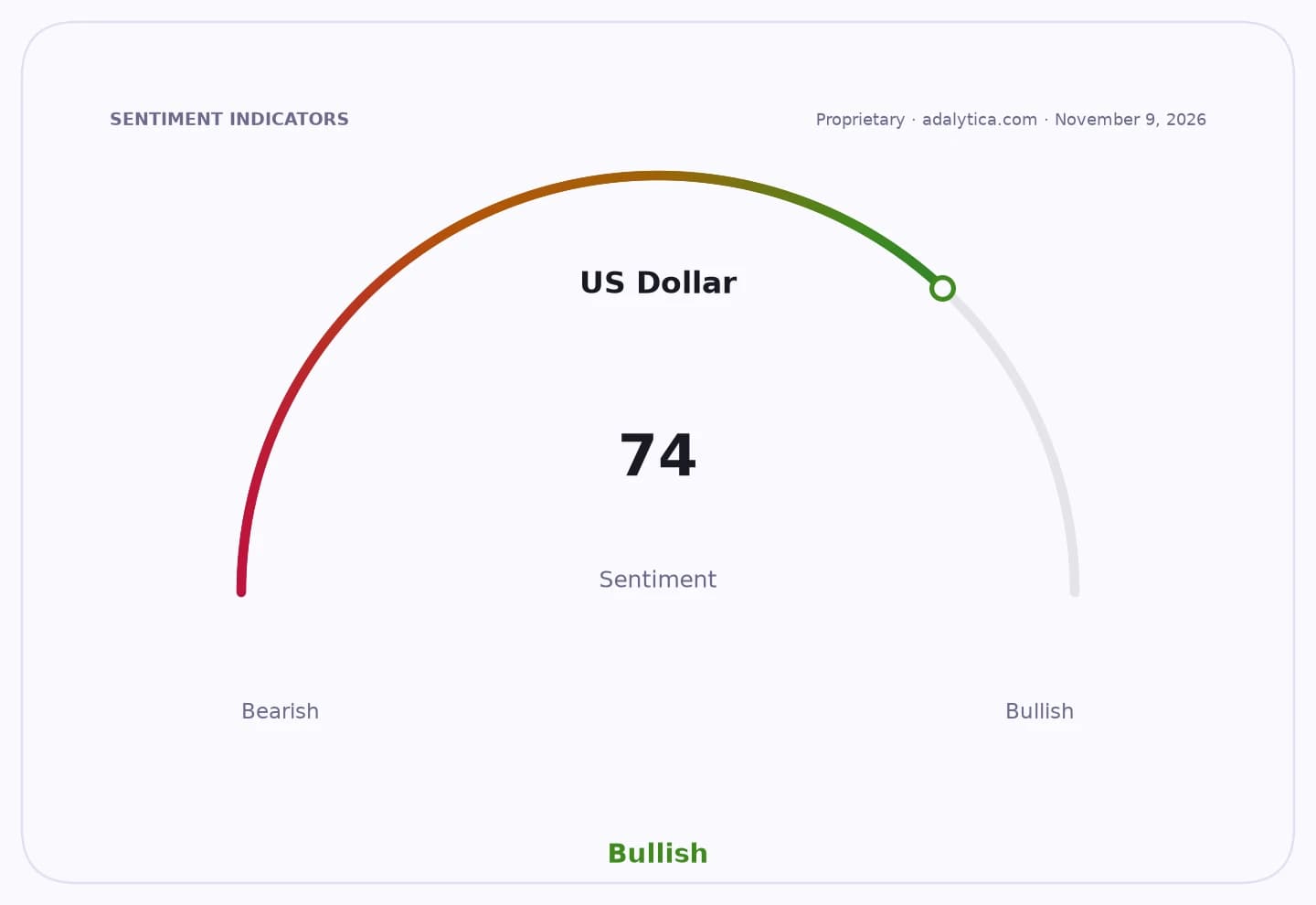
The rupiah ended Friday weaker at Rp18,089 per US dollar, a small move on the day but a sign that Indonesia’s currency is still under pressure from rising energy costs, persistent foreign outflows and a market that is demanding a bigger risk premium.
Rupiah Falls to Rp18,089 as Pressure Builds
US Dollar
That matters because this is no longer just a trading-range story. A weaker rupiah feeds directly into import costs, inflation expectations and the government’s fiscal bill at a time when higher oil prices threaten to widen subsidy and compensation spending. For investors, the issue is whether Indonesia can keep financing growth without letting currency weakness become a broader macro drag.
Sentiment Indicators
Market watchers are already calling for more volatility ahead. One local strategist projected the rupiah to trade between Rp18,080 and Rp18,130 on Monday, with a wider weekly range of Rp17,920 to Rp18,220 and a November target as weak as Rp18,500. Those levels would keep pressure on Bank Indonesia and policymakers if dollar demand stays firm and foreign selling continues.
The core problem is that the currency is being pulled in opposite directions. Indonesia still has decent growth momentum, but that has not been enough to restore confidence fully as investors focus on fiscal discipline, energy import exposure and the possibility that government spending rises faster than expected. When the market starts to question the consistency of economic policy, the exchange rate usually absorbs the first hit.
External factors are adding to the strain. Higher oil prices are lifting concern about energy supply and import bills across emerging markets, while geopolitical uncertainty in the Middle East keeps crude supported. A change in the U.S. political balance has not removed that risk, and traders know that any fresh escalation could keep the dollar bid and emerging-market currencies on the defensive.
For equity and bond investors, the message is straightforward: currency weakness is now a macro variable to watch, not a background noise. If the rupiah keeps sliding, it could pressure domestic consumer costs, complicate the central bank’s policy room and weigh on sectors exposed to imported inputs. Exporters and commodity-linked names are better insulated, while importers, consumer plays and rate-sensitive assets face more downside if the exchange rate keeps drifting lower.
The near-term setup suggests the market will keep testing Indonesia’s resilience. Unless oil eases, foreign flows stabilize and policymakers reassure investors on fiscal discipline, the rupiah’s path is likely to remain steep — and that makes currency hedging, selective export exposure and a defensive tilt look increasingly attractive.
| Entity | Gains | Losses |
|---|---|---|
| Exporters | ▲Stronger rupiah competitiveness | ▼Imported input costs stay manageable |
| Importers | ▲None | ▼Higher dollar-denominated costs |
| Indonesian policymakers | ▲Chance to tighten fiscal messaging | ▼Bigger subsidy and inflation pressure |
| Dollar bulls | ▲Firmer safe-haven demand | ▼None |