Asian shares slipped as a jump in oil prices and elevated U.S. bond yields kept pressure on risk assets, raising the cost of capital and stoking worries that inflation will stay sticky longer than investors had hoped.
Asian ETFs Slip on Oil and U.S. Yield Pressure

The move matters because higher energy prices can feed through to transport, manufacturing and import bills across Asia, while firmer U.S. yields pull capital toward dollar assets and tighten financial conditions globally. That combination tends to hit export-heavy markets, commodity importers and rate-sensitive sectors at the same time.
Sentiment IndicatorsⓘProprietary · adalytica.com · October 8, 2026
This is a snapshot — live sentiment, awareness and momentum for 130+ markets update continuously in the dashboard.Open AlphaPulse

Japan-focused EWJ fell to 98.32 from 99.32 a day earlier, while the broader Asia ex-Japan AAXJ dropped to 116.83 from 118.43 and emerging-markets ETF EEM slipped to 67.37 from 68.27. The declines came even as all three funds remained above their 50-day moving averages, suggesting the pullback is happening within a still-intact uptrend rather than from outright breakdown levels.
The pressure point is the bond market. The U.S. 10-year Treasury yield was at 5.27% on Oct. 6 and is forecast at 5.287% for Oct. 7, while the 2-year/10-year spread widened to 0.51 percentage point, reflecting a curve that remains relatively steep but with borrowing costs still near cycle highs. For Asian equities, that keeps U.S. fixed income competitive against stocks and raises the hurdle for higher valuations.
DGS10 vs DCOILWTICO — macro contextadalytica.com
Explore this data interactively — full history, time series and cross-market comparisons.Open AlphaPulse

Oil added to the drag. U.S. crude stood at $96.24 on Oct. 6, after touching $97.89 on Oct. 2, keeping pressure on the region’s import bills and threatening margins for airlines, industrials and other fuel-sensitive businesses. For markets already watching the Federal Reserve path and the dollar, higher oil also complicates the inflation outlook and reduces room for central banks in Asia to ease policy.
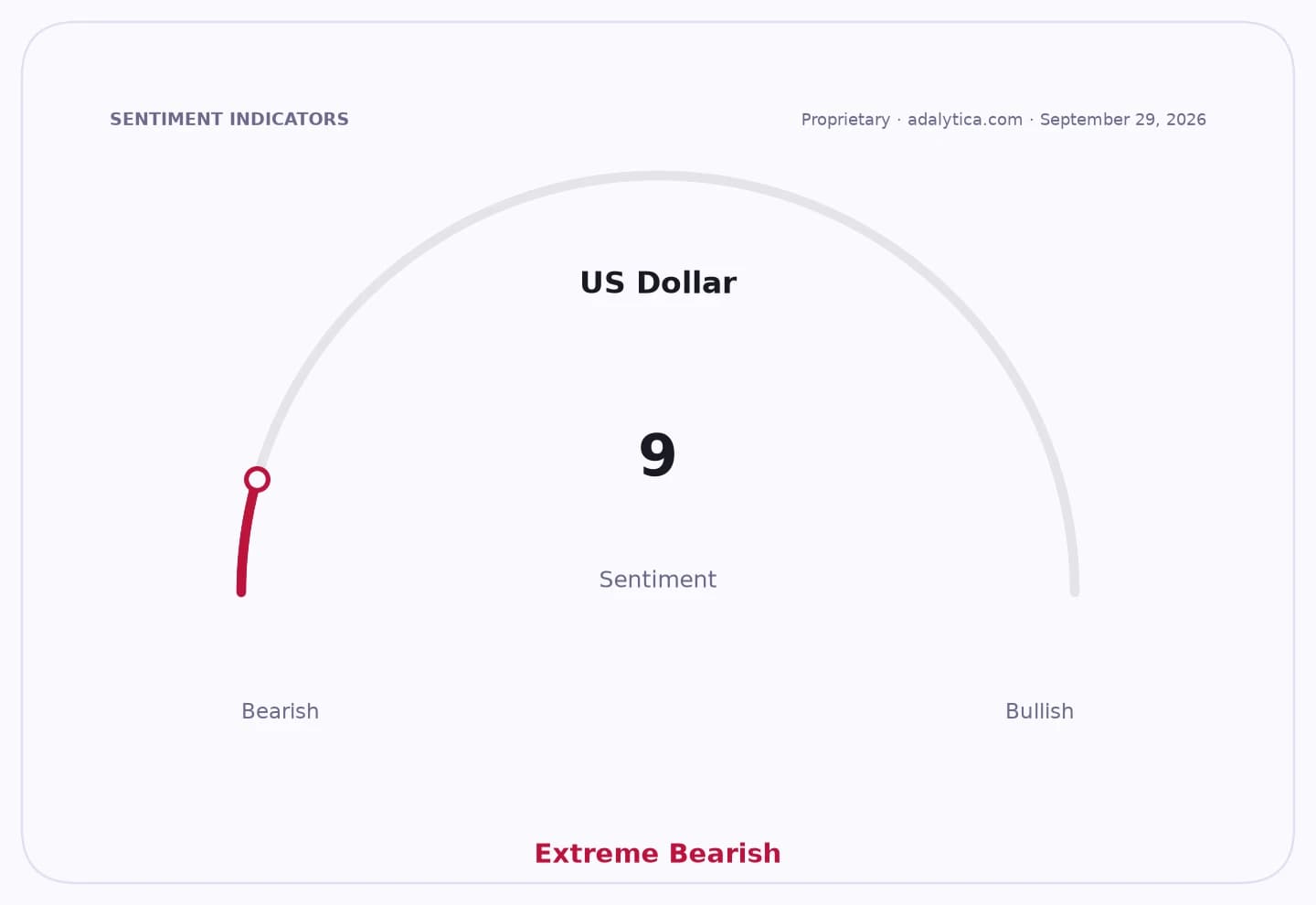
Adalytica’s U.S. dollar trade signals showed sentiment at 57, neutral, with awareness at 79, or greed, underscoring how persistent dollar demand can still tighten global liquidity. That backdrop is usually unfavorable for Asian risk assets, particularly when U.S. yields are high and commodity prices are firming.
The near-term focus will be whether oil stabilizes and whether Treasury yields back off from the 5.3% area. Until then, investors are likely to favor defensives, exporters with pricing power and balance-sheet strength, while the more rate-sensitive corners of Asian equity markets remain vulnerable.
| Entity | Gains | Losses |
|---|---|---|
| U.S. oil producers | ▲Higher crude prices | ▼Fuel-heavy consumers |
| Treasury bondholders | ▲Higher yield income | ▼Equity valuations |
| Asian exporters | ▲Currency support from stronger dollar | ▼Importers and airlines |
| EWJ, AAXJ, EEM bulls | ▲Long-term trend intact | ▼Near-term momentum traders |