ASML’s next growth cycle is taking shape around when Intel, Samsung and Taiwan Semiconductor Manufacturing Co. move High-NA EUV from early trials into high-volume production, giving the chip equipment maker a clearer, but still distant, runway for demand.
ASML High-NA EUV demand builds with Intel, Samsung, TSMC
That matters because High-NA EUV is ASML’s most advanced lithography platform and the next major upgrade path for cutting-edge chip manufacturing. Intel has already exposed more than 1 million wafers with High-NA tools, while Samsung is targeting 2028 for high-volume manufacturing and TSMC is aiming for 2030, suggesting the technology is progressing from development into an industry-wide rollout rather than a one-off test.
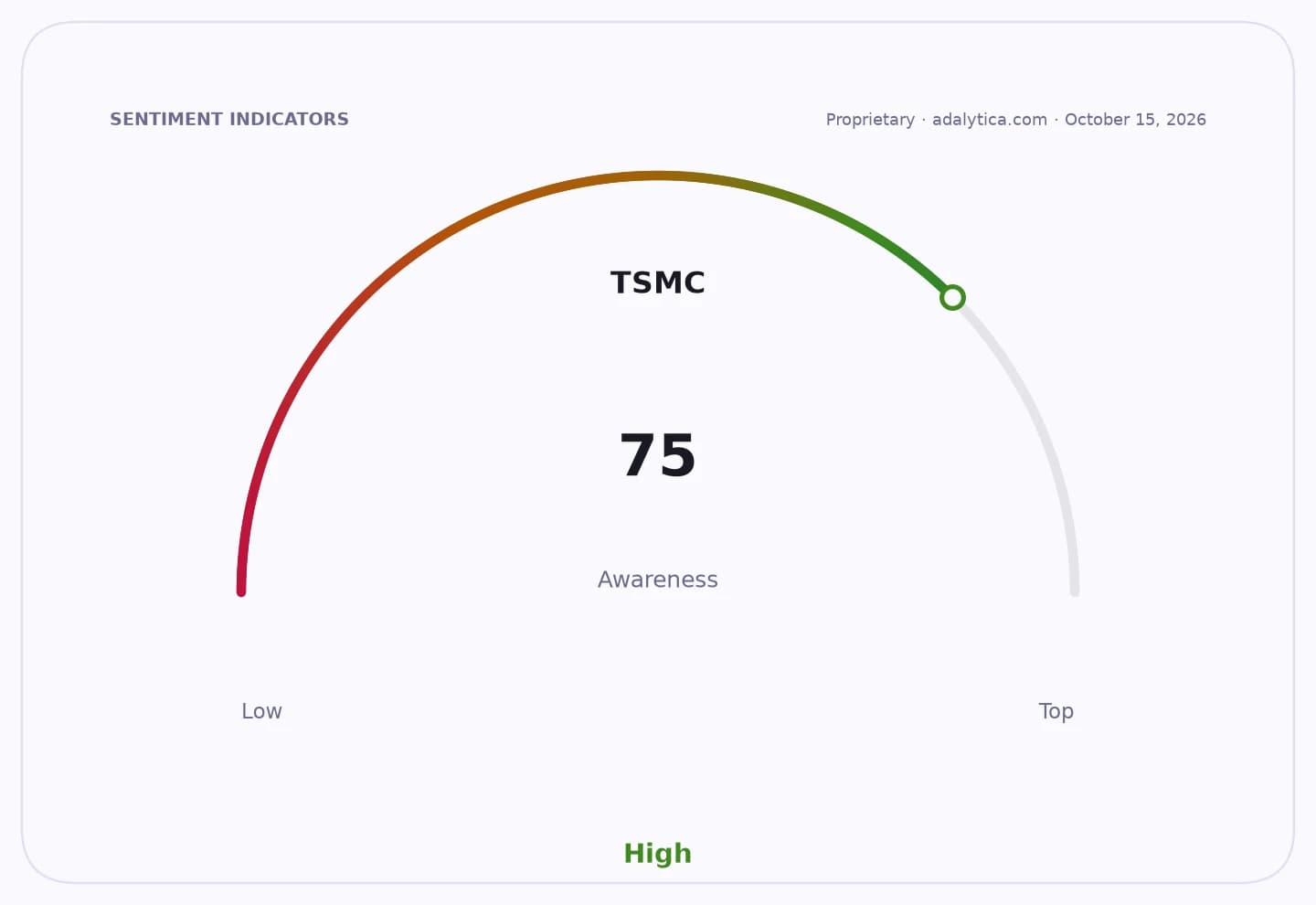
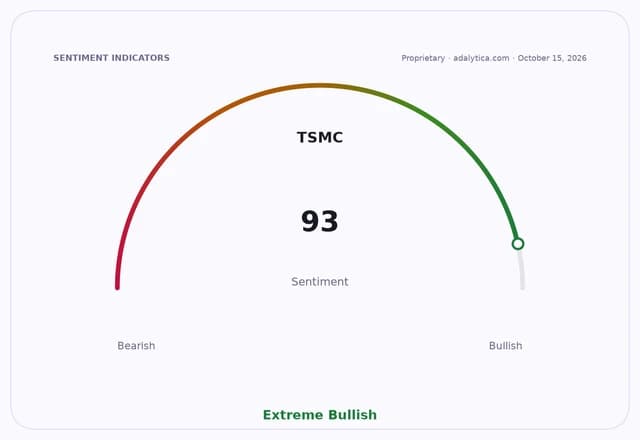
Sentiment IndicatorsⓘProprietary · adalytica.com · October 15, 2026
This is a snapshot — live sentiment, awareness and momentum for 130+ markets update continuously in the dashboard.Open AlphaPulse
ASML Chief Executive Christophe Fouquet said on the company’s third-quarter call that the quarter showed “meaningful momentum” around High-NA EUV, with the technology moving “from development to production.” He said Intel’s performance on layers patterned with High-NA has met or exceeded comparable Low-NA EUV layers, and added that availability across ASML’s existing High-NA fleet was approaching 90%.
For investors, the timing matters more than the milestone itself. ASML’s revenue boost from High-NA will not come all at once, and management says the industry is still in “very initial ramps,” meaning chipmakers will likely need more systems as they validate the technology and deploy it across additional layers over time. That makes the story one of staggered equipment demand rather than an immediate step-up in sales.
The near-term picture is still being driven by ASML’s existing EUV and deep ultraviolet tools, where demand remains tight. The company expects capacity for low-NA EUV and DUV immersion systems to rise 30% in 2027, but now says planned output in both 2027 and 2028 will still fall short of customer demand, forcing it to study further expansion.
TSMC’s longer-range plan also points to another layer of demand beyond the current fleet. ASML said the Taiwanese foundry wants to work with it on larger EUV photomasks, with a 12-inch mask pilot line targeted for 2031 and production in 2033, underscoring how the technology road map stretches well beyond this cycle.
ASML’s stock has reflected both the long-term opportunity and the shorter-term uncertainty. The shares closed at 1,653.77 on Oct. 15, below the 50-day moving average of 1,740.81, while the RSI reading of 39.2 points to subdued momentum after recent volatility. TSMC ended at 422.65, also below its 50-day average, and Intel closed at 95.99 after a sharp pullback from recent highs.
The investor takeaway is that High-NA is no longer just a laboratory story, but the earnings impact will depend on how quickly Intel scales further, whether Samsung hits its 2028 target and whether TSMC keeps to 2030. The next catalyst is likely to come from customer capex plans and ASML’s own guidance on how quickly it can keep adding capacity to meet demand.
| Entity | Gains | Losses |
|---|---|---|
| ASML | ▲Longer-dated High-NA demand | ▼Investors wanting immediate revenue lift |
| Intel | ▲Early mover advantage | ▼Rivals still behind on adoption |
| Samsung | ▲2028 process roadmap | ▼Lagging behind Intel’s lead |
| TSMC | ▲Extended transition window | ▼Short-term equipment buyers seeking faster rollout |