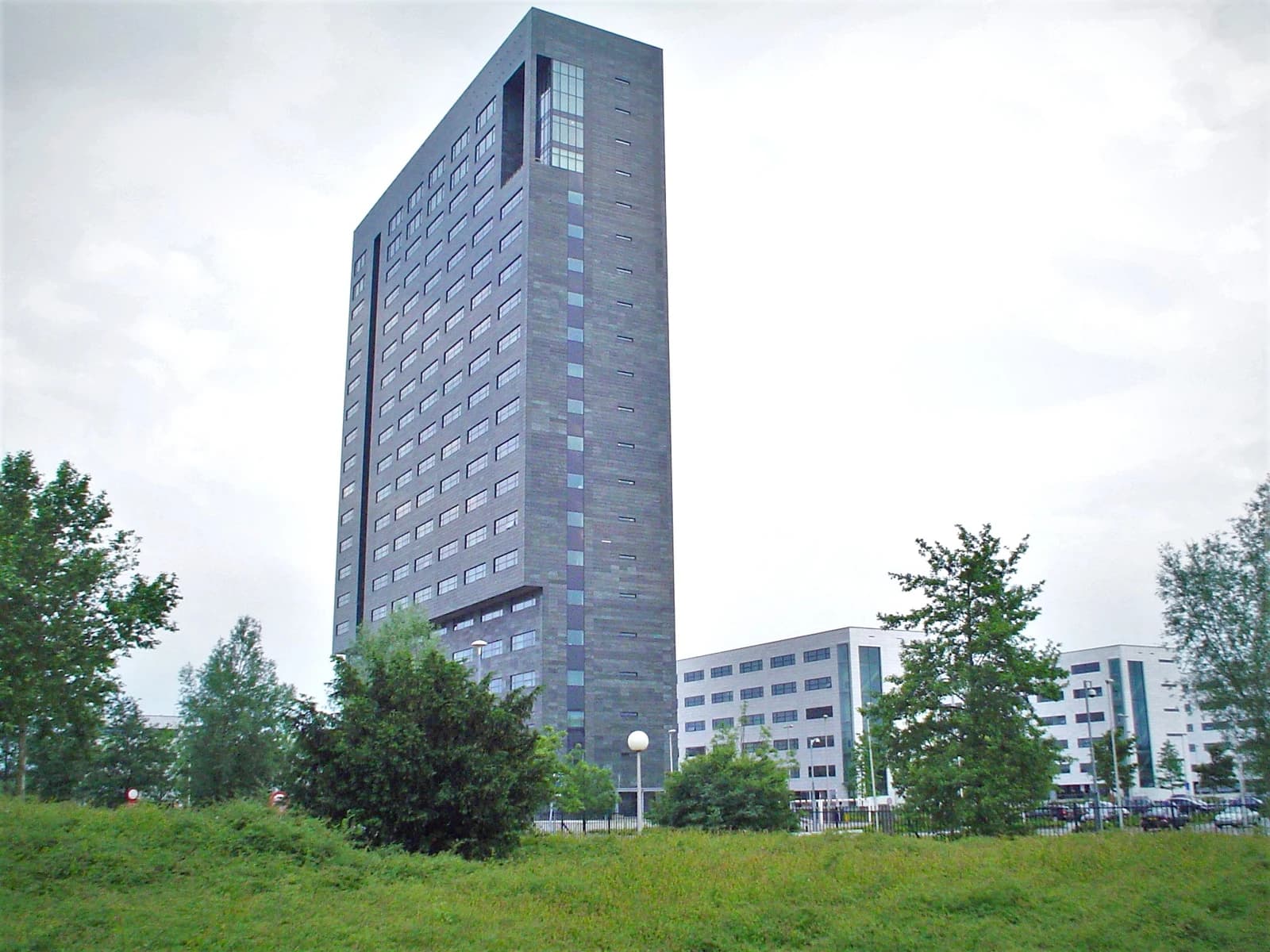
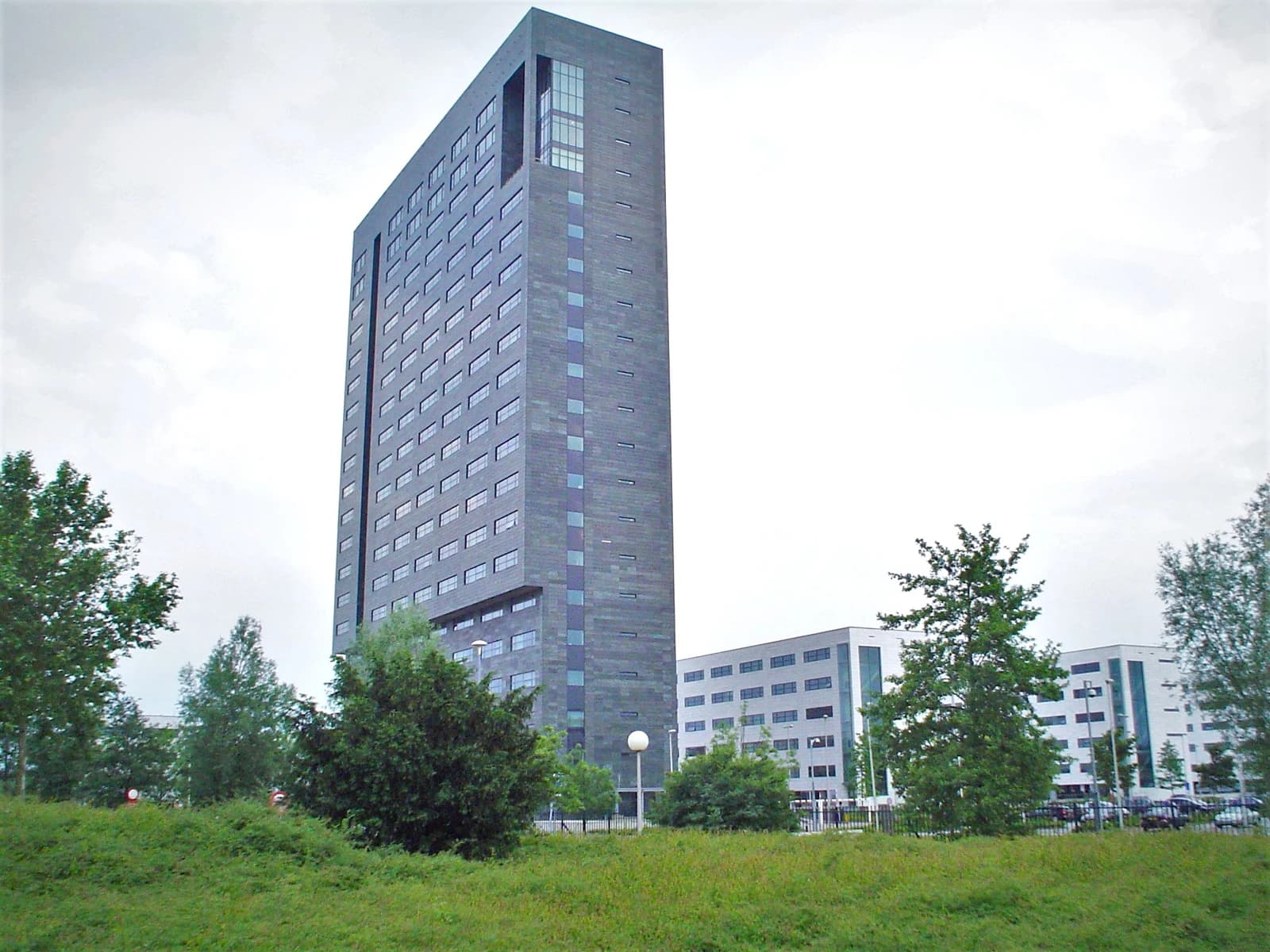
ASML’s latest results reinforce the simplest explanation for why the Dutch company has become one of the most strategically important businesses in global industry: if the world wants more AI chips, it still has to go through Eindhoven.
ASML Raises 2026 Sales and Margin Outlook

The company said July-quarter sales rose to €9.3 billion and lifted its 2026 outlook to €43 billion-€45 billion from €36 billion-€40 billion, with gross margin now seen at 54% to 56%. That is not just a better quarter. It is proof that demand for the most advanced semiconductor manufacturing tools remains powerful enough to support higher revenue and stronger profitability even after years of heavy investment by chipmakers and a volatile macro backdrop.
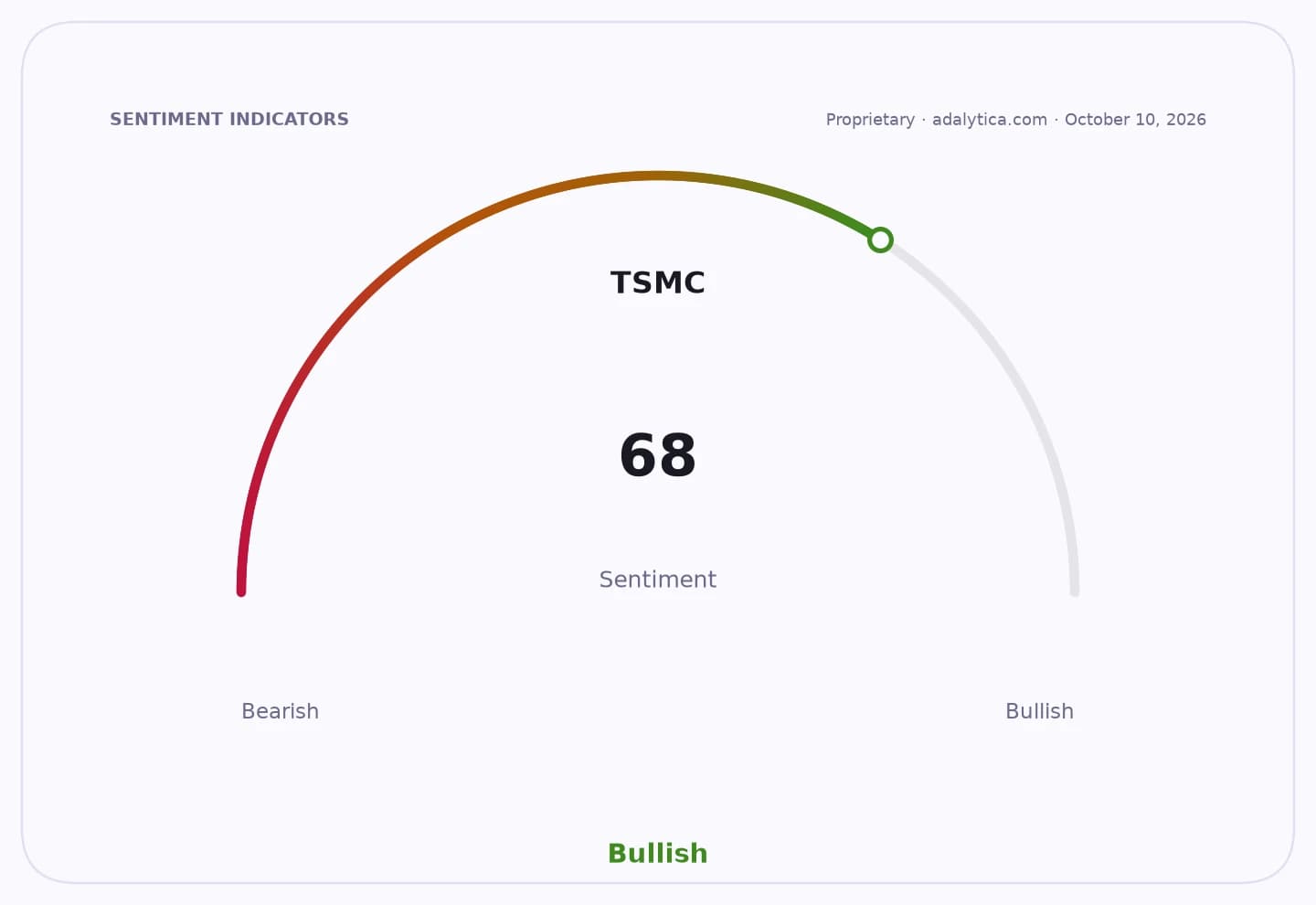
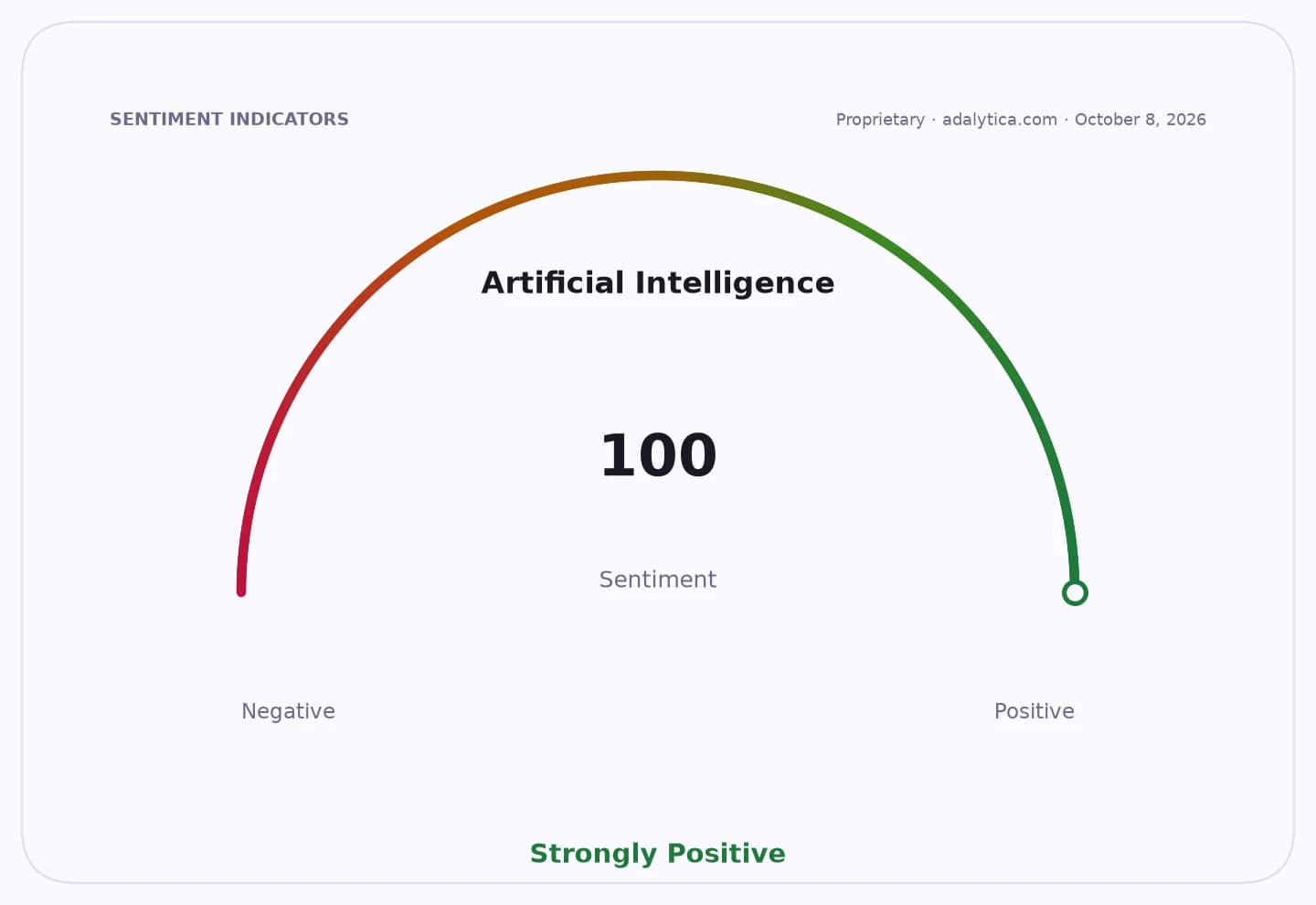
Sentiment IndicatorsⓘProprietary · adalytica.com · October 4, 2026
This is a snapshot — live sentiment, awareness and momentum for 130+ markets update continuously in the dashboard.Open AlphaPulse
For investors, that matters because ASML sits at the narrowest choke point in the semiconductor supply chain. Its extreme ultraviolet and deep ultraviolet lithography systems are essential for producing the most advanced logic and memory chips, including those powering AI accelerators, data centers and high-performance computing. When ASML raises guidance, it usually means customers are still spending on the fabs that will define the next phase of compute capacity.
The market has been trying to decide whether the AI buildout is entering a digestion phase. ASML’s numbers argue the cycle is broader and more durable than that. Revenue at €9.3 billion and net income of €2.9 billion show the company is converting demand into cash at a scale few industrial businesses can match. The stock’s rebound to about €1,867, after a year of sharp swings, reflects that investors are again willing to pay for the scarcity value of the world’s dominant lithography supplier.
That scarcity premium is the heart of the investment case. ASML does not need to win the AI chip race outright; it profits every time Nvidia, Taiwan Semiconductor Manufacturing Co. or another foundry customer expands capacity. Nvidia’s shares have also stayed near record territory, while TSMC has rallied strongly as well, underscoring that the capex cycle is still alive. The difference is that ASML sells the toll road, not the traffic.
There is also a geopolitical layer. The semiconductor supply chain remains one of the world’s most contested strategic assets, and ASML’s technology sits at the center of the U.S.-China tech rivalry. Any acceleration in export controls, onshoring incentives or sovereign chip spending only deepens the company’s relevance, because it remains indispensable to the factories that governments and hyperscalers still need built.
The recent move in ASML shares also shows how quickly the market can miss the scale of this franchise. The stock’s 50-day moving average has been rising, and momentum indicators such as RSI have been stretched, but that is what leadership looks like when a company controls a bottleneck with no real substitute. Investors should expect volatility, not thesis breakage.
Our view is that ASML remains one of the cleanest ways to own the AI infrastructure supercycle without betting on any single chip designer. If the next leg of the buildout comes from more advanced nodes, more packaging capacity and more fabs outside Asia, ASML is still the first call on the trade. The pullbacks are opportunities, not warnings.
| Entity | Gains | Losses |
|---|---|---|
| ASML | ▲Higher guidance, pricing power | ▼Short sellers |
| Nvidia | ▲More AI chip capacity | ▼Fears of supply bottlenecks |
| TSMC | ▲Fab expansion demand | ▼Idle capacity concerns |
| Chip tool rivals | ▲Little immediate gain | ▼Share gains to ASML |