ASML Holding shares fell 6.1% as investors rotated out of semiconductor names on renewed doubts that the AI spending boom will translate quickly into profits.
ASML Shares Fall 6.1% on AI Spending Doubts
The Dutch chip-equipment maker slid to 1,356.20 euros, extending a sharp decline from its recent high above 1,984 euros and leaving the stock well below its 50-day moving average of 1,631.95 euros. The move comes as global markets reassess the pace and payback of heavy AI infrastructure spending, with investors increasingly asking which companies will capture returns and which will only supply the buildout.
Sentiment Indicators
Artificial Intelligence
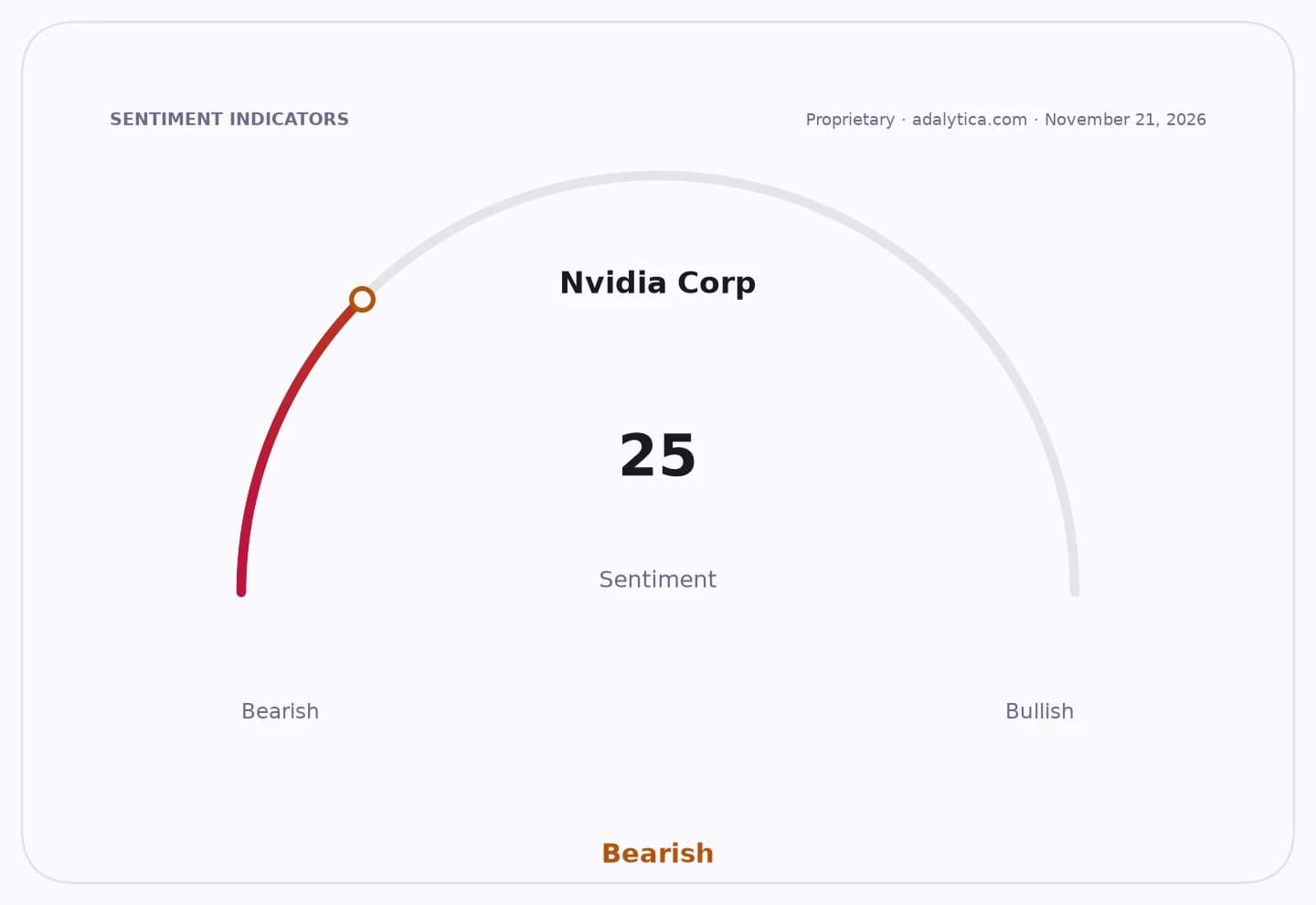
The pressure is not isolated to ASML. Nvidia dropped to $145.98 from $150.96 the previous session, while Taiwan Semiconductor Manufacturing Co. eased to $352.09 from $362.62, underscoring a broader de-risking across the AI supply chain. ASML’s technical backdrop also weakened, with the stock trading under its 200-day moving average of 1,597.94 euros and its relative strength index at 33.9, near oversold territory.
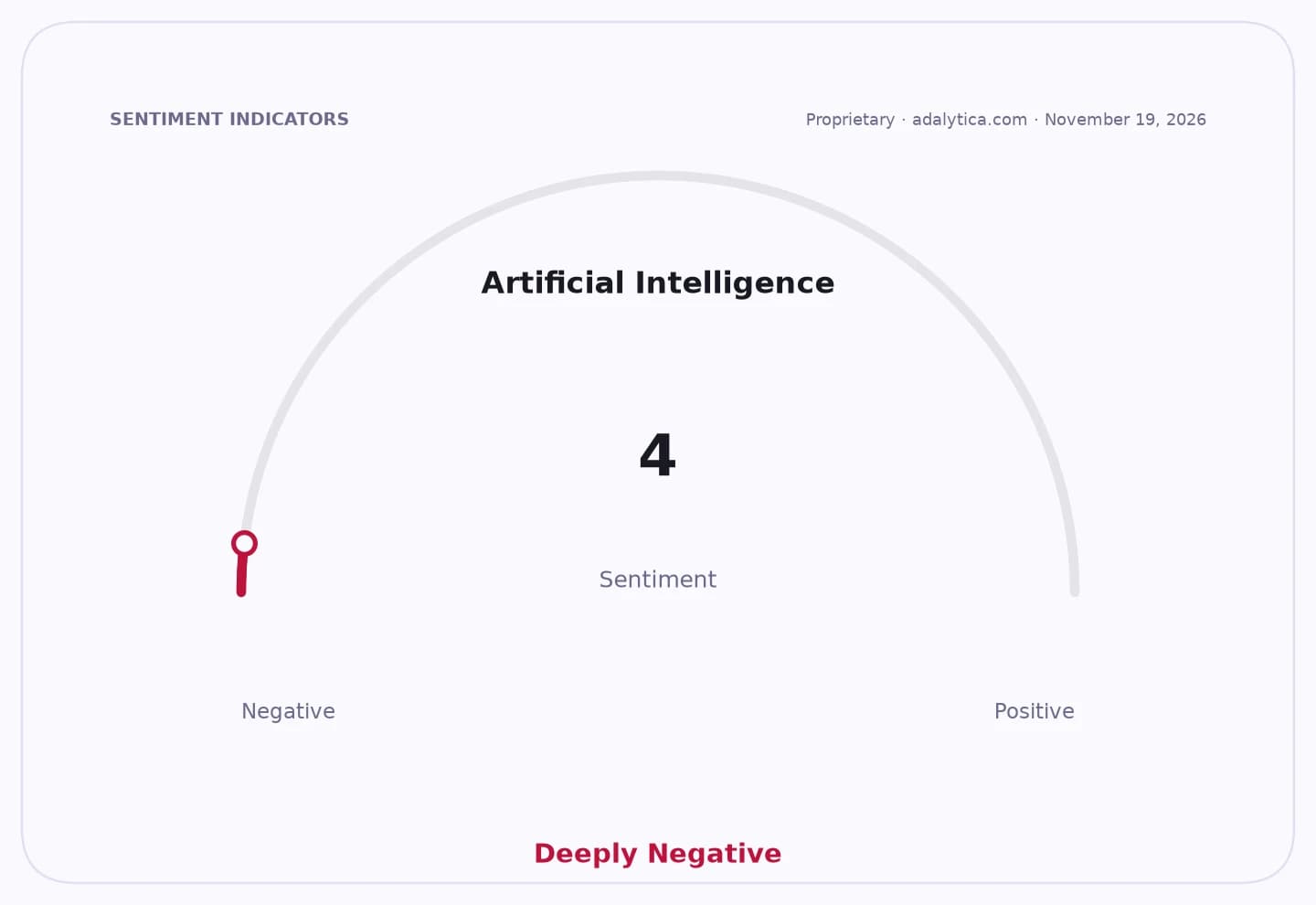
The selloff reflects a market that has been willing to pay for AI growth but is now demanding evidence of monetization. Recent swings in Adalytica’s AI sentiment gauge show the same shift in mood, with the snapshot at 11, labeled extreme fear, after touching extreme greed earlier in the year.
Fundamentally, ASML remains one of the clearest beneficiaries of long-term AI capital spending because its extreme ultraviolet lithography tools are essential to advanced chip production. But the stock is now being treated less like a pure AI winner and more like a proxy for the sector’s ability to convert spending into margins and cash flow.
Investors will be watching upcoming AI demand commentary from chipmakers and cloud companies for signs that the capex cycle is still accelerating or starting to normalize. If profit growth and free cash flow continue to lag spending, the trade could stay under pressure even for suppliers with the strongest technology franchises.
| Entity | Gains | Losses |
|---|---|---|
| AI infrastructure buyers | ▲Build capacity | ▼Near-term free cash flow |
| Chipmakers with AI exposure | ▲Long-term demand | ▼Valuation multiples |
| ASML customers | ▲Advanced tooling access | ▼Margin pressure from capex |
| Skeptical investors | ▲Lower entry prices | ▼Momentum exposure |