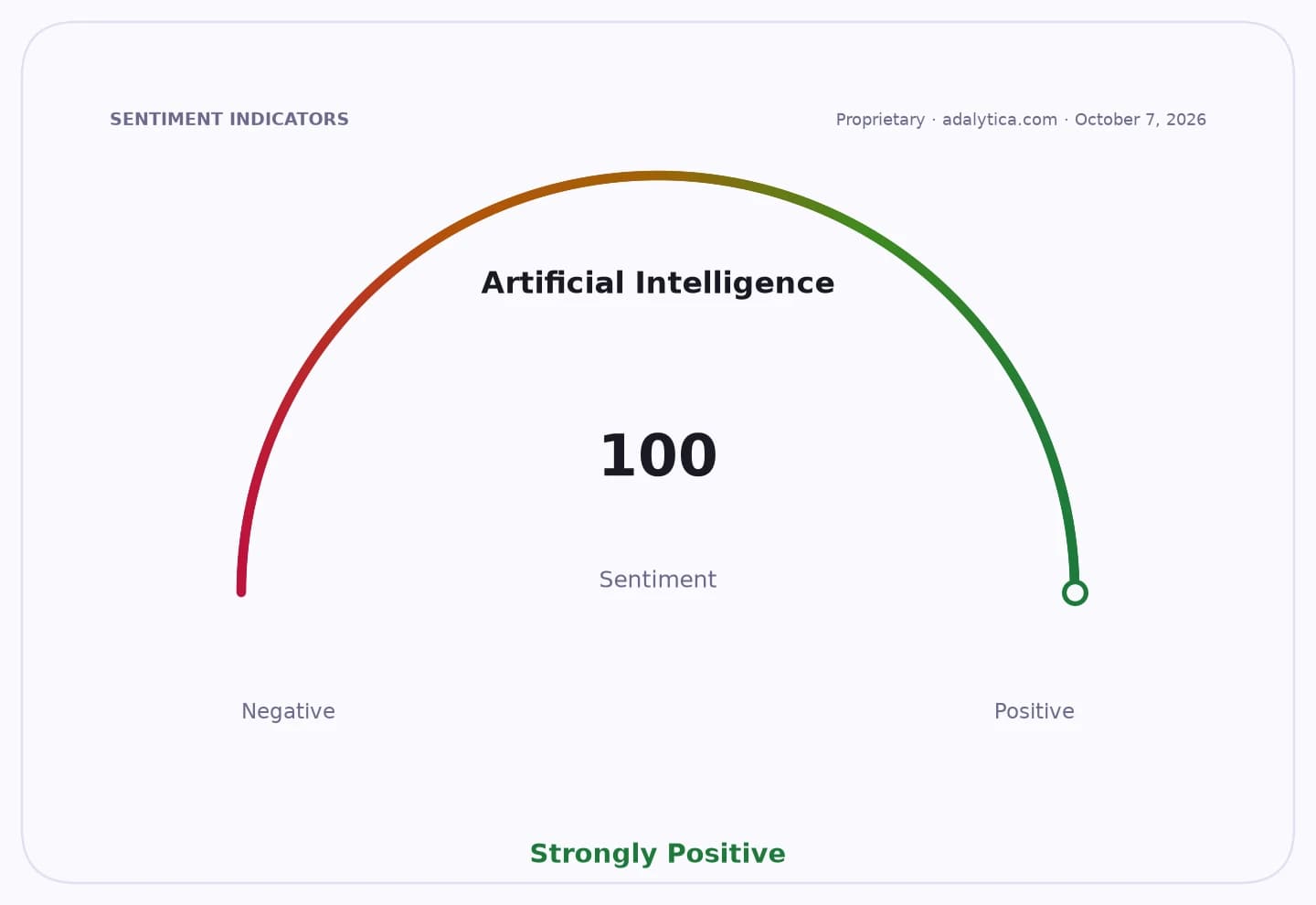
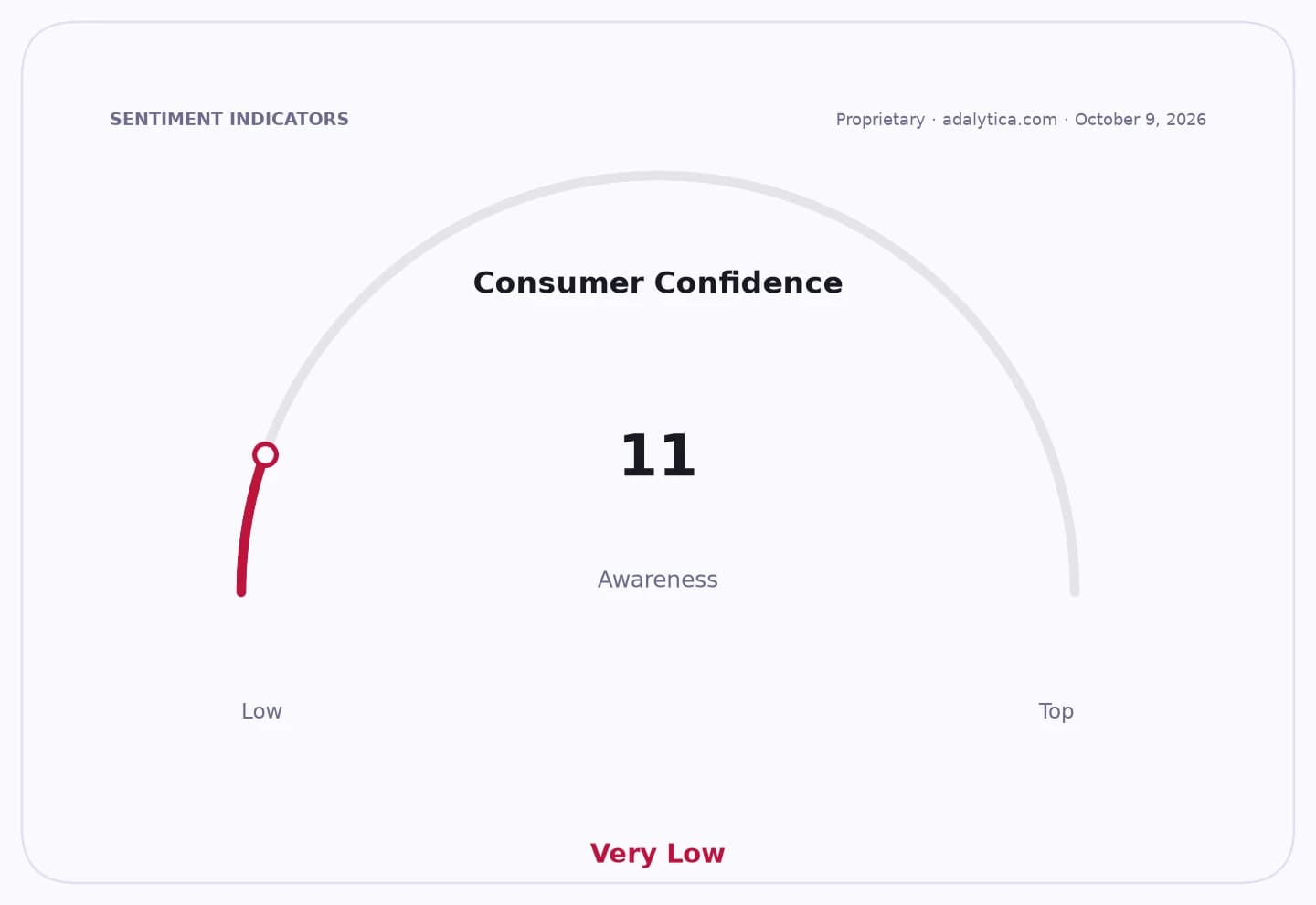
Australia’s AI spending surge is emerging as a fresh inflation driver just as the Reserve Bank of Australia is still trying to pin price growth back to target, raising the odds that borrowing costs stay higher for longer and households absorb most of the pain.
Australia AI spending adds inflation pressure

That is the message from Jonathan Kearns, a former senior RBA official now chief economist at Challenger, who said the productivity gains from artificial intelligence will take time to show up while the investment wave lands in the economy almost immediately. In other words, Australia gets the demand first and the efficiency later — a classic inflationary mix that central bankers cannot ignore.
Sentiment IndicatorsⓘProprietary · adalytica.com · October 10, 2026
This is a snapshot — live sentiment, awareness and momentum for 130+ markets update continuously in the dashboard.Open AlphaPulse
The mechanism is straightforward and economically important. Building out data centres, wiring up power and buying the hardware needed for AI requires heavy capital spending now, and Kearns estimated imported equipment makes up about three-quarters of that outlay in Australia. That helps soften some of the domestic price pressure, but it does not remove it: local construction, labour, energy and supporting services still feed into aggregate demand, keeping inflation sticky even as rates rise.
That matters because the RBA is already on the defensive. The central bank lifted its cash rate in September for a fourth time this year to 4.6%, a 15-year high, and Governor Michele Bullock has explicitly pointed to the AI boom as adding to inflation. Kearns said there is “absolutely no chance” the RBA can simply look through the surge after several years of inflation above target. His call for one more rate increase this year underlines a market reality investors are starting to price in: AI may be bullish for productivity over time, but in the near term it is a policy headwind.
For investors, that creates a clear split. Winners are the capital providers and infrastructure suppliers tied to AI buildout — cloud, chips, data-centre developers, construction and power networks. Losers are interest-rate-sensitive sectors, especially consumers and non-AI businesses that face tighter financial conditions and slower discretionary demand. The Australian dollar can also take some of the strain if policy stays restrictive while growth stays uneven.
The deeper narrative is that AI is no longer just a valuation story for U.S. megacaps. It is becoming a macro force with consequences for inflation, rates and asset allocation in smaller open economies as well. Kearns said the broader labour-market gains from AI will only become visible once businesses move beyond routine tasks and redesign workflows. Until then, the market should treat AI capex as an inflationary stimulus, not a productivity dividend.
For investors, the message is simple: position for the buildout before the payoff. In Australia, that means favouring the picks-and-shovels of AI infrastructure and remaining cautious on domestic rate-sensitive exposure until the inflation impulse clearly fades.
| Entity | Gains | Losses |
|---|---|---|
| AI infrastructure providers | ▲Higher capex demand | ▼Later payoff risk |
| RBA / rate-hawks | ▲Policy justification | ▼Growth tolerance |
| Households | ▲None | ▼Higher borrowing costs |
| Non-AI businesses | ▲Limited spillover demand | ▼Crowding out from tighter policy |