Australia’s fiscal room is narrowing just as the economy loses momentum, raising the odds that Treasurer Jim Chalmers’ budget update will lean on bigger deficits to cushion growth rather than deliver rapid repair to the public finances.
Australia deficits may widen as growth slows

That matters because the combination of softer activity, sticky inflation and a labour market that is not cracking gives the government less scope to spend freely without keeping pressure on prices and bond yields. With consumer prices still running well above the Reserve Bank’s comfort zone and unemployment holding near 4.1%, Canberra faces a familiar trade-off: support demand now, or wait longer for the inflation bill to come due.
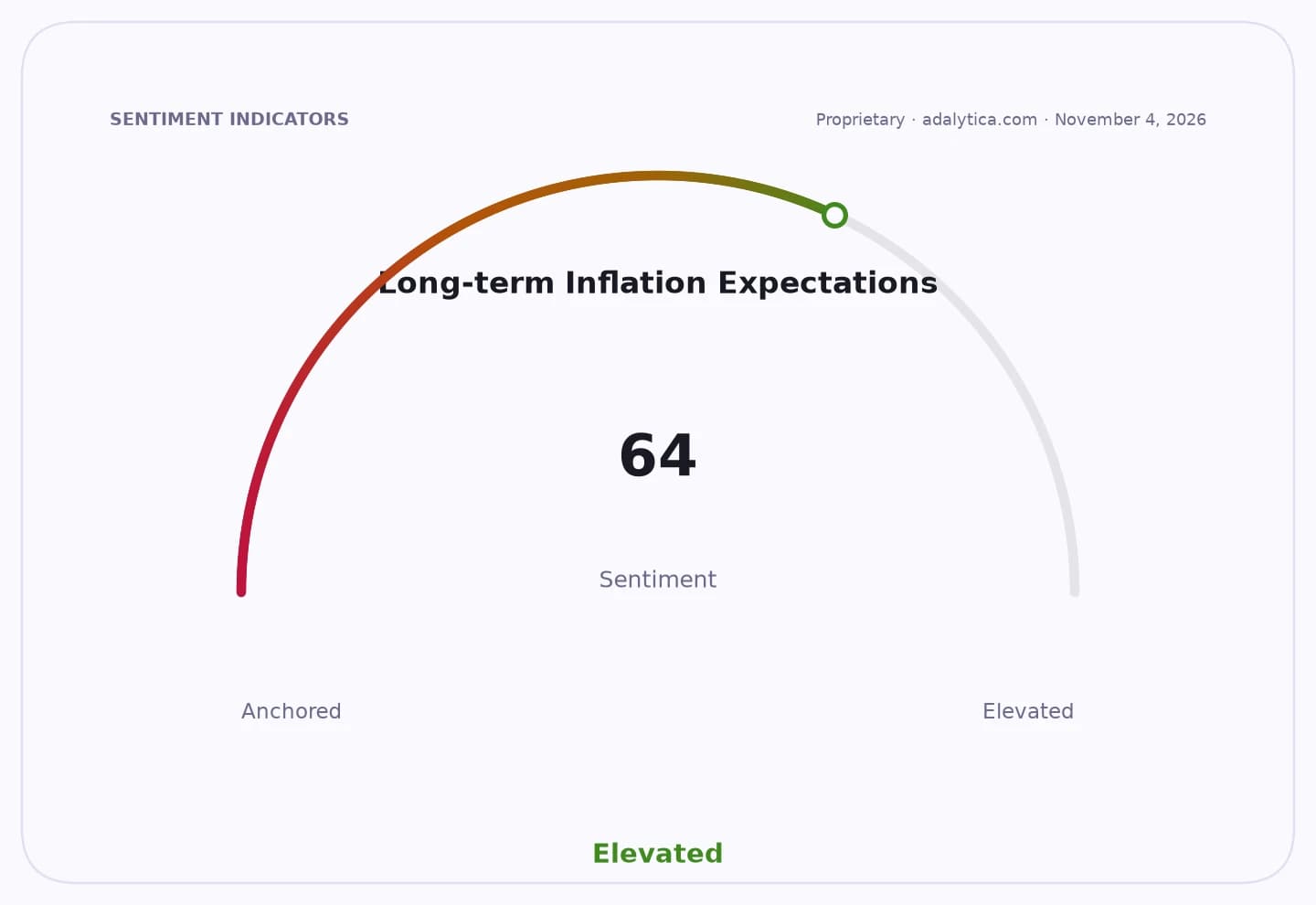
Sentiment Indicators
The latest data underscore that tension. CPI is projected to rise to 338.65 in November from 337.48 in October, a 0.35% monthly increase that suggests price pressures are cooling only gradually. At the same time, the jobless rate is seen steady at 4.11%, close to October’s 4.1%, implying the labour market remains tight enough to limit the case for aggressive fiscal restraint. Ten-year government bond yields near 4.84% to 4.92% show markets are already demanding a premium for that mix of still-firm inflation and large borrowing needs.
For investors, the key question is not just the size of the deficit, but what it means for the path of rates, bonds and the Australian dollar. A larger shortfall would support household incomes and parts of the domestic economy in the near term, but it could also keep pressure on the Reserve Bank to maintain restrictive policy for longer if spending adds to demand. That would be a negative for rate-sensitive sectors and for longer-duration bonds.
Equity markets are already pricing a more cautious outlook. The iShares MSCI Australia ETF, EWA, has fallen to about $27.37 from recent highs above $29.80, with its relative strength index down into the high 20s, a conventional technical signal that the fund is oversold. That weakness reflects both domestic growth worries and the market’s sensitivity to rates. By contrast, BHP has slid to around $70.77 from more than $96 earlier this year, showing that even resource exporters are not immune to a weaker macro backdrop and softer risk appetite, despite the group’s ongoing cost control and productivity gains.
The budget narrative is therefore one of gradual deterioration rather than crisis. Chalmers is likely to present an economy growing more slowly than the government would like, but not weak enough to justify panic. That leaves him balancing a politically important spending message against the risk that deficits stay wider for longer, with bond investors, the central bank and cyclical stocks all watching how much fiscal support Canberra is prepared to keep in place.
| Entity | Gains | Losses |
|---|---|---|
| Australian households | ▲Near-term fiscal support | ▼Higher inflation risk |
| Government | ▲Political flexibility | ▼Bigger deficits |
| Bond investors | ▲Higher yields | ▼Price pressure from borrowing |
| Rate-sensitive stocks | ▲Budget support demand | ▼Extended restrictive RBA stance |