Jim Chalmers has finally said the quiet part out loud: Australia’s government spending problem is no longer just about inflation, but about how much the state is swallowing of the economy itself.
Australia spending and Australian dollar outlook

That matters because once public outlays climb to around 40% of GDP, the debate stops being a short-term budget tweak and turns into a longer fight over growth, productivity and the private sector’s share of national income. Investors should care because a government that keeps spending at that scale can shape everything from interest rates to business margins and the value of the Australian dollar.
Sentiment Indicators
The treasurer’s promise to “cut” spending in next month’s mid-year update is telling precisely because it comes after months of political hedging. Critics have dismissed his inflation rhetoric as hollow, and they have a point: if the budget keeps expanding faster than the economy, monetary policy ends up doing more of the heavy lifting while fiscal policy quietly leans against it.
That is the real economic story here. Australia does not need a panic over one update, but it does need a serious discussion about the size and durability of government spending. When spending rises toward 40% of GDP, as the current numbers imply, taxes, borrowing or both eventually have to do the balancing. That can crowd out private investment, leave less room for future tax relief and make the country more vulnerable if growth cools.
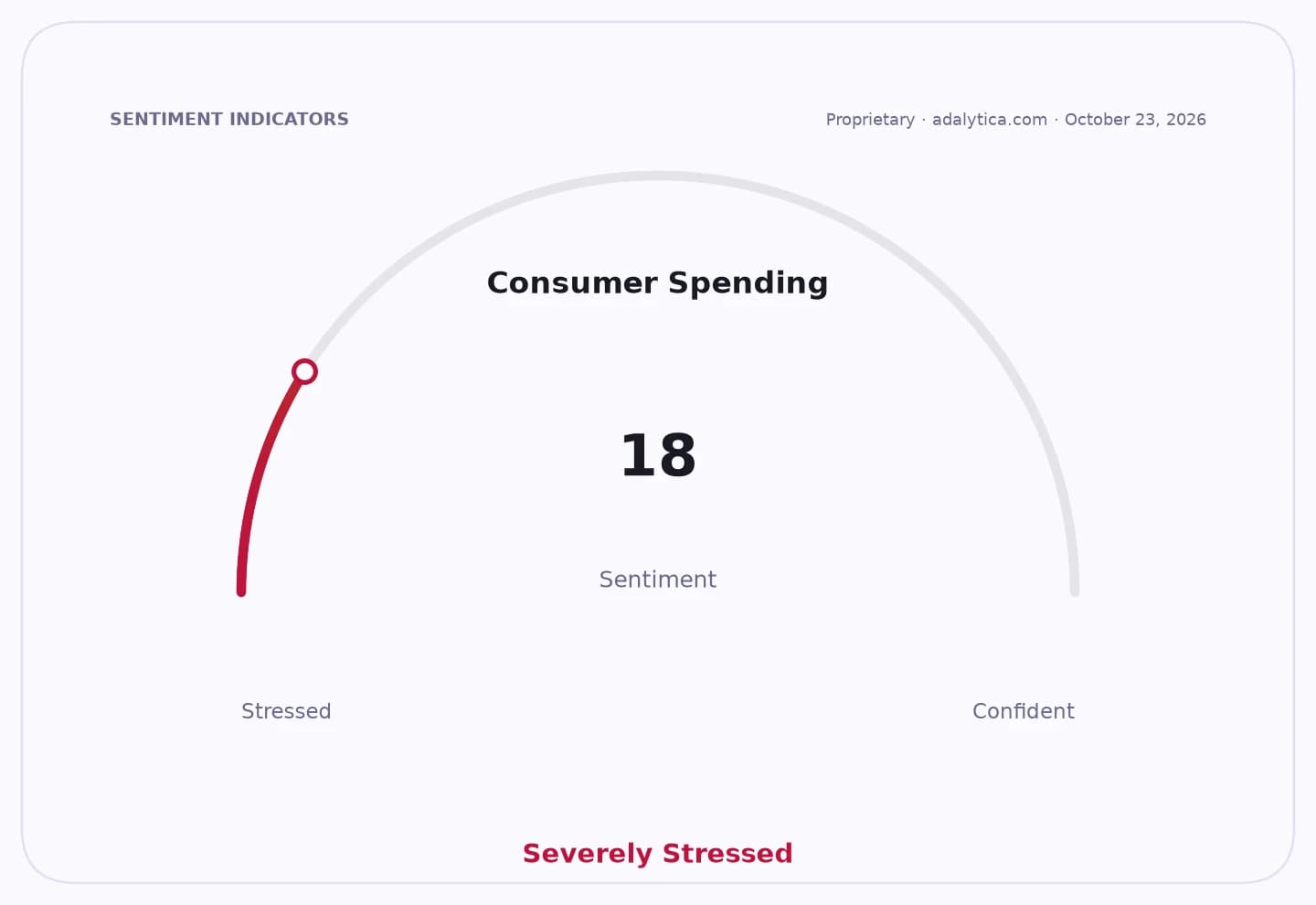
Consumer Spending — 30-day sentimentadalytica.com
Explore this data interactively — full history, time series and cross-market comparisons.
Consumer Spending
Markets have already shown how sensitive this backdrop can be. Bond yields remain well above the ultra-low levels investors became accustomed to for much of the past decade, and rates look set to stay restrictive rather than forgiving. On the currency side, the Australian dollar has been soft, trading around 66 US cents, below both its 50-day and 200-day moving averages, while its RSI readings point to a market that is still under pressure. That kind of setup is what you tend to see when investors worry that fiscal and growth support are not translating into stronger confidence.
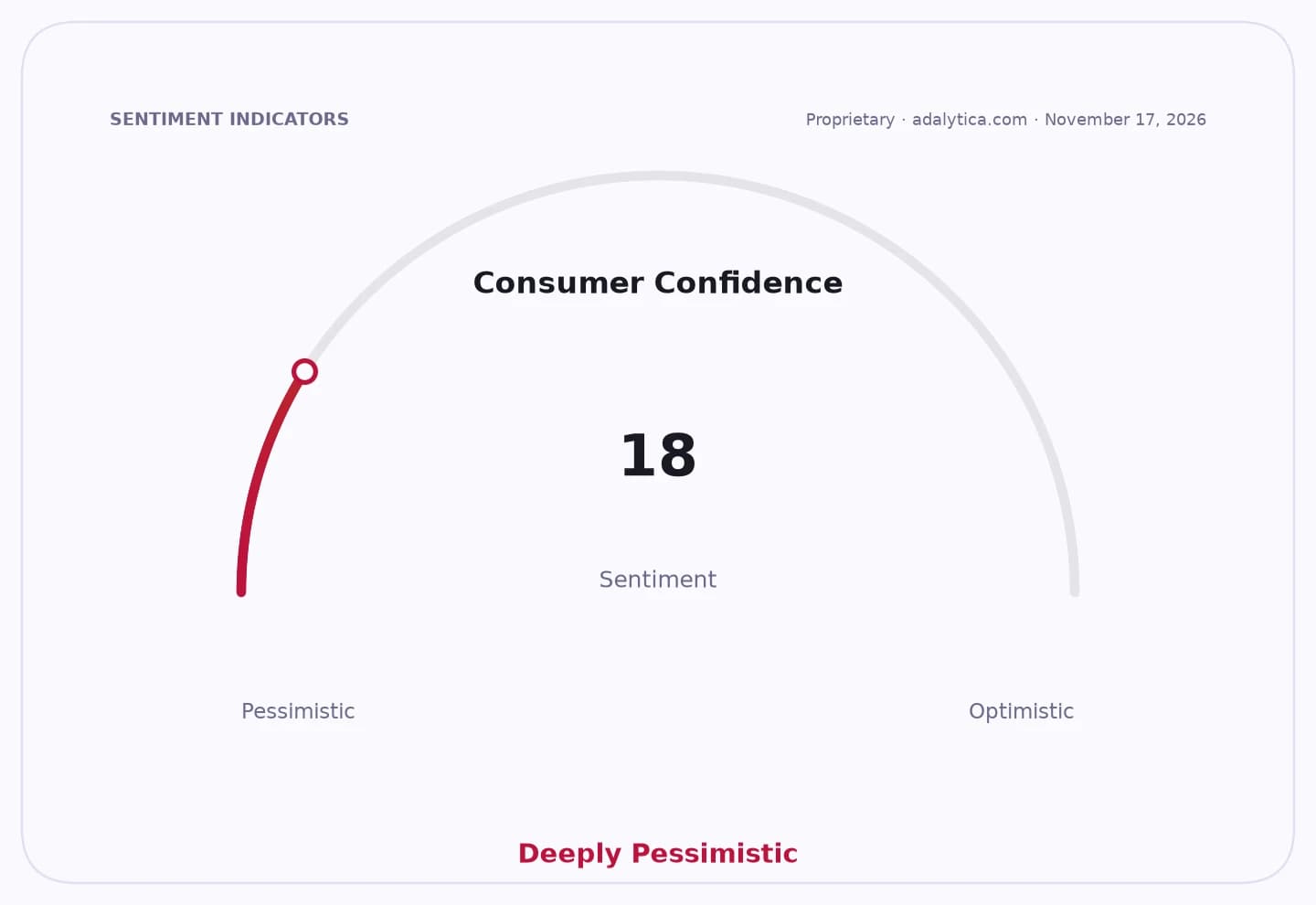
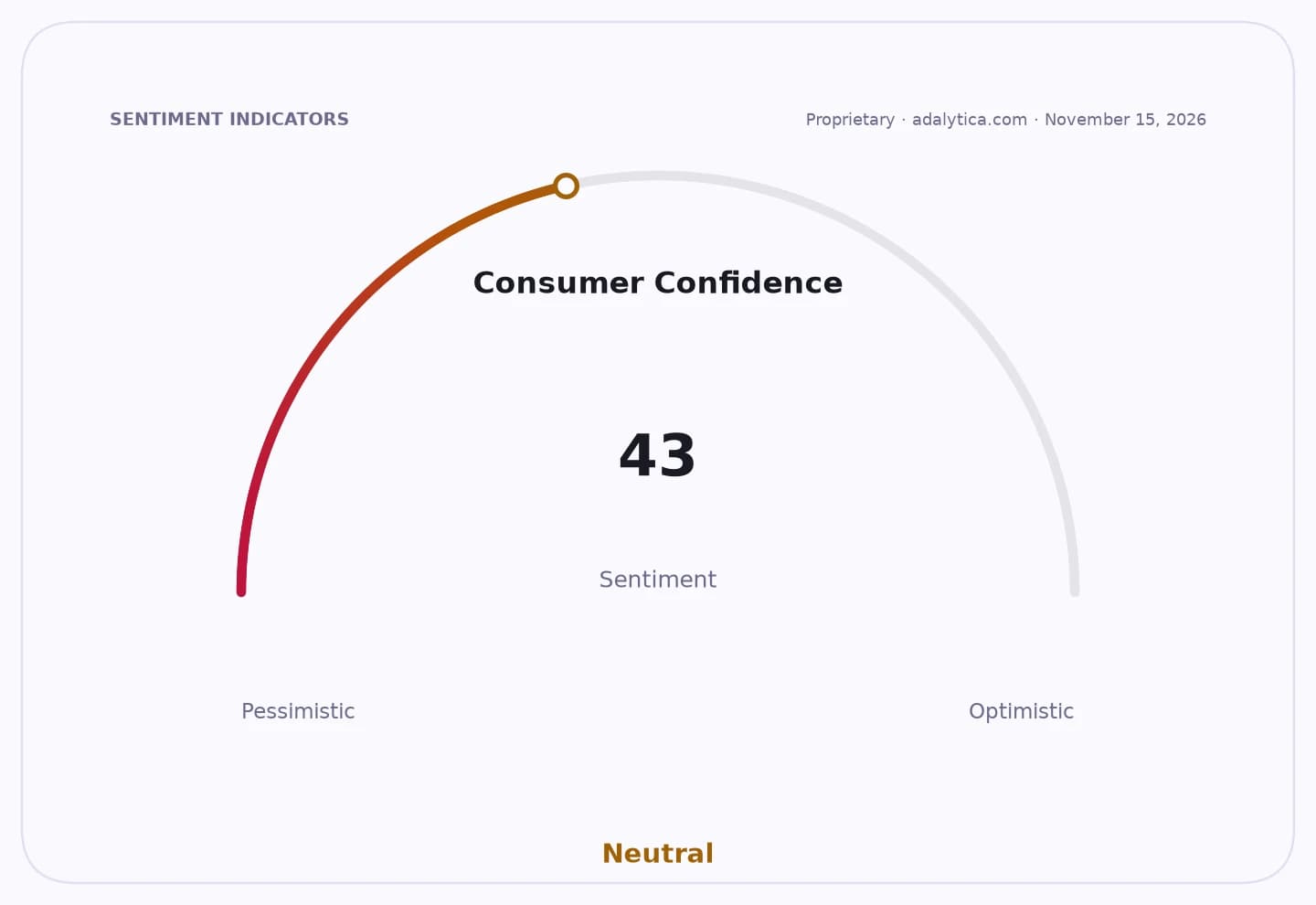
Consumer mood is part of the same picture. Adalytica’s spending sentiment remains in “Fear” territory, while its consumer confidence recession gauge is also flashing caution. In plain English, households are uneasy, and that means the government cannot rely forever on consumption alone to carry the economy.
For long-term investors, the lesson is not to obsess over one budget statement. It is to watch whether Canberra is willing to shrink the state’s footprint enough to leave more room for business investment, stronger productivity and cleaner public finances. If Chalmers really is discovering the “c-word,” the next question is whether he intends to use it to mean cutting spending — or merely talking about it. Either way, the mid-year update is worth watching.
| Entity | Gains | Losses |
|---|---|---|
| Australian taxpayers | ▲lower future burden | ▼higher fiscal pressure |
| Private businesses | ▲room for investment | ▼crowding-out risk |
| Bondholders | ▲fiscal discipline | ▼debt overhang fears |
| Australian dollar | ▲spending restraint | ▼weak growth backdrop |