Australia’s housing pain is moving from a headline risk to a balance-sheet problem, and that matters for the broader economy because hundreds of thousands of households are now being warned they are at a “tipping point.”
Australia Housing Stress Builds in Mortgage Market
The most important new information is not just that mortgage stress is rising, but that it is spreading into a large enough share of borrowers to threaten spending, savings and forced-sales activity across the housing market. Nearly 30% more distressed property listings over the past year suggests more homeowners are already struggling to keep up, while the warning that about 450,000 households are at the edge of financial strain points to a problem that can no longer be treated as isolated.
Sentiment IndicatorsⓘProprietary · adalytica.com · October 13, 2026
This is a snapshot — live sentiment, awareness and momentum for 130+ markets update continuously in the dashboard.Open AlphaPulse
That is economically significant because Australian households sit at the center of the country’s growth model. When mortgage repayments climb faster than wages and everyday costs keep rising, families cut back on discretionary spending first and, in more severe cases, start missing payments or selling. That weakens retailers, cools construction, and can feed a broader slowdown in consumption. It also raises the risk that more homes come to market at a time when buyers are already cautious, putting pressure on prices in the most leveraged parts of the country.
The stress is showing up in the lending data too. Nearly one in four new borrowers are taking interest-only loans worth almost $50 billion, a sign that some households are trying to buy breathing room rather than paying down principal. That may ease monthly cash flow for now, but it also leaves borrowers more exposed if rates stay high or income growth disappoints. In other words, the problem is less about one bad month and more about a prolonged squeeze.
Housing — 30-day sentimentadalytica.com
Explore this data interactively — full history, time series and cross-market comparisons.Open AlphaPulse
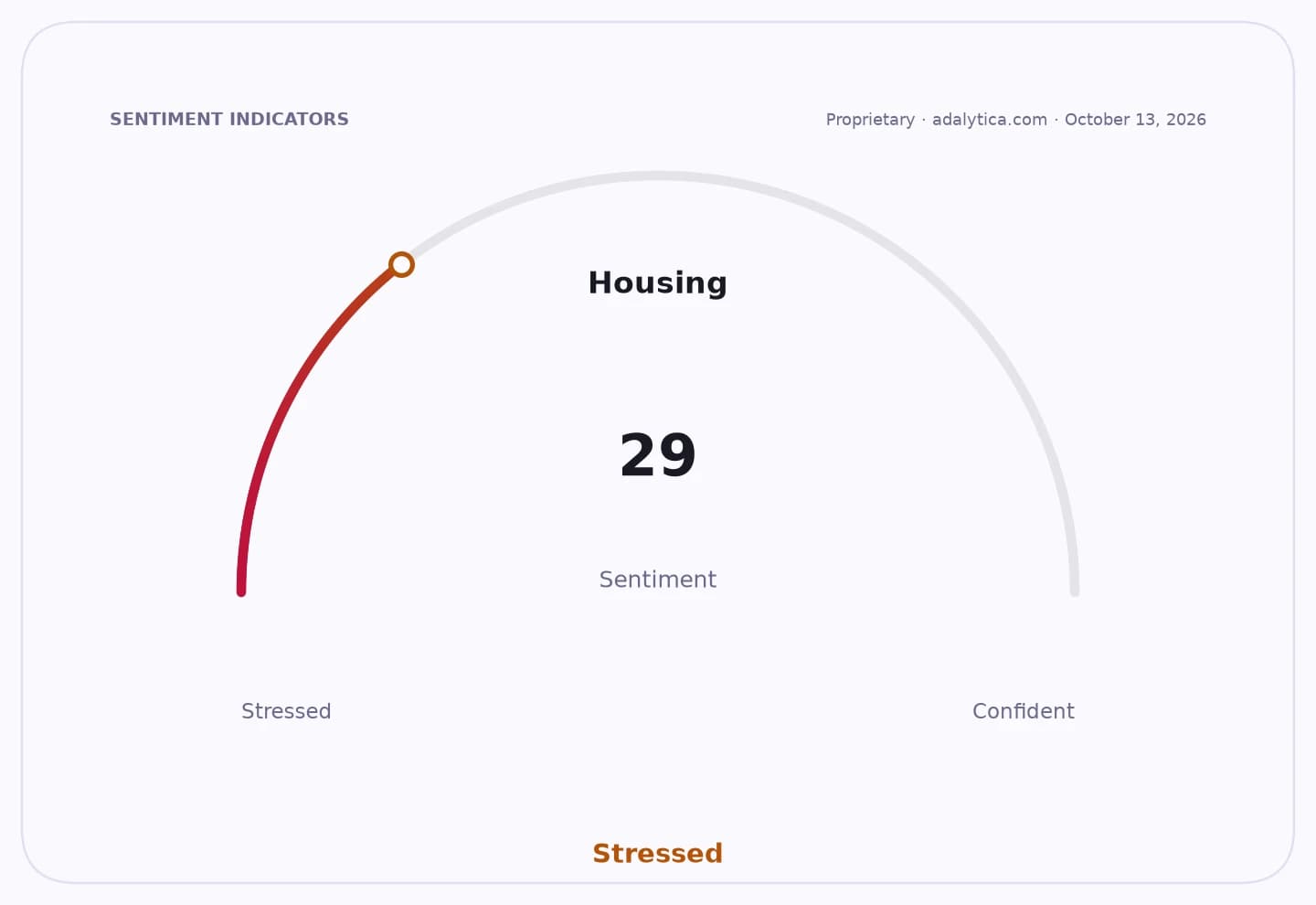
Investors should care because housing stress eventually ripples into almost every asset tied to the consumer. Lenders face higher arrears risk, mortgage originators see more refinancing pressure, and property-related equities become more sensitive to any slowdown in transaction volumes. The Australian dollar can also feel the strain if market participants conclude the Reserve Bank must keep policy tighter for longer to contain inflation, even as households get squeezed. Adalytica’s Housing and Rent Inflation sentiment gauge has already fallen sharply into fear territory, underscoring how quickly confidence can deteriorate when affordability worsens.
The tension is clear: policy makers need to cool inflation, but higher borrowing costs are now colliding with household fragility. Recent moves in global rates matter here too. Australia’s 10-year government bond yield has held around 5.2%, still high enough to keep borrowing costs elevated, while the unemployment rate forecast remains near 4.1%, a level that is not disastrous but leaves little room for a sharp rise in job losses. If the labor market softens, the mortgage problem could escalate quickly.
For long-term investors, the lesson is not to panic over every listing or rate move, but to respect the cycle. Housing stress usually builds slowly, then shows up in earnings, credit quality and consumer demand with a lag. That means the next few quarters could be uncomfortable for homeowners and lenders alike, even if the longer-term Australian property story remains intact.
The key question now is whether wage growth and rates can stabilize before stressed households tip into forced selling on a much wider scale. Until that becomes clearer, the housing market is worth watching closely, especially if you own banks, mortgage lenders or consumer-exposed stocks.
| Entity | Gains | Losses |
|---|---|---|
| Cash buyers | ▲More negotiating power | ▼Fewer distressed bargains if supply stays tight |
| Distressed homeowners | ▲Short-term relief from refinancing options | ▼Forced sales and equity losses |
| Lenders and mortgage originators | ▲Demand for refinancing and restructuring | ▼Higher arrears and credit risk |
| Broad economy | ▲Possible moderation in inflation | ▼Weaker consumer spending and growth |