Australia’s latest inflation shock has pushed the Reserve Bank of Australia closer to another rate increase this year, with supply-driven price pressures raising the risk that monetary policy stays tighter for longer even as households absorb the strain.
Australia inflation shock lifts RBA rate hike odds

That matters because the problem is not simply faster prices, but the source of the increase. When inflation is being lifted by supply shocks — including weather-hit food items and higher costs across key sectors — the usual cure of slower demand works less cleanly, forcing the RBA to choose between defending its inflation target and cushioning a weakening economy. For markets, that means the policy path is becoming less about growth support and more about whether inflation expectations can stay anchored.
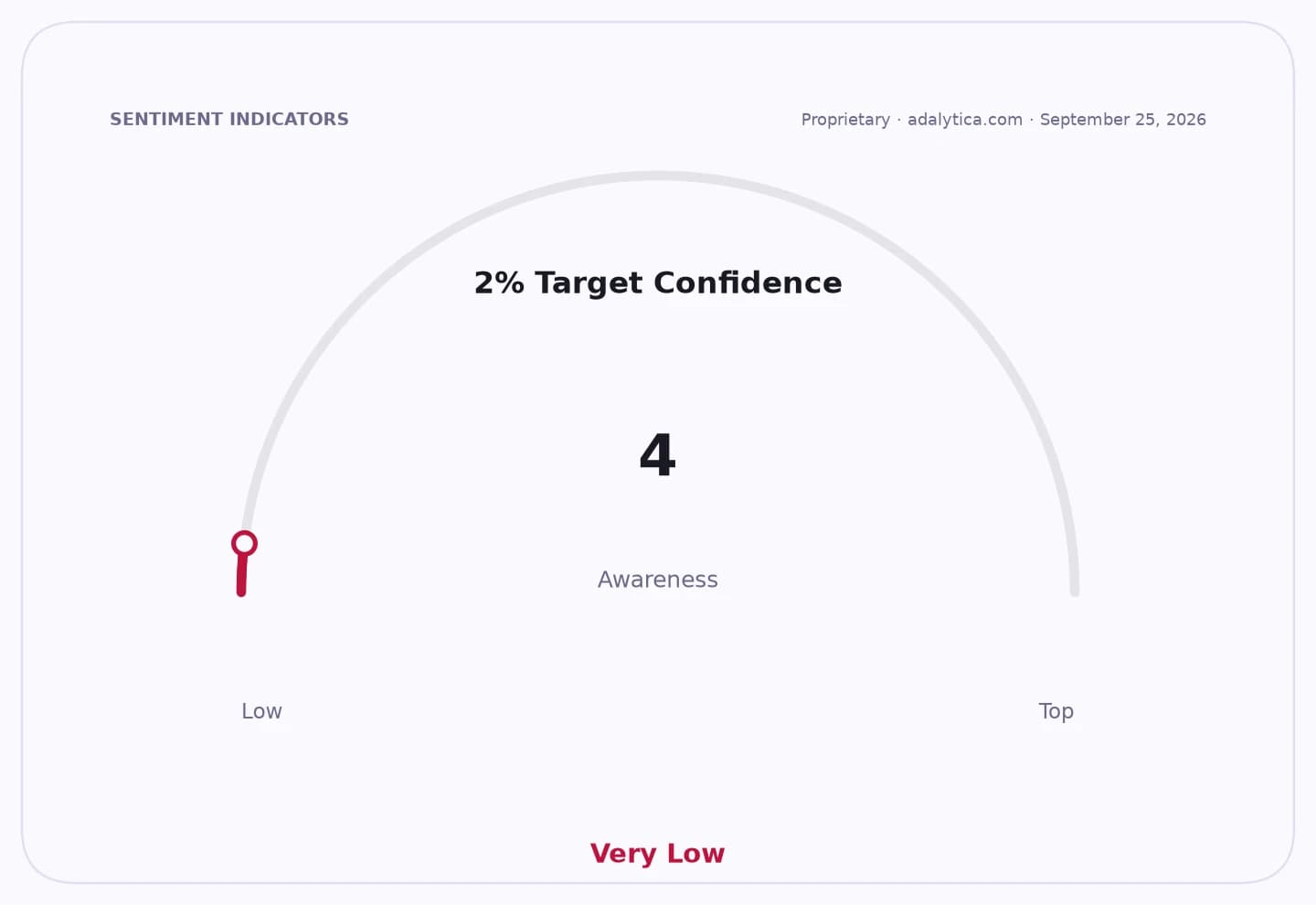
Sentiment IndicatorsⓘProprietary · adalytica.com · September 4, 2026
This is a snapshot — live sentiment, awareness and momentum for 130+ markets update continuously in the dashboard.Open AlphaPulse

The immediate trigger is a stronger-than-expected inflation reading that showed price pressures remaining stubborn despite earlier tightening. The data points to renewed upward pressure in areas that are typically volatile but economically important, from commodities to consumer staples. A broader global backdrop of disrupted supply chains, weather-related price spikes and still-elevated input costs is adding to the problem, and the latest move in crude oil reinforces how quickly imported inflation can re-accelerate.
Investors are watching the implication for Australian rates, bond yields and the currency. A higher-for-longer RBA would keep pressure on rate-sensitive sectors such as housing, consumer discretionary and highly leveraged companies, while supporting the Australian dollar if markets conclude the central bank has to stay ahead of inflation. Financials could face a more complicated mix: margin support from higher rates, but credit stress if households buckle under the cumulative effect of mortgages, living costs and slower real income growth.

The market readthrough extends beyond Australia. Persistent inflation in one developed economy adds to the case that central banks globally cannot declare victory too early, especially when price pressure is being driven by supply rather than demand. That helps explain why confidence in the Fed’s 2% inflation target has become a market focus, and why investors are staying alert to any evidence that sticky inflation is becoming a cross-border problem rather than a local one.
The next catalyst is the incoming inflation data and the RBA’s reaction function. If price gains remain firm, another hike becomes more likely and could reprice everything from bank valuations to consumer demand forecasts. If inflation eases, the central bank may regain room to pause — but for now, the burden of proof sits with disinflation.
| Entity | Gains | Losses |
|---|---|---|
| RBA | ▲tighter credibility | ▼policy flexibility |
| Lenders | ▲wider margins | ▼credit quality risk |
| Households | ▲lower inflation eventually | ▼higher mortgage strain |
| Rate-sensitive stocks | ▲potential bargain entry | ▼valuation pressure |