Australia’s savings war has pushed term-deposit rates above 6% for the first time since 2011, handing savers a rare windfall just as banks compete aggressively for funding and home buyers gain a little more bargaining power.
Australia term deposit rates top 6% as banks compete

That matters because it marks a shift in the cost of money across the Australian economy. Higher deposit rates do not just reward savers; they force lenders to pay up for stable funding, which can ripple into mortgage pricing, credit growth and bank margins. When one bank is willing to pay 6.25% on deposits, the message is clear: the fight for cash is intensifying.
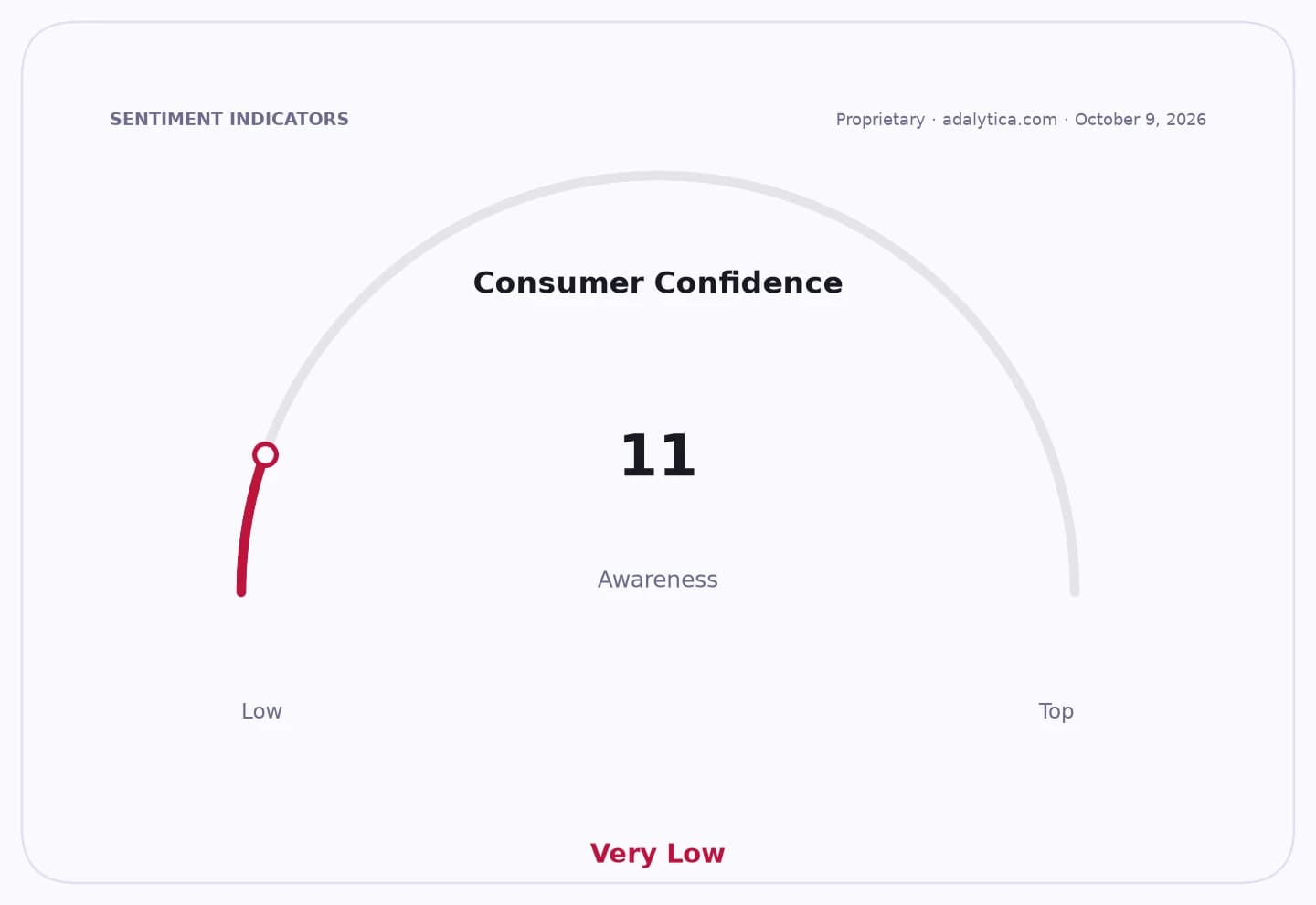
Sentiment IndicatorsⓘProprietary · adalytica.com · October 10, 2026
This is a snapshot — live sentiment, awareness and momentum for 130+ markets update continuously in the dashboard.Open AlphaPulse
For households, the immediate beneficiary is obvious. Australians who have kept money in cash and term deposits are finally seeing returns that can outpace inflation by a meaningful margin, especially after years of near-zero rates. The upside is most visible for home buyers and would-be buyers, who may find stronger deposit competition and slower credit conditions modestly easing the pressure that has kept property markets strained.
The broader macro backdrop explains why this matters now. The U.S. 10-year Treasury yield has climbed back above 5%, while U.S. policy rates remain elevated, and that global price of money is keeping funding costs sticky everywhere. Australia cannot fully escape that pull. Even as the local unemployment rate hovers around 4.2% and the central bank’s policy rate is expected near 3.73%, lenders are still leaning on deposit pricing to protect balance sheets.
For investors, the story is a reminder that bank funding costs are no longer free and that net interest margins may be past their peak. That is the key risk for the major lenders, even if loan growth remains resilient. The flip side is that savers, cash-heavy investors and deposit-oriented products become more attractive as a tactical allocation, especially if the market expects rate cuts to arrive only gradually.
The market is underestimating how powerful this shift can be if it persists. A 6.25% deposit rate is not just a headline; it is a signal that the savings pool is being repriced in real time. If competition for deposits stays fierce, the next winners are likely to be investors who own cash-rich balance sheets, short-duration income strategies and select lenders that can fund cheaply without chasing every depositor.
Our thesis is simple: this is an inflection point for Australian savings and banking. The savers’ ceiling has broken, the funding battle is on, and the smartest money should be positioned for a world where cash earns real yield again and bank margins are no longer guaranteed. In that environment, deposit-rich savers win, but bank stocks with the weakest funding franchises are the ones most at risk.
| Entity | Gains | Losses |
|---|---|---|
| Savers | ▲Higher deposit yields | ▼Lower-rate cash holdings |
| Home buyers | ▲Better deposit pricing | ▼Less urgency in lending |
| Major banks | ▲Funding access | ▼Net interest margin pressure |
| Cash and term deposit investors | ▲Real income returns | ▼Missed upside in risk assets |