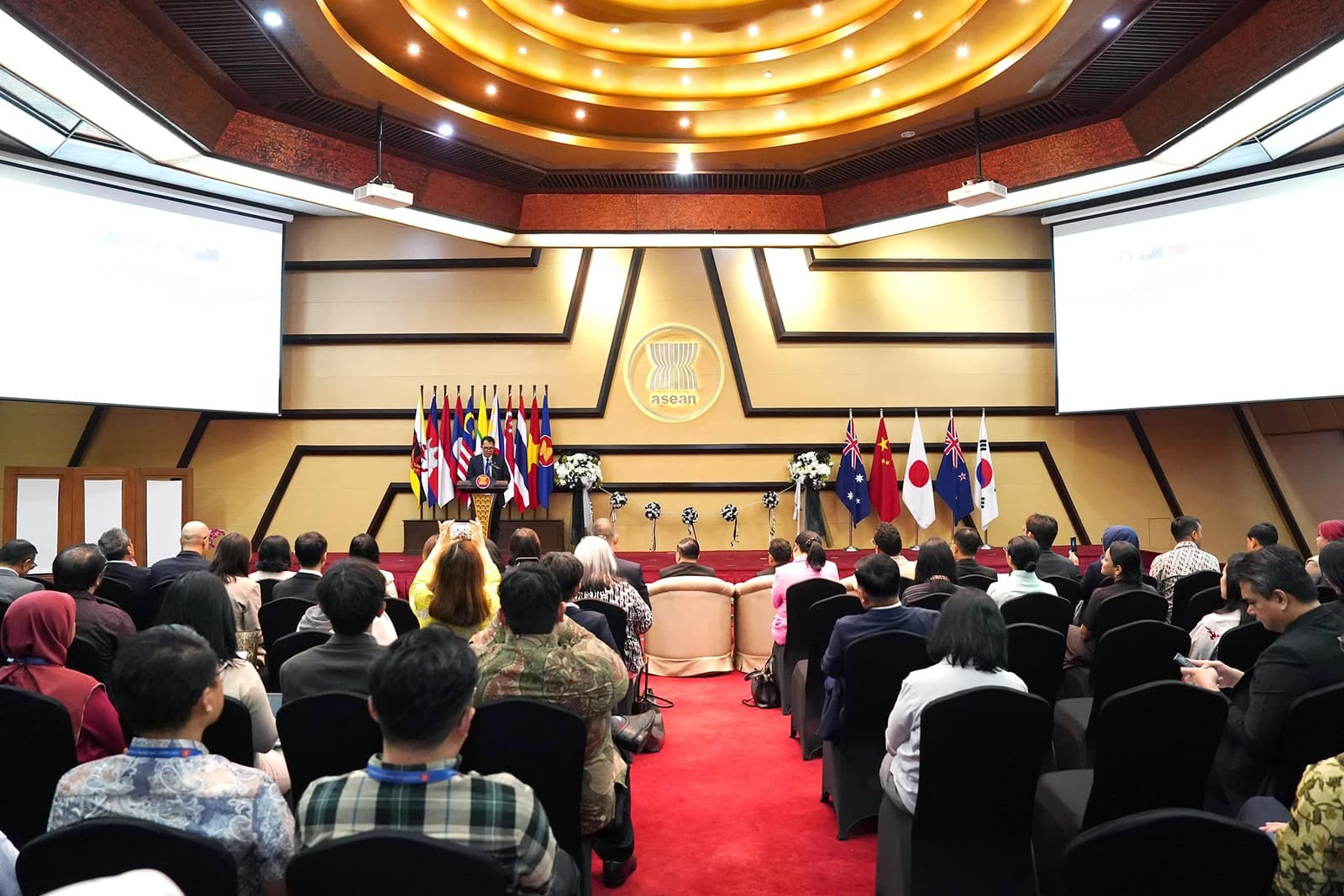
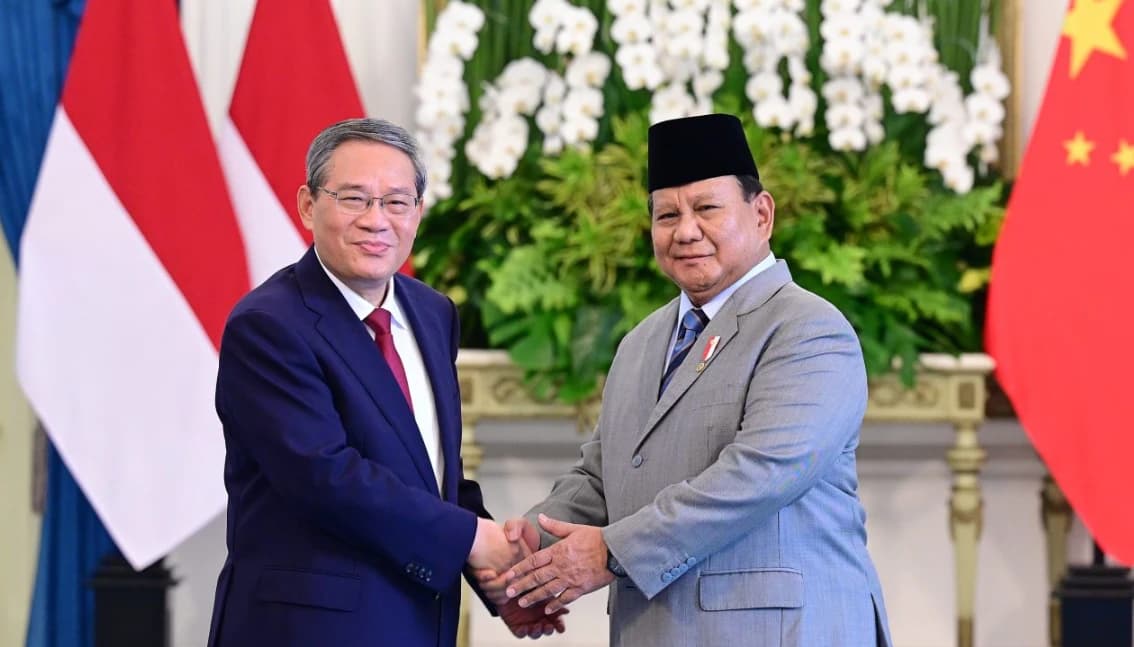
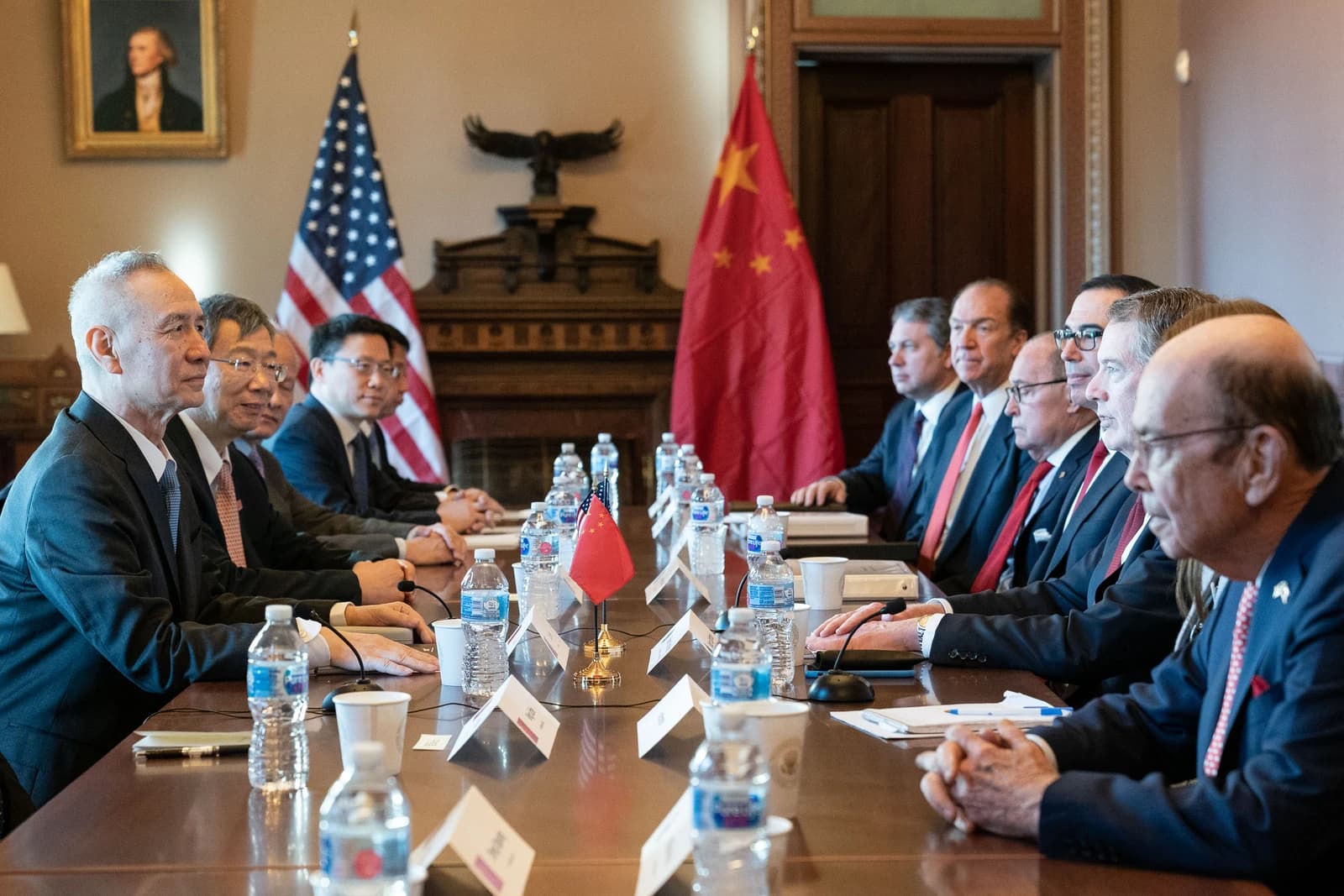
Australia says the worsening US-China rivalry is eroding the economic and diplomatic guardrails that have helped keep the world’s two biggest powers from stumbling into conflict, raising the stakes for trade, supply chains and regional security.
Australia warns US-China rivalry is eroding guardrails
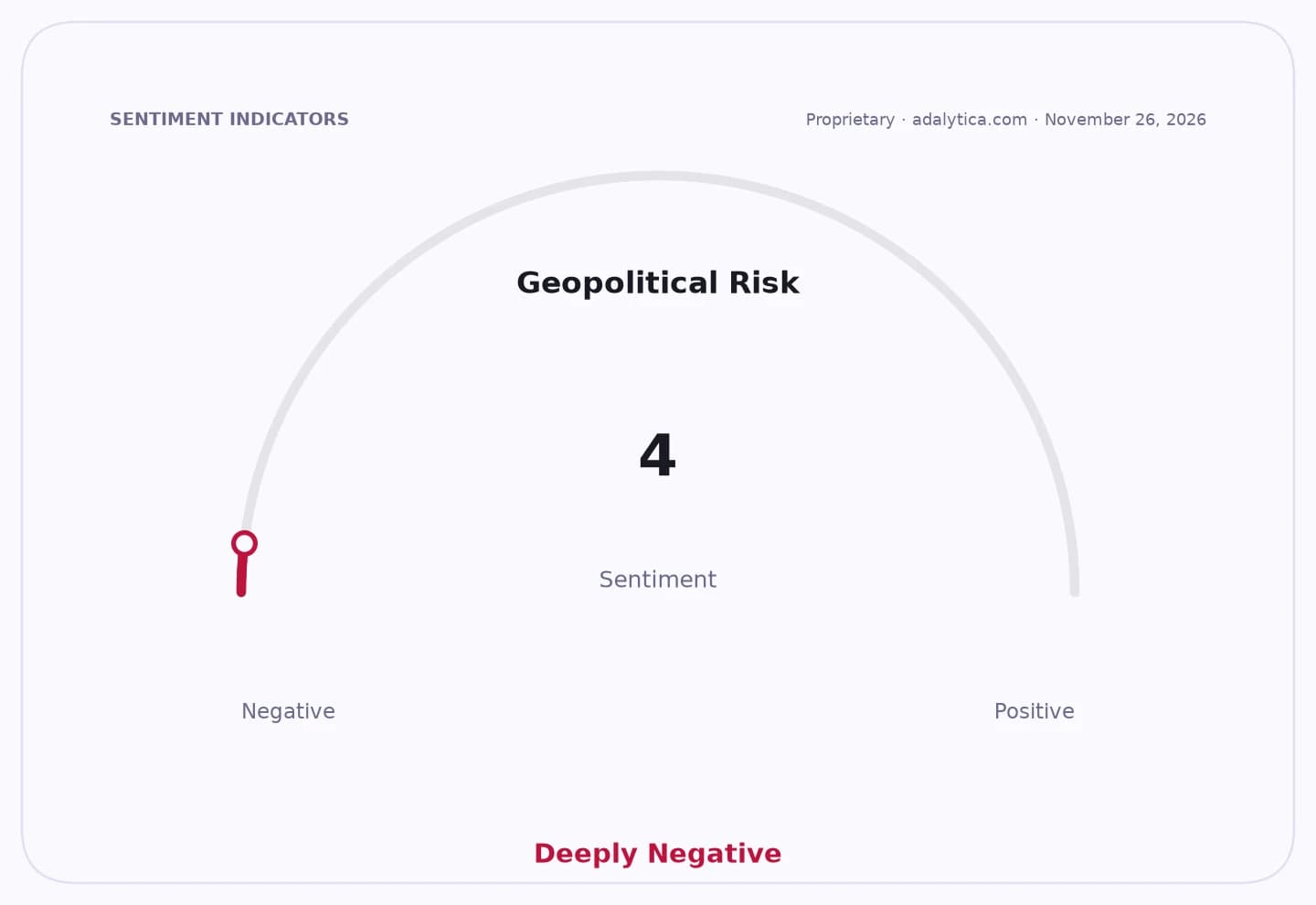
Geopolitical Risk
Foreign Minister Penny Wong told the Senate that competition between Washington and Beijing is increasingly being fought across “every domain,” with trade, investment, shipping routes, food security, subsea cables and critical minerals all being weaponized. She said the old logic of mutual economic dependence acting as a brake on confrontation is now being used as a pressure tool instead.
Sentiment Indicators
That matters because the spillover is no longer confined to rhetoric or military posturing. Wong said conflict is already distorting global energy and goods markets, feeding inflation and accelerating cyber risk, while China’s military buildup and the US response are reshaping strategic priorities across the Asia-Pacific. For exporters, importers and commodity markets, a more adversarial relationship raises the risk of disrupted supply chains, higher transport costs and less predictable access to critical inputs.
The message also lands in markets that have already been pricing in a harsher geopolitical backdrop. Chinese equity proxies showed fresh pressure, with the iShares China Large-Cap ETF (FXI) sliding to $31.99 on Nov. 27 after hitting $31.23 earlier in the week, while the iShares MSCI China ETF (MCHI) traded at $47.99 and the Direxion Daily FTSE China Bull 3X Shares (YINN) closed at $19.96. Technical indicators on all three funds point to a weak tone, with prices still below their 50-day and 200-day moving averages and RSI readings depressed on YINN and MCHI, reflecting persistent investor caution.
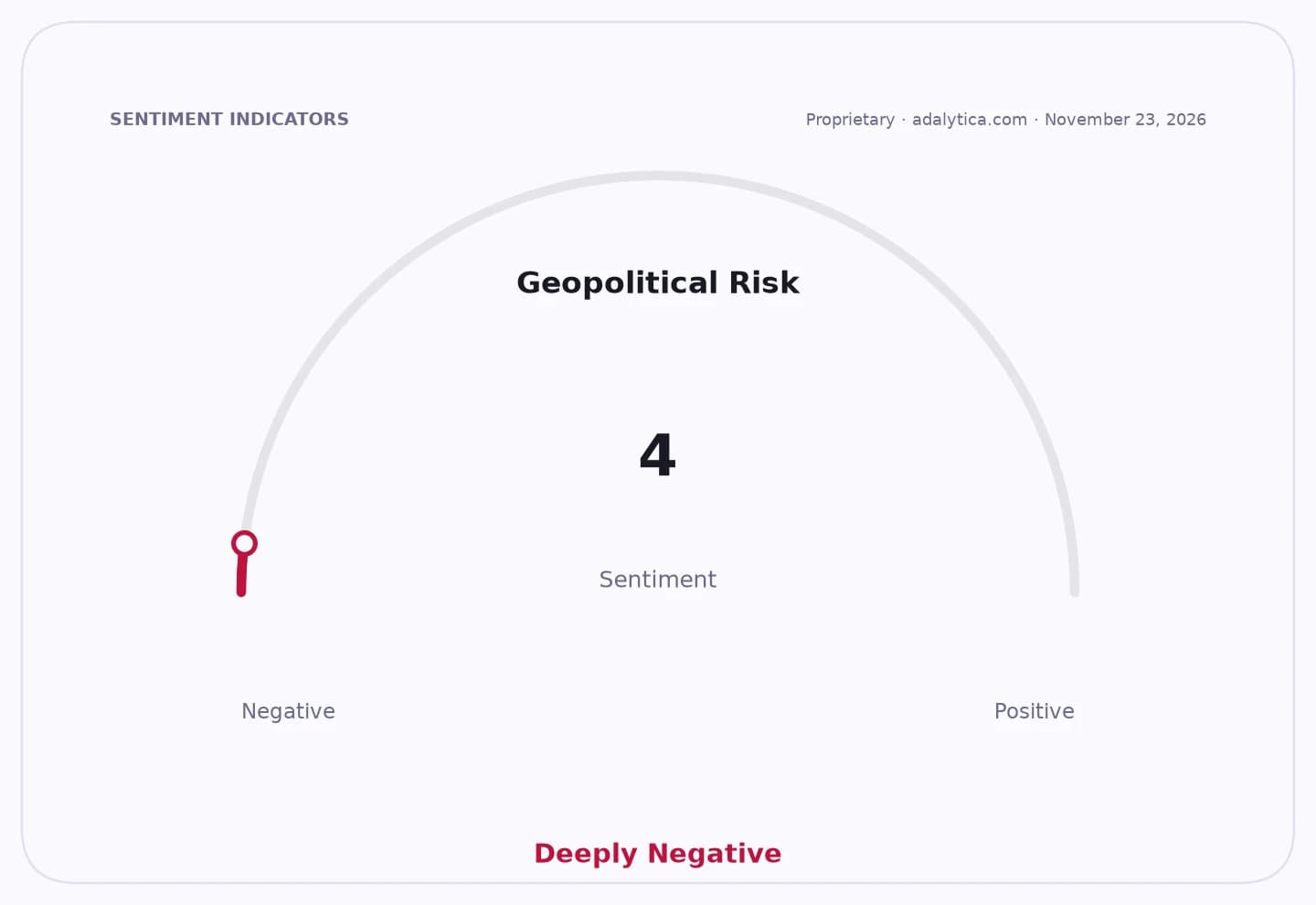
US-China Relations — 30-day sentimentadalytica.com
Explore this data interactively — full history, time series and cross-market comparisons.
Adalytica’s US-China Relations Sentiment gauge shows “Extreme Fear” at 4, down 96% in a week, underscoring how quickly market mood has deteriorated around the bilateral relationship. Its Global Stability Sentiment gauge also sits in “Extreme Fear” territory at 7, suggesting the risk premium around geopolitics remains elevated.
Wong said Australia will keep its US alliance while broadening diplomatic options, strengthening regional partnerships and diversifying trade ties. For investors, the next catalyst is whether the latest friction stays contained in diplomacy and trade or spills into more direct restrictions on technology, shipping and critical minerals.
| Entity | Gains | Losses |
|---|---|---|
| Australia | ▲hedging flexibility | ▼alliance certainty |
| US and China hardliners | ▲tougher strategic posture | ▼lower trust |
| Critical minerals suppliers outside China | ▲diversification demand | ▼policy volatility |
| China-linked equity ETFs | ▲tactical bounce on headlines | ▼longer-term risk premium |