A fighter-jet showdown in Egypt has thrust AVIC Chengdu Aircraft, the Chinese arms maker behind the J-16, back into the investment spotlight — and for long-term investors, that matters less as a one-off headline than as evidence that the global military aircraft market is becoming more multipolar.
AVIC Chengdu Aircraft Gains on Egypt Jet Display

The reason is simple: every public display of a modern Chinese combat jet is also a marketing event. It is a reminder that China is no longer just a domestic buyer of advanced aircraft, but a seller and exporter of platforms that can compete for attention in the Middle East, Asia and other regions where governments are rethinking procurement after years of geopolitical shocks. That opens the door to a bigger addressable market for Chinese defense contractors, even if actual export wins remain uncertain and politically sensitive.
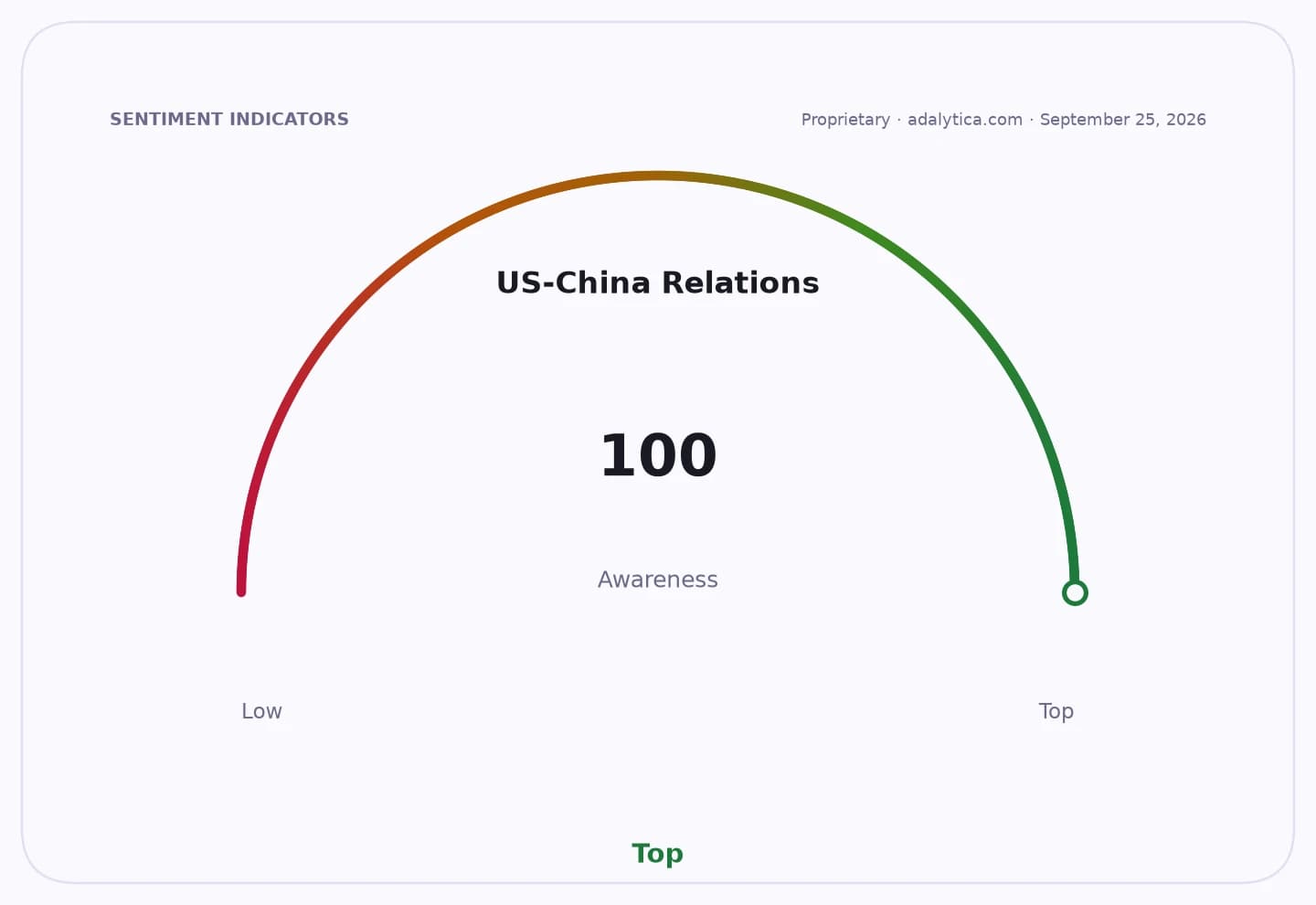
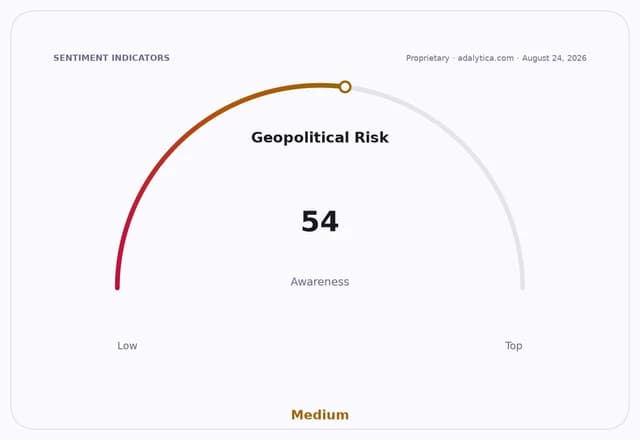
Sentiment IndicatorsⓘProprietary · adalytica.com · August 24, 2026
This is a snapshot — live sentiment, awareness and momentum for 130+ markets update continuously in the dashboard.Open AlphaPulse
For AVIC Chengdu Aircraft, identified by ticker 000768.SZ, the market already appears to be pricing in that possibility. The stock closed at 21.36 yuan on Aug. 24, well above its 50-day moving average of 20.66 yuan, after spending much of the spring under pressure and below its 200-day moving average of 24.27 yuan. The rebound matters because defense names can re-rate quickly when investors start to believe a platform has export legs, a bigger production run or a longer investment cycle.
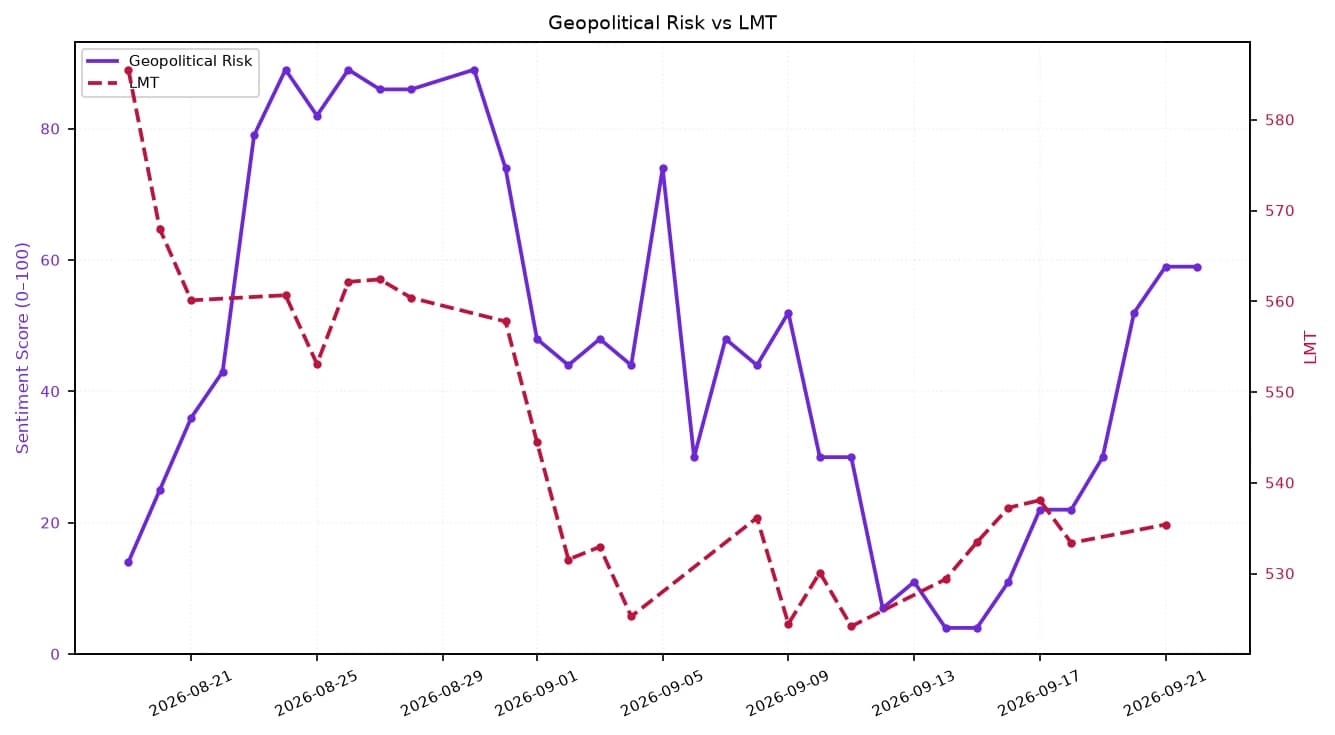
The broader defense trade has been firm as well. Lockheed Martin has rallied sharply this year, though its shares slipped to $563.57 from a recent high above $630, while RTX has also climbed, even after a pullback to $209.91. Those moves tell you something important: investors are willing to pay for durable military demand when geopolitical risk rises and governments keep spending.
Geopolitical Risk vs 000768.SZadalytica.com
Explore this data interactively — full history, time series and cross-market comparisons.Open AlphaPulse
That backdrop is exactly why the Egypt duel matters economically. Defense spending is one of the few areas where long-cycle procurement can outlast a slowdown, and it often benefits from the same instability that hurts broader markets. Adalytica’s Global Stability Sentiment has jumped to 79, a reading labeled “Greed,” underscoring how quickly investors can rotate toward security-linked assets when tensions flare.
But the long-term question for investors is not whether one event boosts a stock for a few sessions. It is whether China’s aviation industry can turn showcase moments into repeat orders, local partnerships and eventually export credibility. That is where the upside lies for AVIC Chengdu Aircraft and its peers. If China can widen its footprint in fighter jets, it strengthens an industry with high barriers to entry, sticky state support and significant follow-on revenue from maintenance, upgrades and training.
There are risks, of course. Western sanctions, U.S. pressure on allies and the inherently political nature of arms sales could limit how far Chinese aircraft can travel beyond Beijing’s orbit. The stock’s technical picture also says the rally is still rebuilding rather than breaking out decisively, with the share price only slightly above its 50-day average and still below the 200-day trend line.
Even so, for investors with a multi-year horizon, the bigger story is not a single airshow or duel. It is the steady globalization of China’s defense-industrial base and the possibility that combat aircraft, missiles and avionics become a more important profit pool than the market has traditionally assumed. That makes 000768.SZ a name worth watching, especially if future demonstrations start to translate into contracts rather than just headlines.
| Entity | Gains | Losses |
|---|---|---|
| AVIC Chengdu Aircraft | ▲Export credibility | ▼Skeptics of China defense stocks |
| China’s defense industry | ▲Global attention | ▼Western incumbents |
| Middle East buyers | ▲More suppliers | ▼Limited bargaining power |
| Lockheed Martin and RTX | ▲Higher sector interest | ▼Rival pressure from Chinese platforms |