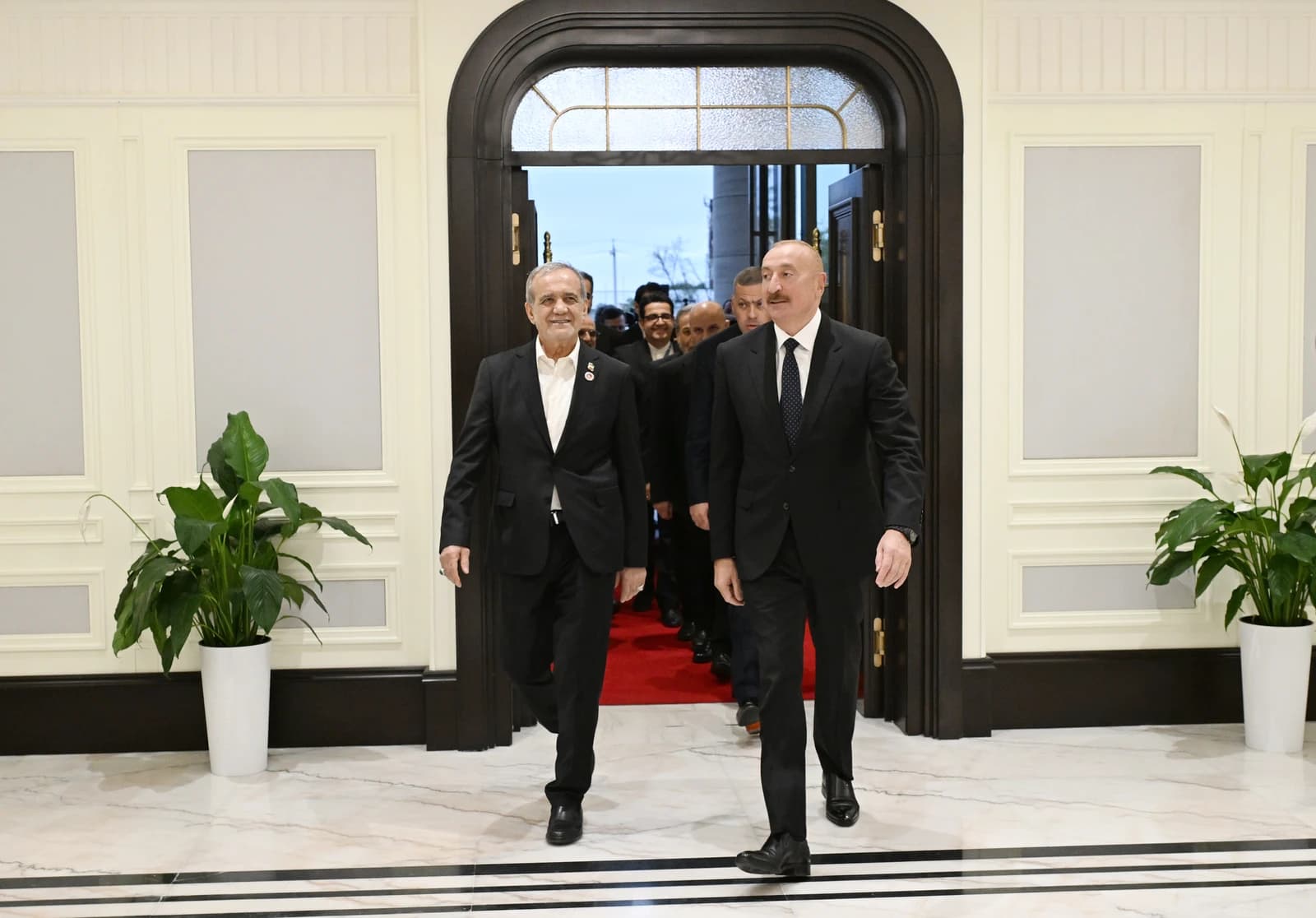
President Ilham Aliyev’s meeting with Iran’s Masoud Pezeshkian in Turkmenbashi is a reminder that, for investors, diplomacy around the Caspian is about more than headlines — it can shape transport routes, border stability and the flow of goods across a strategically important corridor.
Azerbaijan Iran Meeting Focuses on Transit Routes
The most important economic issue is whether Azerbaijan and Iran can turn political dialogue into practical cooperation on trade and transit, especially as regional governments keep pushing the North-South transport route and other cross-border projects that could shorten shipping times between Russia, the Caucasus and the Gulf. When neighbors with history of tension choose negotiation over confrontation, the payoff can show up in lower logistics risk, steadier customs flows and better visibility for infrastructure and transport-linked businesses.
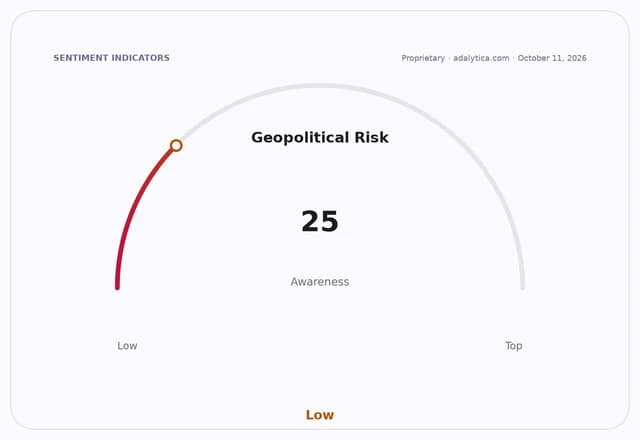
Sentiment IndicatorsⓘProprietary · adalytica.com · October 11, 2026
This is a snapshot — live sentiment, awareness and momentum for 130+ markets update continuously in the dashboard.Open AlphaPulse
That matters beyond the immediate region because the Caspian corridor sits at the crossroads of energy, freight and geopolitical competition. Any easing in friction between Baku and Tehran reduces the odds of disruption along routes that matter to commodity traders, shippers and countries trying to diversify supply chains away from longer, costlier paths. In a world where investors are increasingly pricing in geopolitical risk, even incremental diplomatic progress can support sentiment around regional connectivity projects.
The meeting also comes as regional leaders continue to stress “non-threatening” dialogue and practical cooperation. That language may sound routine, but it is the kind of diplomatic framing that often precedes deeper discussions on border security, transit fees, rail links and customs coordination — the unglamorous details that determine whether a corridor actually works. For long-term investors, those details are where real value gets created.
Geopolitical Risk — 30-day sentimentadalytica.com
Explore this data interactively — full history, time series and cross-market comparisons.Open AlphaPulse
From a market perspective, the immediate move is less about a single trade and more about the broader investment climate. Stable relations can support assets tied to transportation, ports, logistics and energy infrastructure, while heightened tension would tend to do the opposite by raising risk premiums and delaying capital spending. For investors with a multi-year horizon, the opportunity lies in watching whether this talk translates into durable policy coordination.
Azerbaijan and Iran may still have plenty of disagreements, but meetings like this one are how regional powers lower the temperature and keep commerce moving. That makes the Turkmenbashi encounter worth watching for investors who care about the long game in Eurasian trade.
| Entity | Gains | Losses |
|---|---|---|
| Azerbaijan | ▲Transit leverage | ▼Geopolitical friction |
| Iran | ▲Regional trade access | ▼Isolation risk |
| Logistics and transport firms | ▲Route stability | ▼Disruption premiums |
| Rival corridors | ▲— | ▼Relative competitiveness |