Russia is signaling it wants Azerbaijan at the center of a wider Eurasian economic and transport network, a message that matters because the South Caucasus is increasingly where energy flows, trade routes and geopolitical influence intersect.
Azerbaijan, Russia Discuss Eurasian Trade Routes
Maria Zakharova said Moscow is ready for close cooperation with Baku as Azerbaijan chairs the Conference on Interaction and Confidence Building Measures in Asia for the next two years, underscoring that Russia sees the platform as more than a diplomatic forum. It is a vehicle for trade connectivity, digital security, small business ties and, increasingly, regional logistics.
That matters economically because Azerbaijan sits on a strategic corridor linking Russia, Iran, Turkey and Central Asia. Moscow’s willingness to deepen work through CICA comes as Russia and Iran are also preparing a gas transit agreement via Azerbaijan, a reminder that pipeline and transport politics remain tightly connected in the region. For energy markets, any new transit arrangement through Baku can alter route optionality, bargaining power and the economics of moving gas across the South Caucasus.
Zakharova emphasized that Russia has already used CICA to advance practical projects: Moscow has overseen the small and medium-sized enterprise track since 2007, helped create a business council in 2015 and has promoted transport connectivity and cybersecurity cooperation. In other words, the Kremlin is not just seeking symbolism; it is trying to preserve institutional influence over the rules and channels that underpin regional commerce.
For investors, the story is less about a single headline than about the persistence of a multi-year theme: countries and corporates are still reshaping supply chains around geopolitics, not just cost. That favors infrastructure, logistics, energy transit and industrial names exposed to Eurasian trade routes, while keeping pressure on legacy routes that can be bypassed or renegotiated. Any escalation in Russia-Azerbaijan coordination also bears watching for spillover into sanctions-sensitive energy flows and cross-border payments.
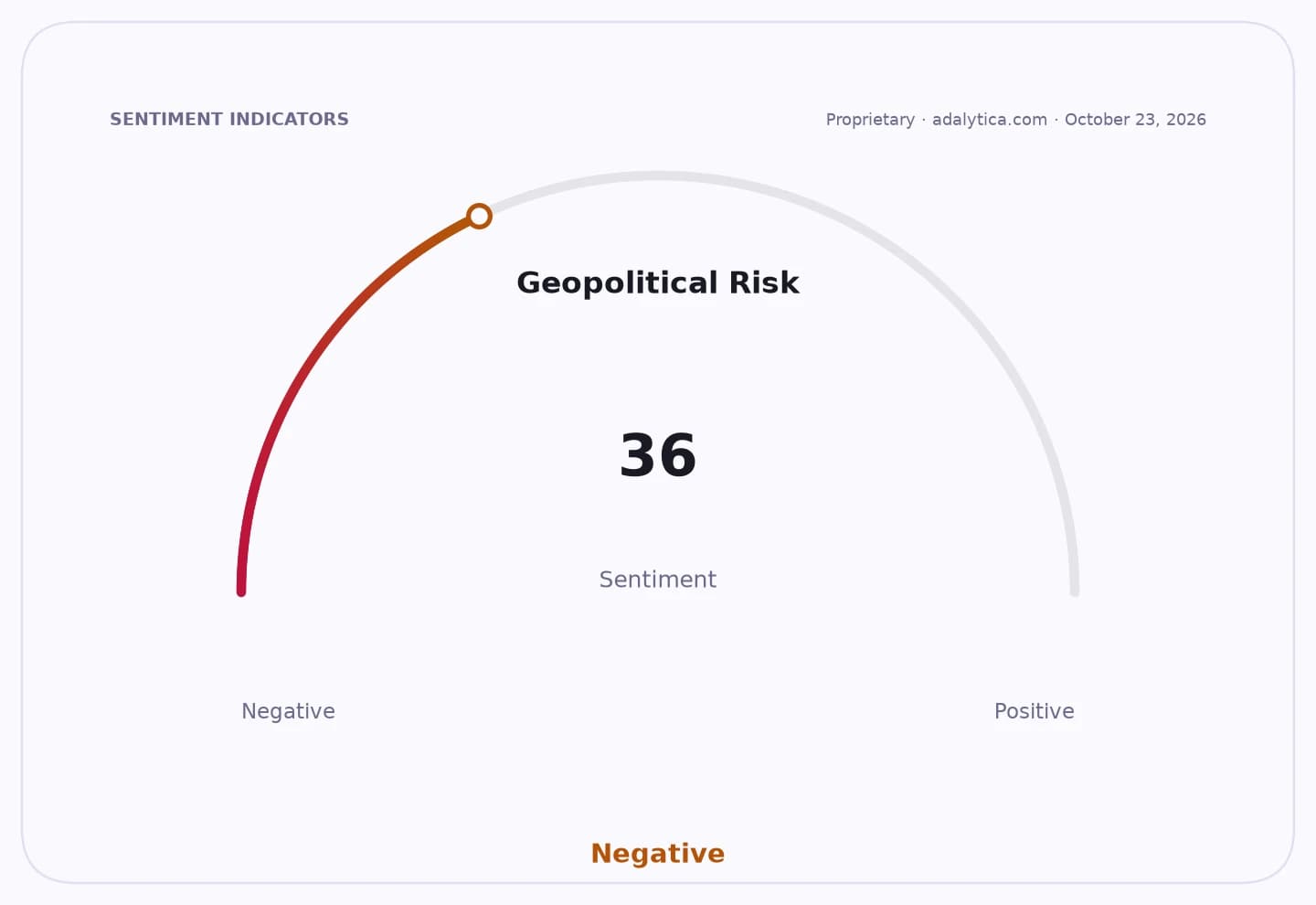
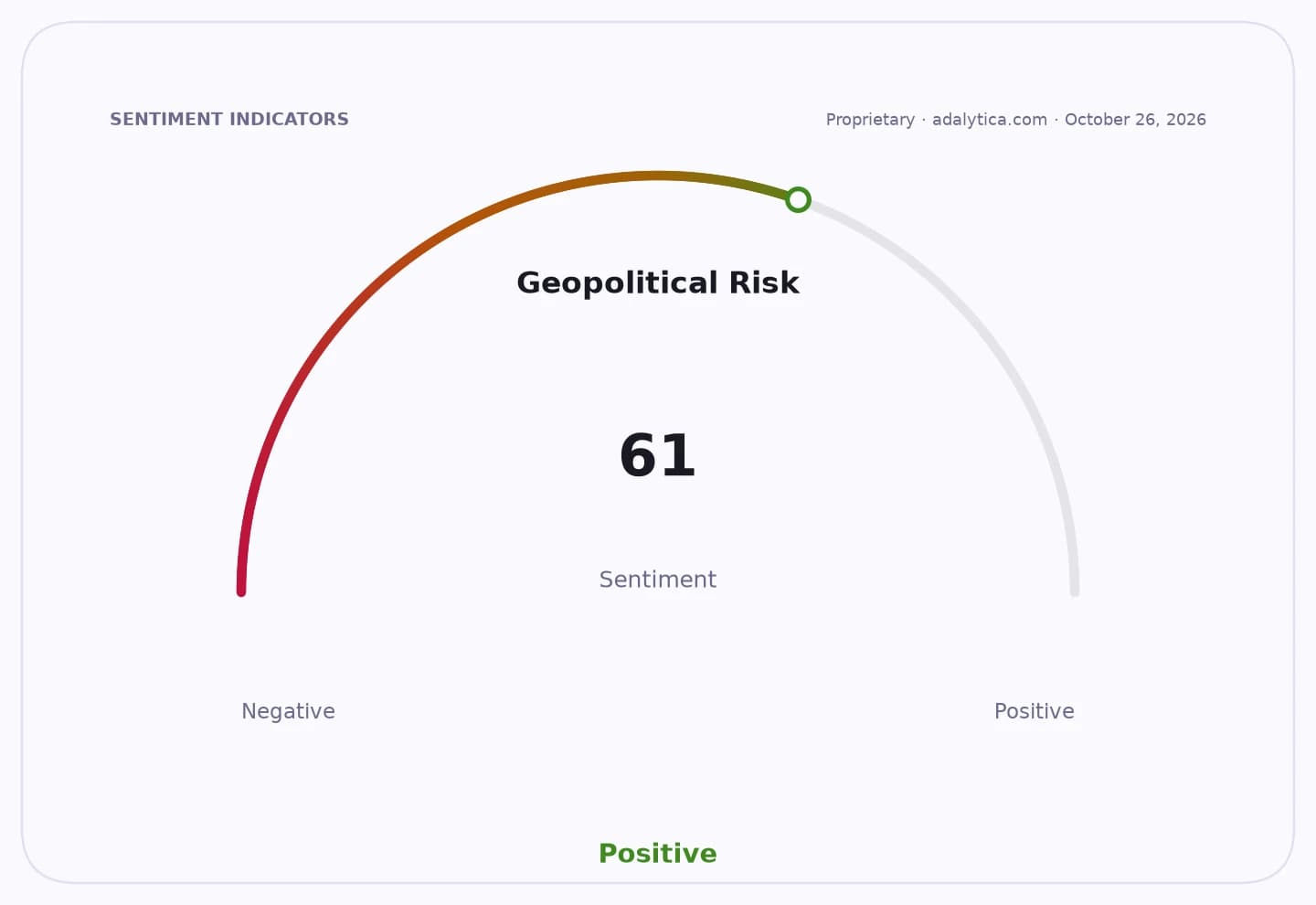
The market backdrop suggests investors have room to price in more of this realignment. Adalytica’s Global Stability Sentiment gauge remains neutral at 61, but awareness sits in fear territory at 18, showing that geopolitical risk is still being underappreciated even after recent swings. That is exactly the kind of setup where infrastructure and corridor winners can compound while the market stays fixated on the next headline.
Azerbaijan’s next two years at the helm of CICA give Baku leverage to shape a format that touches trade, technology and confidence-building across Asia. If the Russia-Iran gas transit talks advance alongside that agenda, the South Caucasus could become an even more important toll road for energy and commerce — and the investable winners will be the companies tied to pipes, ports, rail, power and regional logistics, not the headlines themselves.
| Entity | Gains | Losses |
|---|---|---|
| Azerbaijan | ▲More diplomatic leverage | ▼Higher corridor pressure |
| Russia | ▲Wider regional access | ▼Less route flexibility |
| Energy transit operators | ▲Higher throughput optionality | ▼Bottleneck risk elsewhere |
| Rival corridors | ▲Less centrality | ▼Transit share pressure |