Jerônimo Rodrigues’ re-election in Bahia and the PT’s clean sweep of the state’s two Senate seats gives Brazil’s governing party an unusually powerful regional base in the country’s fourth-largest state and strengthens its hand in Congress ahead of a period when fiscal, infrastructure and energy debates will be central to Brasília.
Bahia reelects Jerônimo Rodrigues, PT wins Senate seats
With 97.85% of polling stations counted, Rodrigues had 55.55% of valid votes against 43.97% for ACM Neto of União Brasil, a margin of almost 939,000 ballots. The result means the Workers’ Party will govern Bahia for a sixth consecutive term, while former governor Rui Costa and veteran senator Jaques Wagner secured the two Senate seats in play.
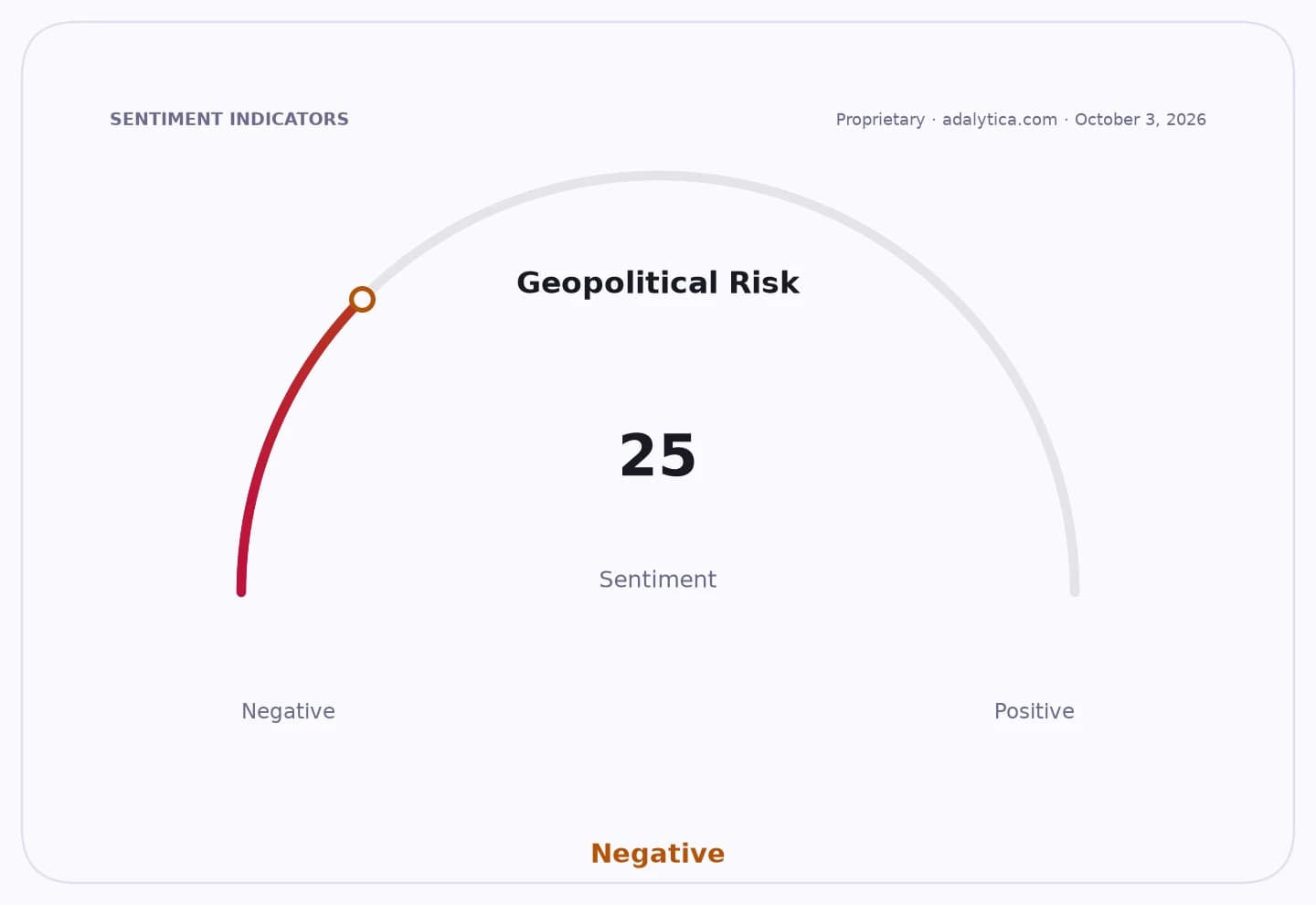
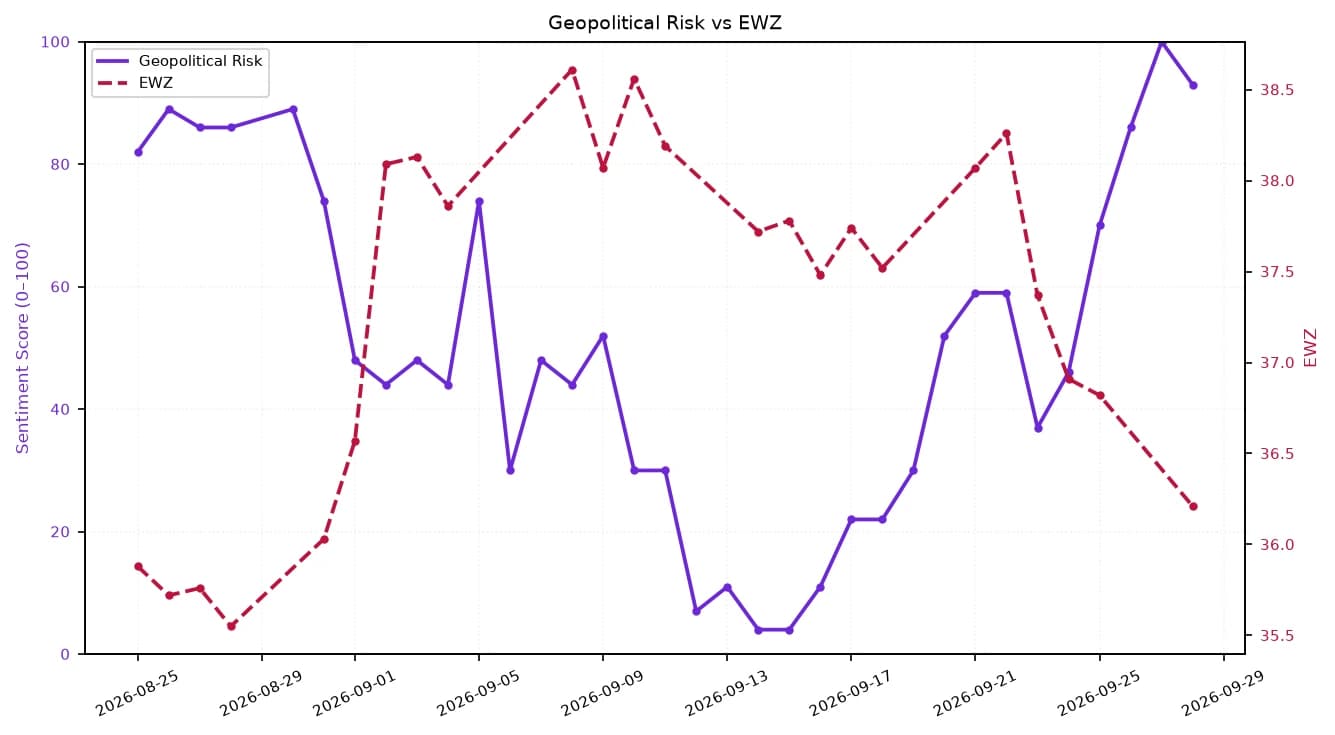
Sentiment IndicatorsⓘProprietary · adalytica.com · October 5, 2026
This is a snapshot — live sentiment, awareness and momentum for 130+ markets update continuously in the dashboard.Open AlphaPulse
The scale of the victory matters well beyond local politics. Bahia is one of Brazil’s most populous and economically relevant states, and its government sits at the intersection of social spending, state-level infrastructure decisions and relations with the federal government. Keeping the governorship while taking both Senate seats gives the PT a stronger platform to defend President Luiz Inácio Lula da Silva’s agenda in Congress, where coalition arithmetic remains fragile.
For investors, the result is less about immediate market moves than about policy continuity and legislative support in a state that matters for industrial, energy and consumer demand. Petrobras, which is heavily exposed to Brazil’s political and regulatory cycle, tends to draw attention whenever the PT consolidates political power, even though the company’s share price will still be driven primarily by oil prices, capital allocation and dividend policy rather than any single election result. Santander Brasil, which has a sizable retail presence in the country, is also more sensitive to domestic growth and credit conditions than to the vote itself.
The outcome also underscores how much the PT’s Bahia machine still benefits from the party’s long incumbency in the state. Rodrigues repeated his 2022 victory over ACM Neto, though this time without a second round. The Senate races were more comfortable still: Rui Costa took 29.95% and Wagner 27.52%, well clear of their nearest rivals Angelo Coronel and João Roma, each around 20%.
The broader message for markets is that Brazil’s political map remains split, but the PT has retained one of its strongest regional fortresses. That should help Lula’s allies in the coming fights over budget discipline, infrastructure spending and state-federal coordination, while leaving investors to weigh the usual trade-off: political stability in a large state, but a Congress likely to remain dependent on deals and coalition management rather than clean ideological majorities.
| Entity | Gains | Losses |
|---|---|---|
| PT in Bahia | ▲Regional dominance | ▼Opposition momentum |
| Jerônimo Rodrigues | ▲Second-term mandate | ▼ACM Neto |
| Rui Costa and Jaques Wagner | ▲Senate seats | ▼Rival camps |
| Petrobras and domestic Brazil assets | ▲Policy continuity | ▼Reform certainty |