Bangladesh has set out a new energy roadmap that leans on domestic coal, fast-tracked solar and expanded gas supply to meet surging power demand, a mix that could ease near-term shortages but also deepen fiscal and execution risks.
Bangladesh energy roadmap adds coal, solar and gas
The plan matters because electricity demand is rising faster than the grid and fuel system can reliably support, forcing the government to choose between costlier imports, domestic fossil-fuel development and a rapid buildout of renewables. For investors and lenders, the roadmap points to a large pipeline of infrastructure spending, but also to a policy backdrop that remains highly dependent on financing, fuel availability and project delivery.
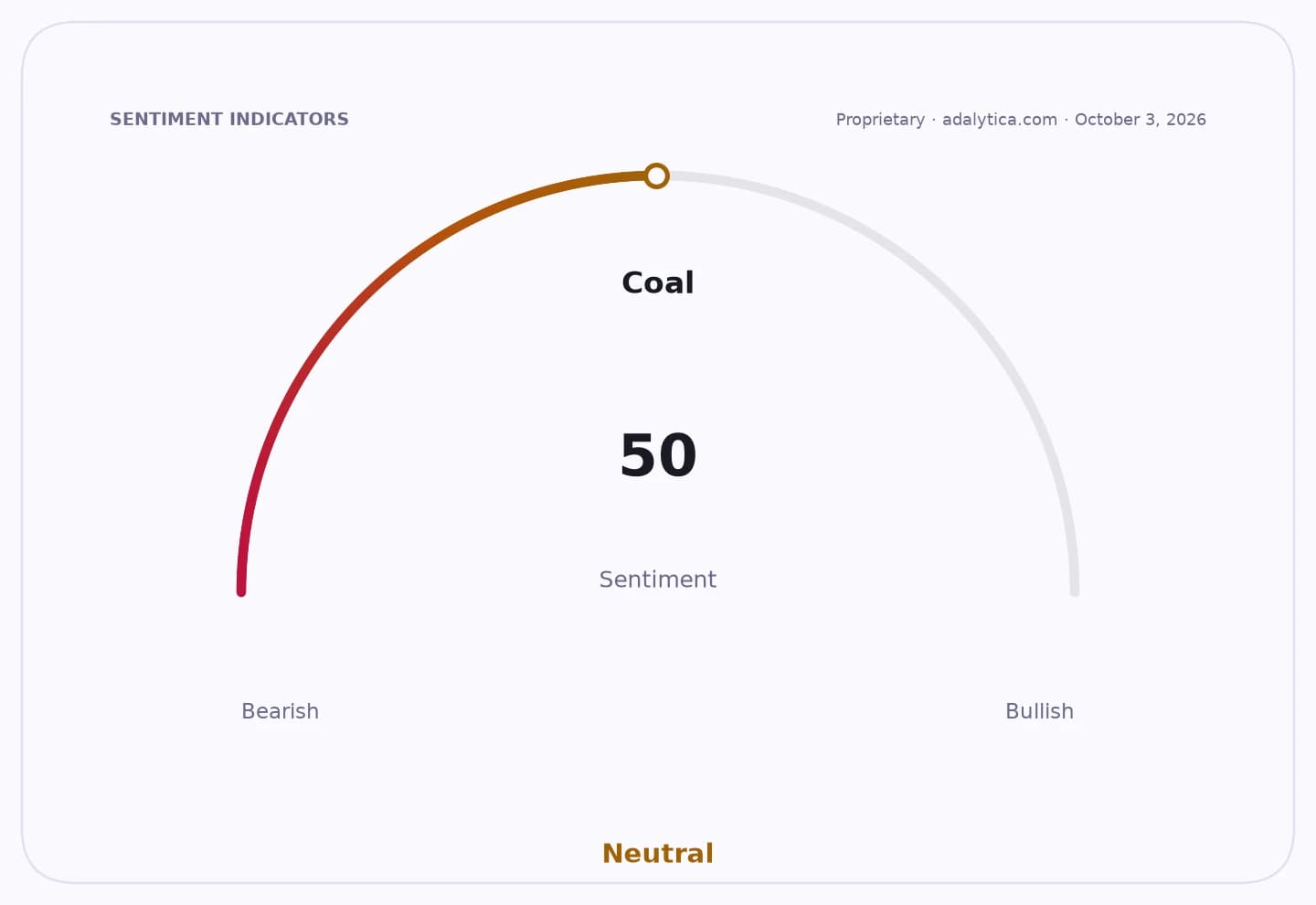
Sentiment IndicatorsⓘProprietary · adalytica.com · October 3, 2026
This is a snapshot — live sentiment, awareness and momentum for 130+ markets update continuously in the dashboard.Open AlphaPulse
Under the medium-term plan for 2028-30, the government wants to add 12,940 megawatts of capacity, including 10,000MW of solar and 2,940MW of coal-fired generation from Barapukuria, Payra and Matarbari. It also plans grid upgrades and battery storage, with large solar projects to be structured through public-private partnerships in Sirajganj, Sonagazi and Rampal.
The scale of the buildout underscores the pressure on the power system. The government said electricity demand rose 17% year on year to 18,178MW on Sept. 14, while generation in September 2025 stood at 15,271MW, leaving a gap that has been filled by gas, coal and liquid fuels. For September 2026, generation is projected to edge up to 15,859MW, with coal output easing and liquid-fuel generation rising sharply to 3,791MW to cover shortages.
That makes the roadmap as much a supply-security response as an energy-transition document. Bangladesh is trying to reduce its exposure to imported LNG and oil, both of which have strained budgets and made power costs vulnerable to global price swings. The plan calls for a 1,000mmcfd land-based LNG terminal, a 600mmcfd floating terminal at Kutubdia under negotiation with a Chinese state enterprise, and more domestic gas exploration, including an offshore model PSC scheme open to international firms.
On the clean-energy side, the government is using aggressive incentives to accelerate solar adoption, slashing import duties on equipment to 1% from 64%, cutting advance income tax to 1% from 15% and setting a purchase tariff of Tk 10.50 per unit. It has also targeted at least 30% of total generation from renewables by 2040, a commitment that could attract development finance if the policy remains stable.
But the roadmap also revives tensions that have defined Bangladesh’s energy debate for years. Analysts warn that heavy reliance on imported LNG and continued coal expansion could leave the country exposed to volatile fuel markets and mounting environmental and financing constraints. Khondaker Golam Moazzem of Knowledge Hub Institute Trust said the plan lacks a rigorous funding analysis, while IEEFA’s Shafiqul Alam said domestic gas exploration needs to proceed without interruption as global financing for coal contracts.
For investors, the winners are likely to be solar developers, grid equipment suppliers, battery storage providers and LNG-linked infrastructure builders if the financing closes. The losers could be liquid-fuel suppliers if renewable and gas projects advance on schedule, and coal developers if external financing tightens further. The bigger question is whether Bangladesh can fund and execute a three-track strategy — coal, gas and solar — quickly enough to avoid another cycle of shortages and expensive emergency power generation.
| Entity | Gains | Losses |
|---|---|---|
| Solar developers | ▲Faster project pipeline | ▼None near term |
| LNG and gas инфраструктure | ▲New terminal demand | ▼Fuel import exposure |
| Coal project sponsors | ▲2,940MW capacity plan | ▼Financing and ESG pressure |
| Liquid-fuel generators | ▲Short-term dispatch gains | ▼Long-term displacement risks |