India is forcing more than 100 captive coal-fired power plants to run at maximum capacity through year-end as a demand spike and tight fuel stocks threaten electricity supply across the world’s third-largest coal consumer.
India orders 112 captive coal plants to run at full capacity
The move is a blunt sign that the power system is under strain just as hotter weather and weaker hydropower output lift the need for thermal generation. For investors, it underscores that India is leaning on coal longer and harder than planned, which supports fuel demand, keeps utilities and industrial users on alert for shortages, and complicates the country’s clean-energy transition.
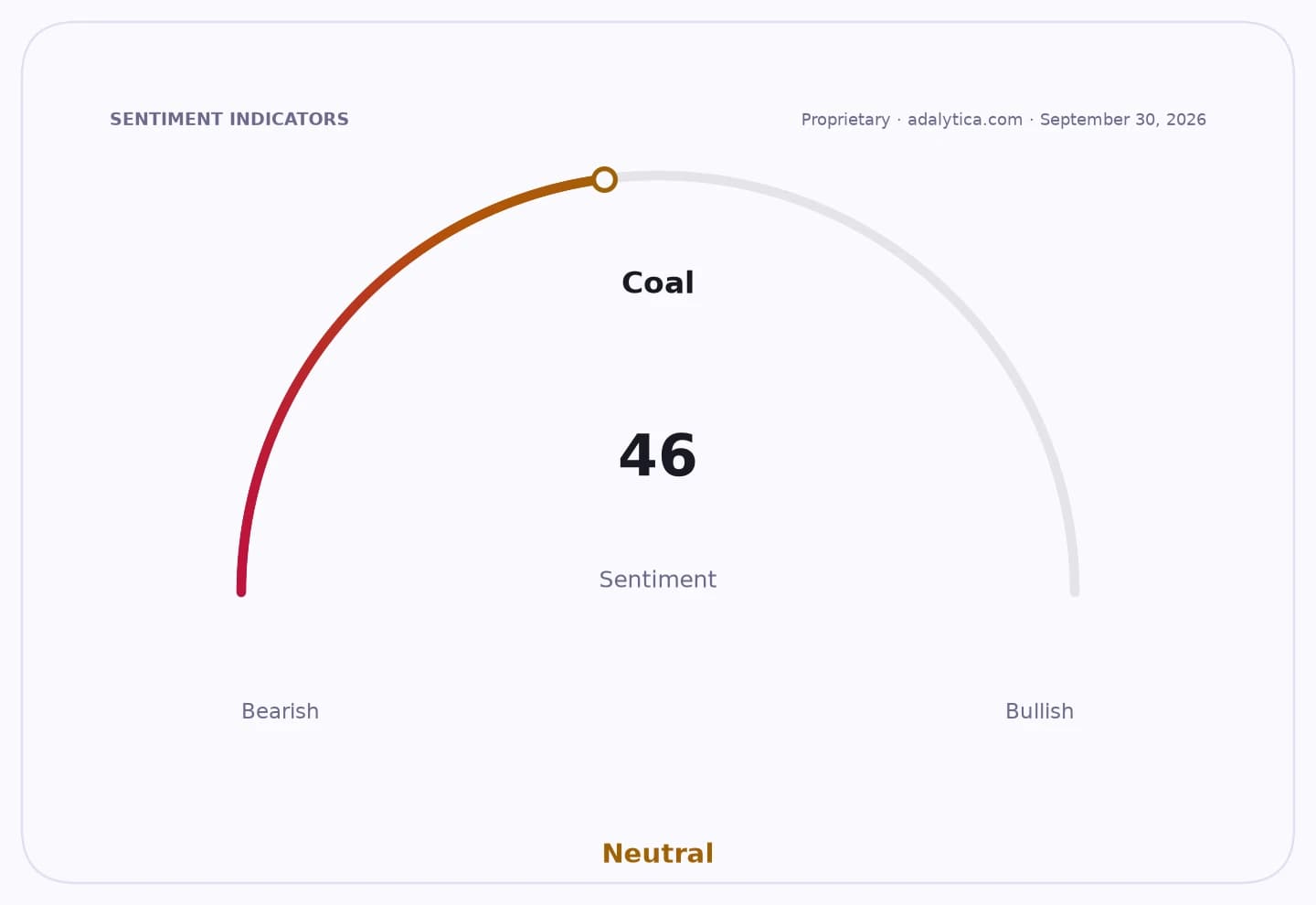
Sentiment IndicatorsⓘProprietary · adalytica.com · October 2, 2026
This is a snapshot — live sentiment, awareness and momentum for 130+ markets update continuously in the dashboard.Open AlphaPulse
The federal power ministry invoked emergency powers under Section 11 of the Electricity Act and ordered 112 plants with at least 50 megawatts of installed capacity to maximize generation from October 1 through Dec. 31. The directive covers facilities owned by companies including Vedanta, Tata Steel, Hindalco Industries, JSW Steel, UltraTech Cement, Reliance Industries, Indian Oil, Bharat Aluminium, Hindustan Zinc and Nayara Energy.
India said the order is intended to meet an “expected rise in electricity demand in the coming months,” according to the Sept. 25 directive seen by Reuters. Nearly 40% of coal-fired plants are already operating with critically low fuel stock, the report said, as El Niño-driven temperatures raise power use and strain supplies.
The plants are mostly captive units built to serve energy-intensive industries such as aluminum smelters, steel mills, cement factories and refineries. New Delhi told generators to sell surplus electricity on power exchanges, a move that could ease local shortages but also add near-term supply to spot markets.
The ministry also ordered weekly reporting to the Central Electricity Authority on generation, captive consumption, power sales, available capacity and coal stocks, signaling tighter oversight of industrial power assets. Separately, it extended an earlier emergency order for Tata Power’s imported coal plant in Mundra, Gujarat, to run at full capacity until Dec. 31.
The policy has direct implications for coal miners, power traders and heavy industry, which may face higher operating costs and less flexibility in how they use captive generation. It also reinforces the case that coal remains India’s emergency backstop when demand outruns grid stability.
The immediate focus now is whether the extra output can stabilize supply without worsening fuel shortages, power-exchange volatility or margin pressure for industrial users heading into the year-end peak.
| Entity | Gains | Losses |
|---|---|---|
| Coal miners and suppliers | ▲Higher demand | ▼Tighter inventories |
| Industrial captive plants | ▲More operating run-time | ▼Less flexibility |
| Power exchanges | ▲More spot supply | ▼Higher volatility |
| Heavy industry and consumers | ▲Reduced outage risk | ▼Higher fuel and power costs |