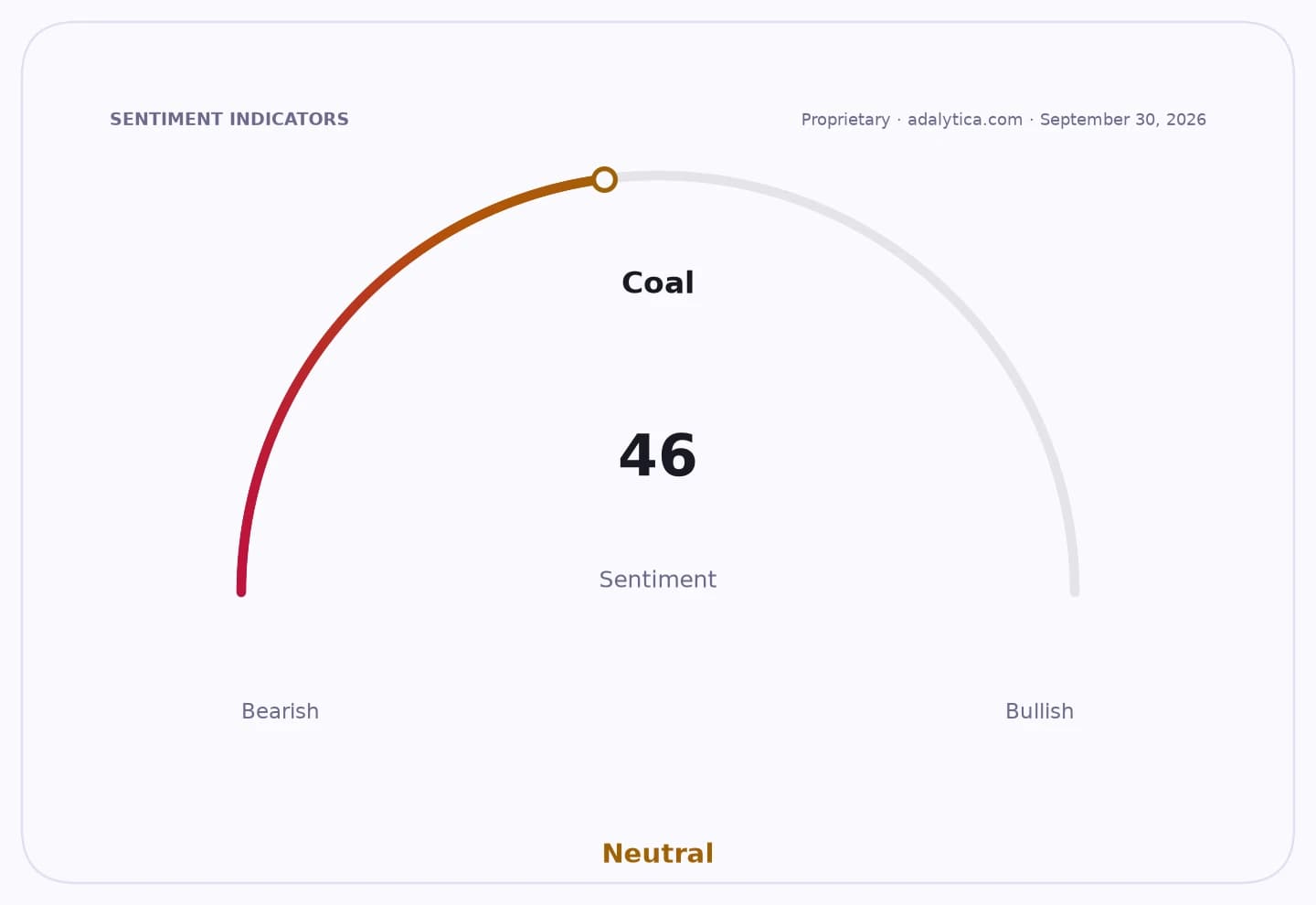
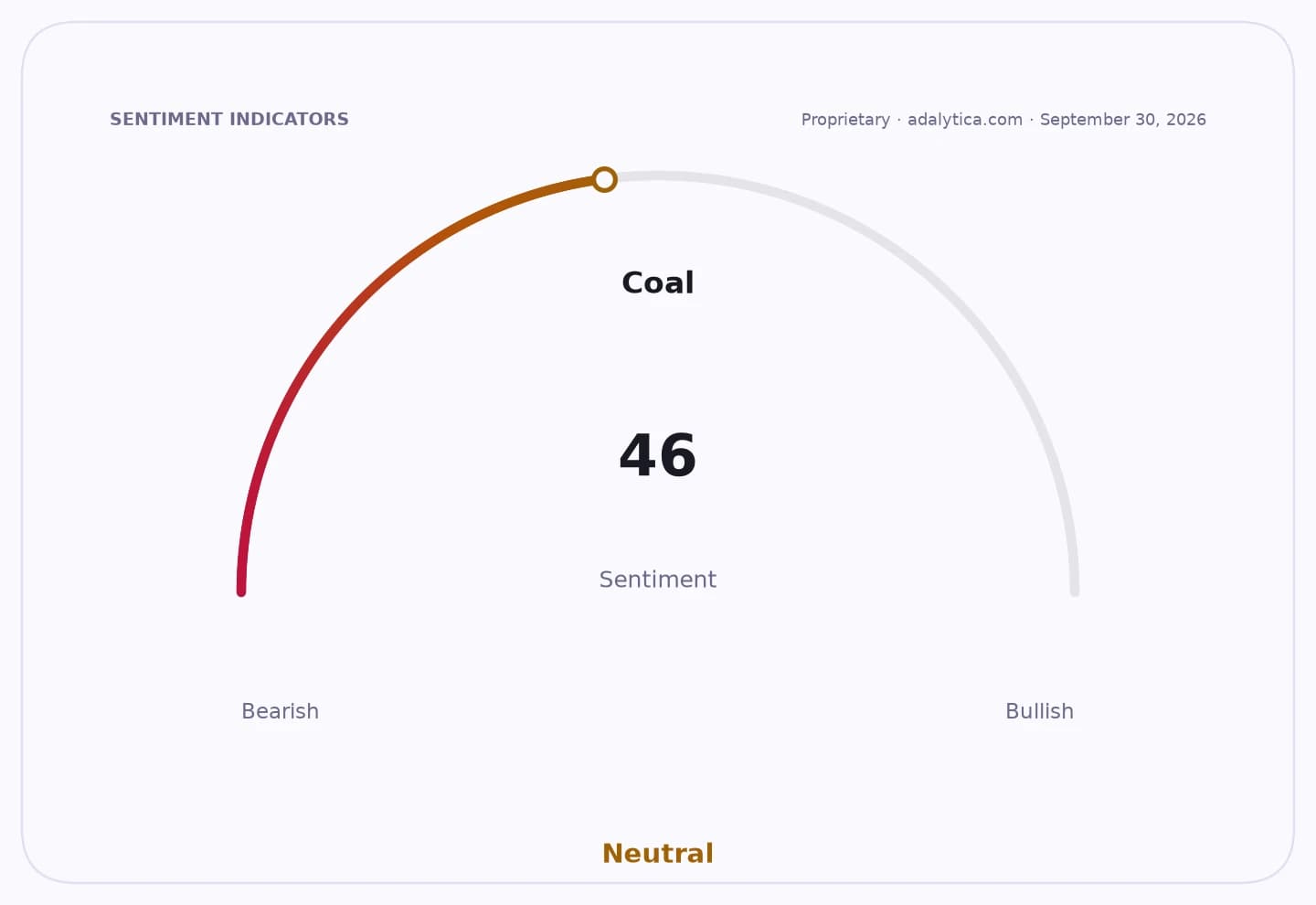
Thermal coal is heading into 2026 with fewer easy answers: seaborne supply is set to tighten even as demand in Asia cools, creating a market that looks stable on the surface but is increasingly vulnerable to sudden price spikes.
Thermal coal supply tightens as Asia demand cools

That matters because thermal coal still sits at the center of power systems in China and India, and the balance between exports from Indonesia and Australia and import demand from Asia will decide whether prices stay range-bound or break higher. Reuters data compiled by Kpler show Asia’s seaborne thermal coal imports peaked at 898.2 million tons in 2024, slipped to 856.3 million tons in 2025 and are expected to fall again in 2026.
Sentiment IndicatorsⓘProprietary · adalytica.com · October 3, 2026
This is a snapshot — live sentiment, awareness and momentum for 130+ markets update continuously in the dashboard.Open AlphaPulse
The biggest shift is on the supply side. Indonesia, the world’s largest exporter, produced a record 790 million tons of coal in 2025 and is now moving to curb output in 2026 in an effort to restrict exports and support prices. That is the kind of policy move investors should watch closely: it turns one of the market’s most important swing suppliers from a volume maximizer into a price manager.
At the same time, domestic demand in Indonesia is absorbing more coal, especially from metals processing. The country is the world’s top nickel producer and is expanding output in other energy-intensive sectors such as aluminum. Reuters noted that domestic sales already account for about 31% of total Indonesian coal demand, so any further rise in local consumption directly squeezes seaborne availability.
Australia, the other major exporter to Asia, is not positioned to fill the gap quickly. New projects are constrained by permitting, while South Africa faces rail bottlenecks. Russia and the U.S. remain credible suppliers, but higher freight costs reduce their flexibility. India, meanwhile, may import less coal for power as its own production rises, and smaller buyers such as Vietnam, the Philippines and Bangladesh are not large enough to offset weakness from China and India.
The market implication is straightforward: supply is likely to fall a bit faster than demand, which argues for prices that remain broadly supported even if they do not stage a dramatic breakout. That is exactly the kind of setup the market often underestimates. Thermal coal rarely needs a massive demand shock to rally; it only needs a modest disruption in Indonesian exports, a weather event, or tighter Chinese mine inspections to expose how thin the buffer really is.
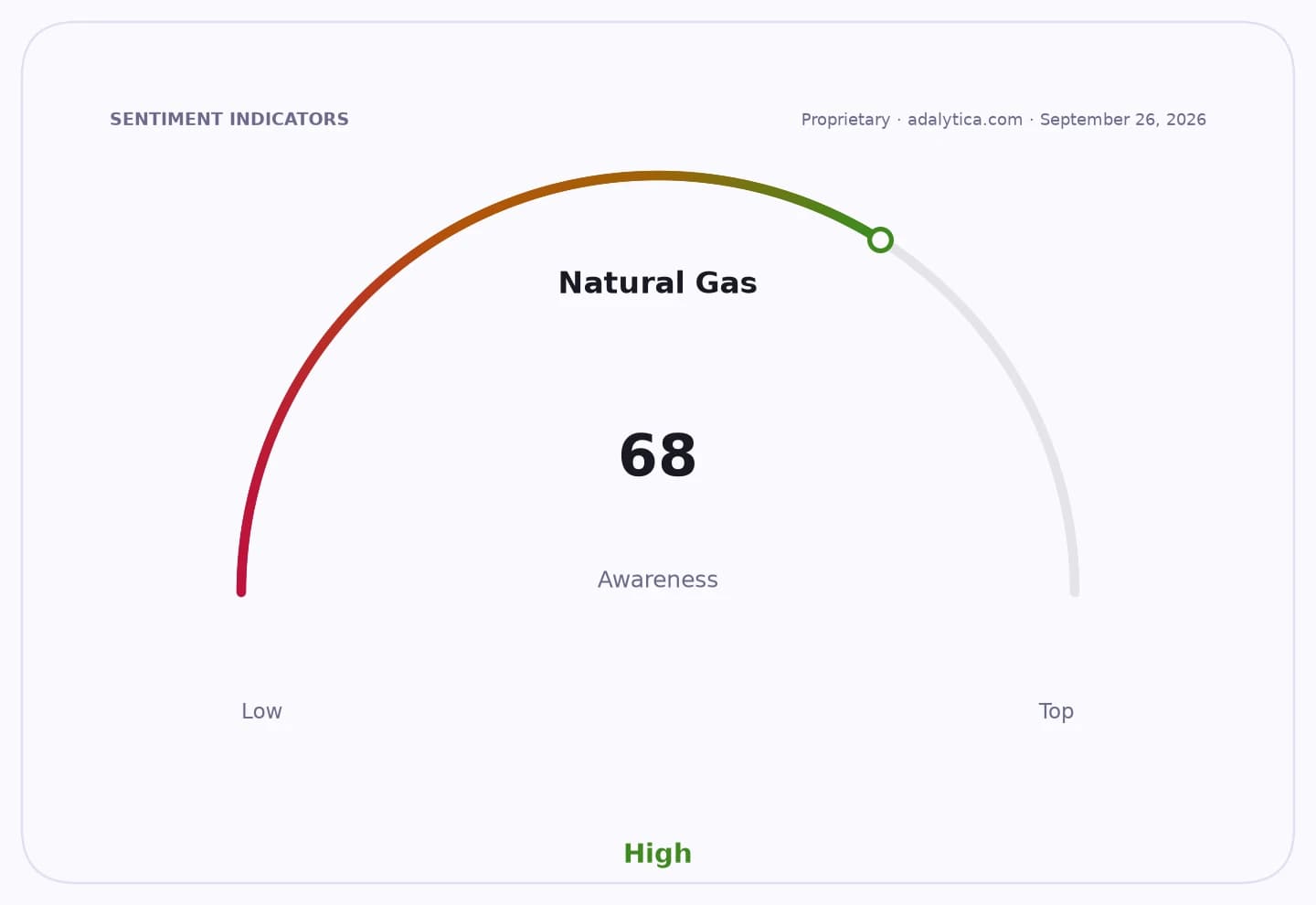
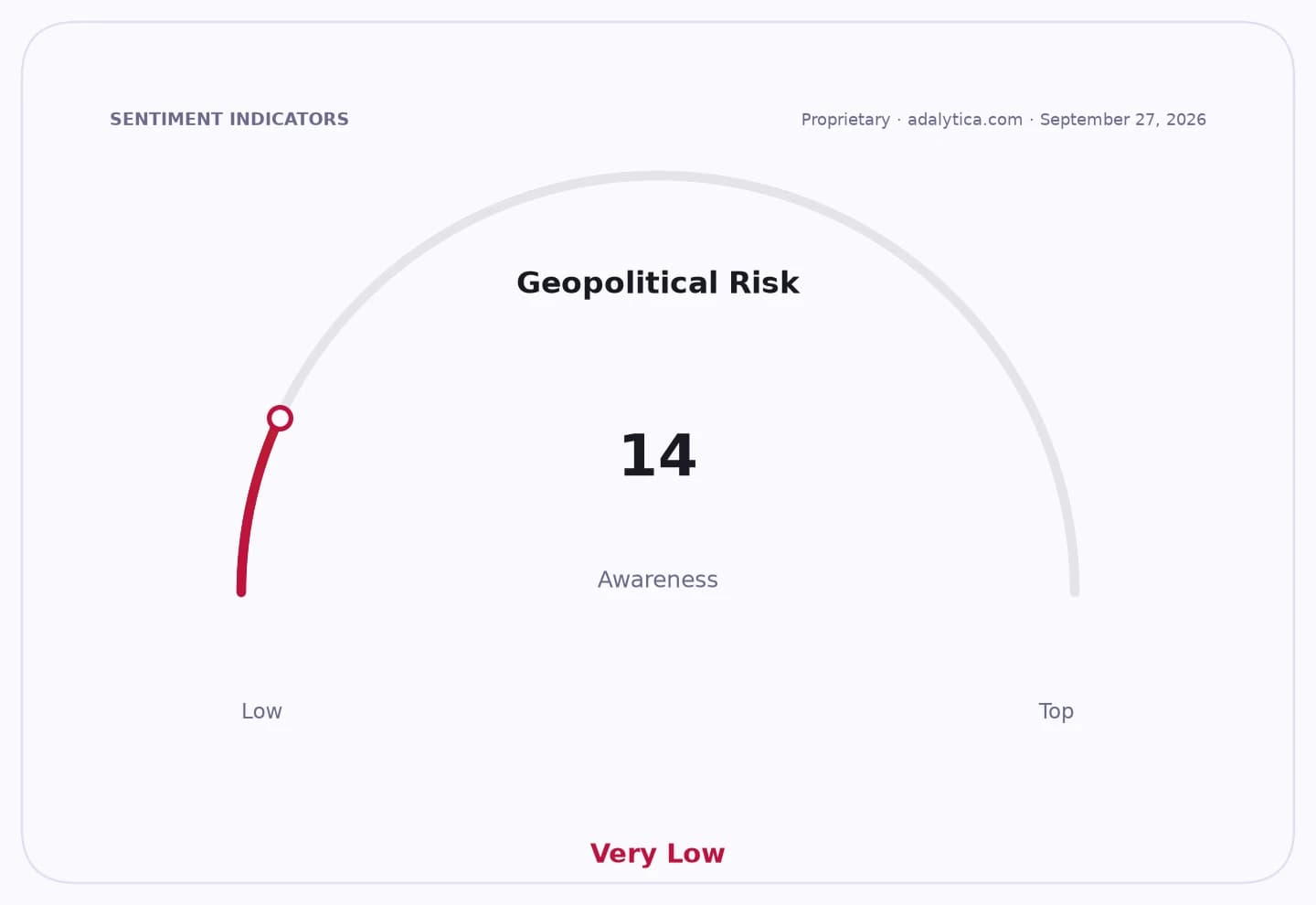
For investors, that favors producers with low-cost assets and strong leverage to any price firmness, while caution is warranted on industrial users and utilities that still rely on seaborne supply. The recent volatility in coal-related sentiment, along with the broader fear in global stability indicators and renewed strength in oil, reinforces the same message: energy markets are being pulled by geopolitics, not just by normal supply-and-demand math.
The next move in thermal coal will likely be decided in Indonesia, not in the spot headlines. If export curbs bite and domestic demand keeps rising, the market may discover that the “many unknowns” are not a reason to stay away — they are the reason the opportunity exists.
| Entity | Gains | Losses |
|---|---|---|
| Indonesian coal producers | ▲higher domestic pricing power | ▼export volumes |
| Thermal coal exporters with logistics constraints | ▲tighter market pricing | ▼market share |
| Asian importers | ▲short-term supply optionality | ▼lower bargaining power |
| Coal-intensive utilities | ▲none | ▼fuel-cost pressure |