Kyrgyzstan’s coal trade has flipped from a dependence story into a net-export story, with imports from Kazakhstan falling by almost 3.5 times while shipments abroad surged enough to leave the country with a $51.9 million surplus in coal and solid fuel trade for the first seven months of 2026.
Kyrgyzstan coal trade turns to a surplus in 2026
That matters because coal is still a core energy input across Central Asia, and a sharp change in who is buying from whom can ripple through power costs, transport demand and regional trade balances. For investors, it is also a reminder that commodity flows are not static: local production, neighboring demand and border trade can turn a small producer into a meaningful supplier when conditions line up.
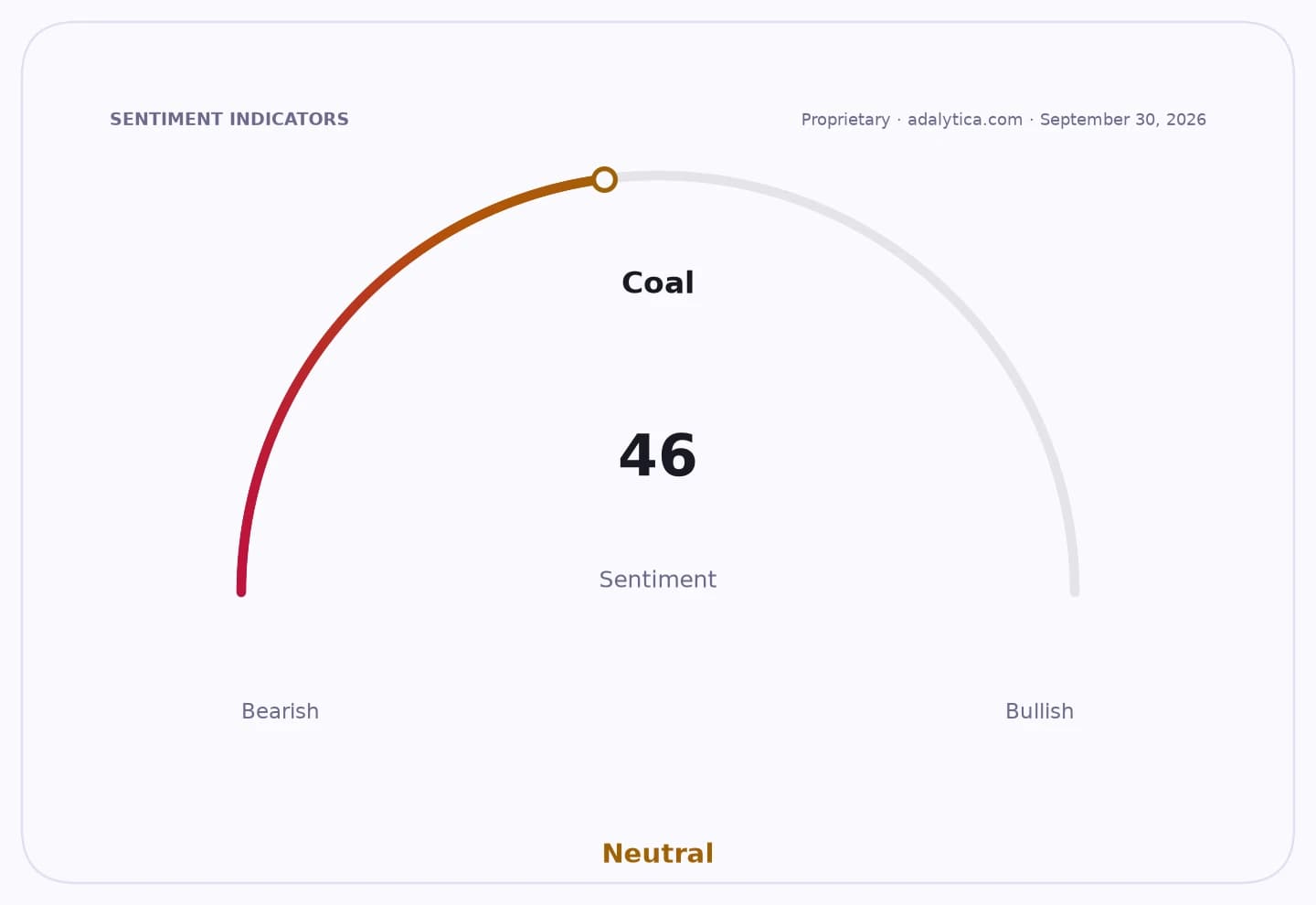
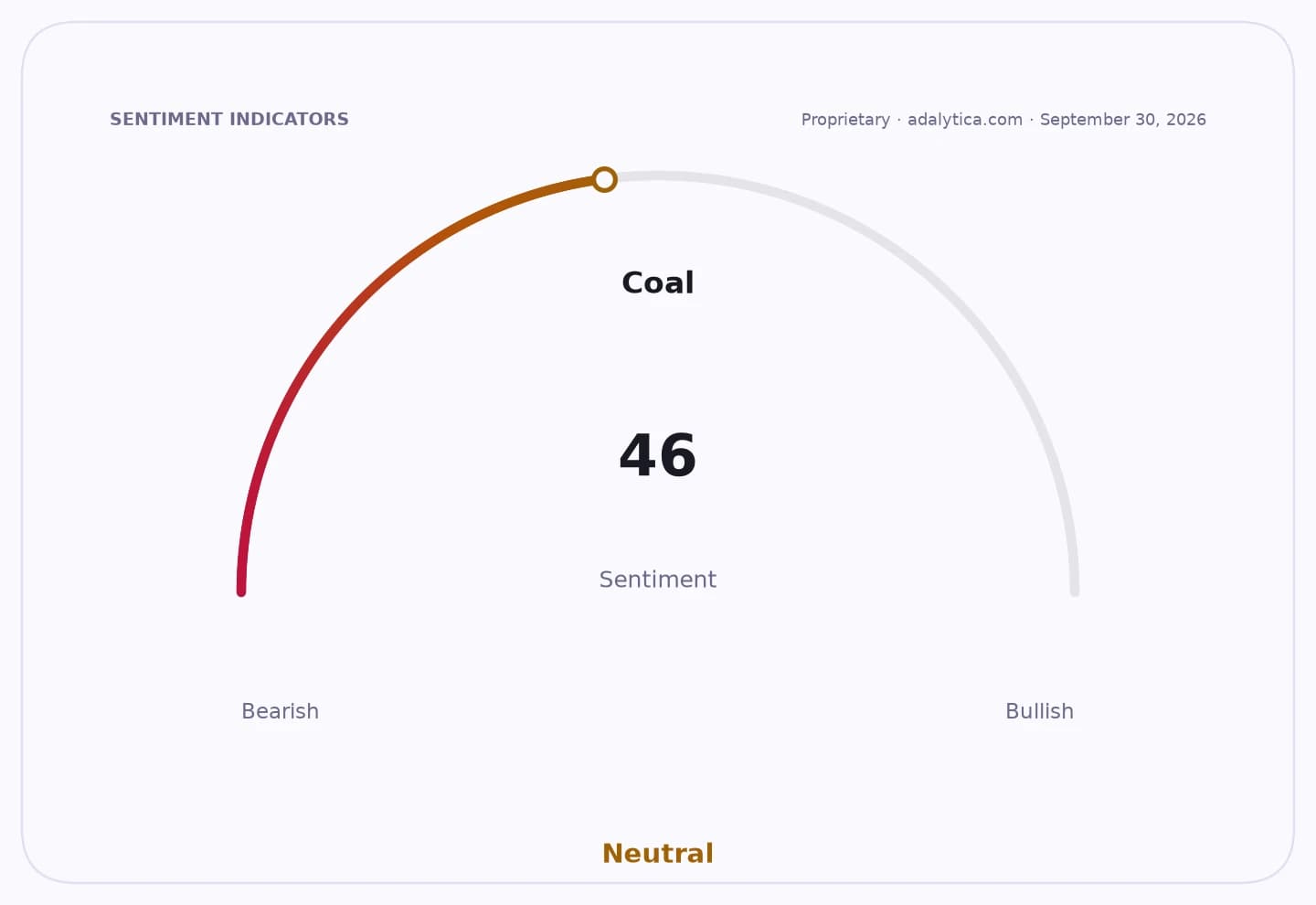
Sentiment IndicatorsⓘProprietary · adalytica.com · September 30, 2026
This is a snapshot — live sentiment, awareness and momentum for 130+ markets update continuously in the dashboard.Open AlphaPulse
Kyrgyzstan imported coal products and peat worth just $7.6 million in January-July, down 59.2% from a year earlier. The steepest drop came from Kazakhstan, where purchases of hard coal fell from $15.9 million to $4.6 million. Even so, Kazakhstan remained Kyrgyzstan’s largest supplier, accounting for 67.5% of imports, followed by Russia at 15% and China at 12.1%.
At the same time, Kyrgyz exports of coal and solid fuels climbed 17.2% in dollar terms to $59.5 million, with volumes reaching 1.17 million tons. Hard coal was the main driver: exports jumped to 701,300 tons worth $33.1 million, more than doubling in both volume and value from a year earlier. Uzbekistan remained the biggest buyer, taking nearly 672,000 tons, while China and Lithuania also received shipments.
The bigger surprise is lignite. Kyrgyzstan shipped 472,800 tons of brown coal worth $26.4 million, a 35.2% increase in value, helped by a 5.7-fold jump in sales to Tajikistan and an 84.4% rise in deliveries to China. Put simply, the country is selling far more coal than it is buying, and that supports local producers, transport operators and export-linked revenue.
For long-term investors, the key takeaway is that coal markets still reward scale, logistics and regional demand even in a world focused on energy transition. Moves like this do not rewrite the global coal story, but they do show how smaller producers can benefit when neighboring economies need steady fuel supplies. That is worth watching, especially in a market where coal sentiment remains cautious and prices can swing quickly. In the meantime, Kyrgyzstan’s trade data suggest a stronger export position — and a better setup for domestic miners and rail-linked businesses than its import numbers alone would imply.
| Entity | Gains | Losses |
|---|---|---|
| Kyrgyz coal exporters | ▲Higher sales revenue | ▼— |
| Kazakhstan coal suppliers | ▲— | ▼Lost Kyrgyz demand |
| Uzbekistan, Tajikistan, China buyers | ▲More supply options | ▼— |
| Kyrgyz importers/power users | ▲Lower import dependence | ▼— |