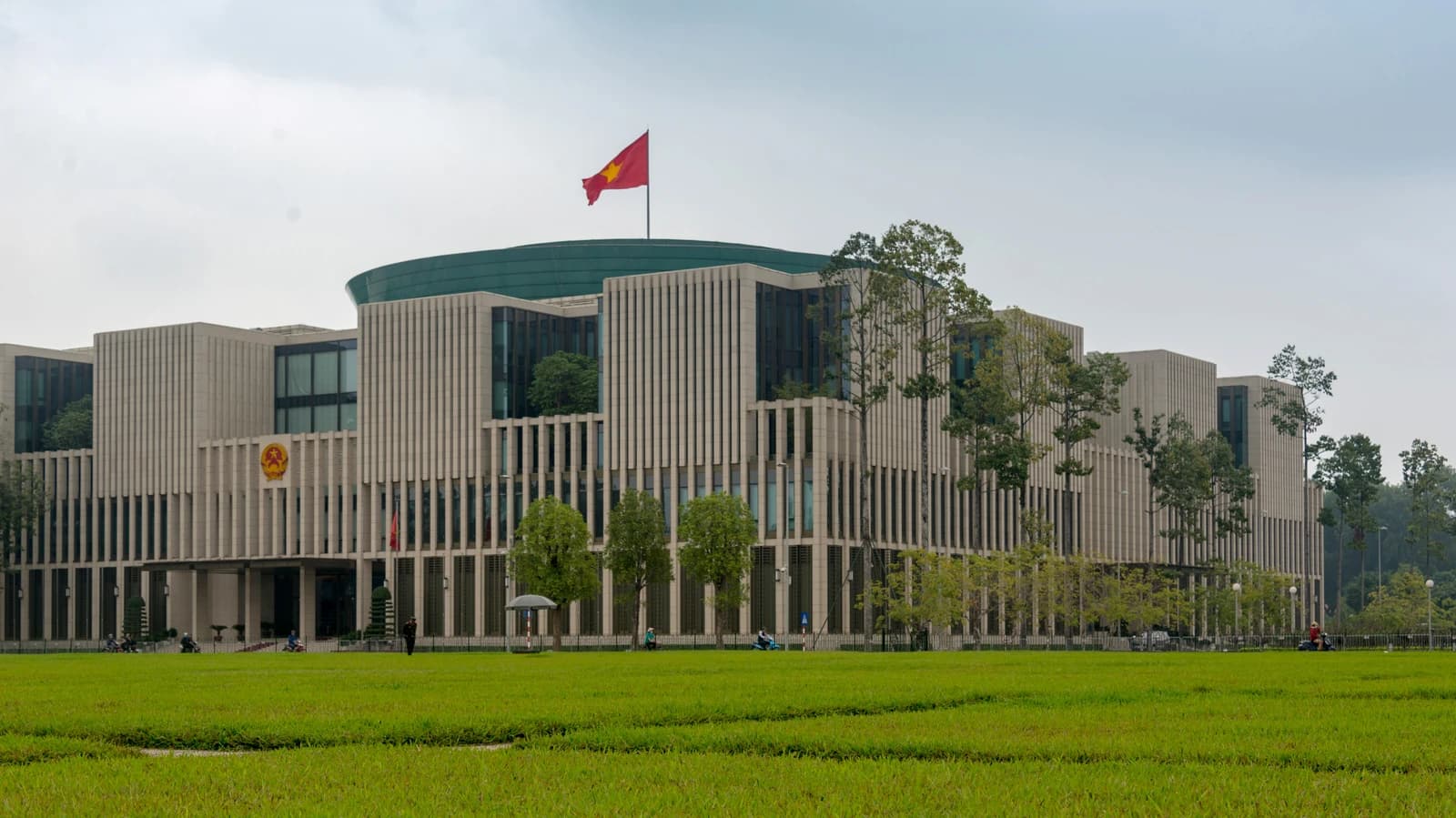
Bao Viet Group has tied up more than 170.5 billion dong in the long-delayed International Financial Tower project in Hanoi, underscoring how legacy landbank positions and stalled developments can remain a drag on capital for years.
Bao Viet Group Holds Hanoi Tower Asset
The investment, disclosed in the insurer’s consolidated accounts as of Sept. 30, 2026, was recorded at cost and appears unchanged in recoverable value after provisions, meaning Bao Viet is still carrying the asset at roughly its original book value. For investors, that matters because it shows the group has not booked a loss on the project, but neither has it converted the site into income-generating property after nearly two decades.
The tower site at 220 Tran Duy Hung was allocated to Bao Viet in 2005 for a planned 34-storey, 150-metre office and retail complex with an estimated budget of about 3.8 trillion dong. Instead, the land remains vacant, with reports describing an overgrown lot rather than a completed Grade A office building. The gap between the original development plan and the current state highlights the execution risk embedded in Vietnam’s real estate pipeline, especially in Hanoi, where authorities have been reviewing a large number of slow-moving projects.
Bao Viet’s exposure is not limited to the International Financial Tower. The group also holds property-linked assets in the Quang Minh villa project, another long-running development on Hanoi’s list of delayed schemes. At the same time, its investment property portfolio fell to just over 90.39 billion dong from 102.47 billion dong at the start of the year, with a decline in the carrying value of its leased office building at 233 Dong Khoi in Ho Chi Minh City.
For shareholders, the key issue is opportunity cost. Capital tied up in dormant property cannot be redeployed into higher-return insurance operations, financial investments or dividend support. For the broader market, the case is another reminder that Vietnam’s urban land allocations have often produced balance-sheet assets rather than cash flow, particularly where permitting, coordination or project execution stalls.
The bull case is that the land still has strategic value in central Hanoi and could eventually support a large commercial asset if the project is revived. The bear case is that the longer a project remains idle, the greater the risk of regulatory scrutiny, redesign costs or impairment pressure if market conditions weaken. Investors will be watching whether Bao Viet can unlock value from the site, or whether the project remains a capital sink on a balance sheet that is otherwise meant to be conservative and liquid.
| Entity | Gains | Losses |
|---|---|---|
| Bao Viet Group | ▲Retains land value | ▼Capital tied up |
| Hanoi authorities | ▲Potential future tax base | ▼Slow project pipeline |
| Property developers | ▲Scarcity of prime central land | ▼Regulatory scrutiny |
| Shareholders | ▲Possible asset upside | ▼Lower capital efficiency |