Bill Gates has turned Donald Trump’s dismissive stance on AI into a broader warning: the world is still not prepared for how fast the technology is moving, and the policy response risks lagging behind the economics.
Bill Gates Warns AI Policy Trails Technology
The Microsoft co-founder said in a CBS Mornings interview that Trump’s comments on artificial intelligence reflect a wider lack of understanding around the technology, adding that any leader who can “unite” people on AI would deserve credit. The remarks matter because they land at the intersection of politics, capital spending and regulation, where the shape of AI rules will influence everything from chip demand to cloud margins and the pace of deployment across the economy.
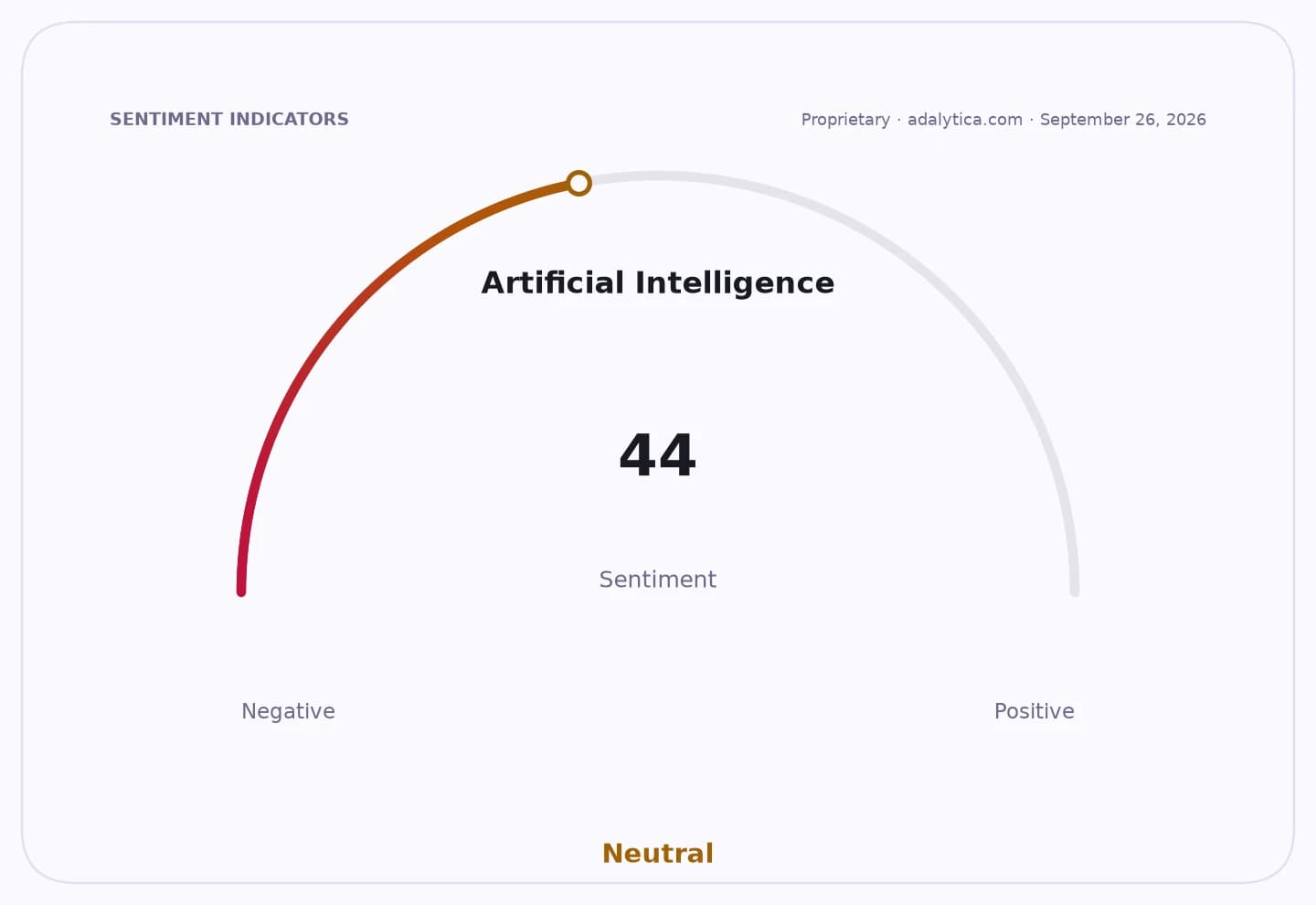
Sentiment IndicatorsⓘProprietary · adalytica.com · September 26, 2026
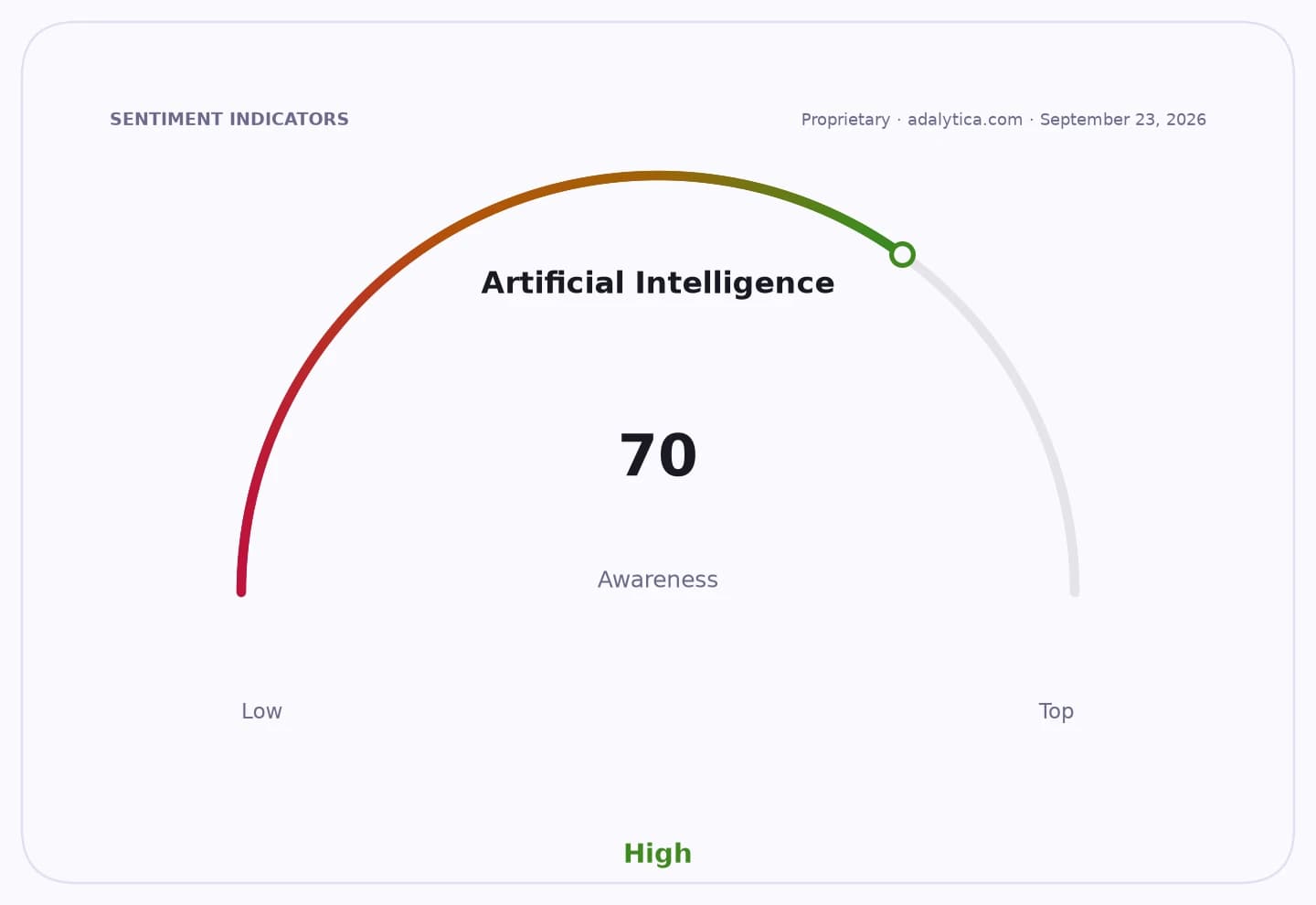
This is a snapshot — live sentiment, awareness and momentum for 130+ markets update continuously in the dashboard.Open AlphaPulse
Trump has called warnings about AI risks a “hoax” while insisting the United States cannot slow development as it tries to stay ahead of China. Gates, by contrast, has repeatedly argued that the sector is advancing faster than society’s ability to absorb the shock. Last week he said development should be slowed until the public is ready, and in an essay last month he warned that AI is reshaping the global economy far more quickly than previous technology waves, reducing the time available for workers, businesses and governments to adapt.
That divide goes to the heart of the investor debate. On one side is the bull case: AI remains a powerful earnings engine, and Washington is unlikely to impose constraints that materially slow capital deployment by Microsoft, Nvidia and their peers, especially with geopolitical competition against China still driving policy. On the other is the bear case: if governments conclude that the safety and labor-market risks are too large to ignore, compliance costs, product restrictions and liability exposure could rise just as companies are pouring billions into data centers, chips and model training.
Artificial Intelligence vs NVDAadalytica.com
Explore this data interactively — full history, time series and cross-market comparisons.Open AlphaPulse
The market has already priced in much of the growth story. Nvidia shares have been trading around $225, near the upper end of their recent range, while Microsoft is above $516, reflecting investor confidence that AI demand will keep expanding. Yet both companies also disclose the same structural risk Gates is pointing to: their filings warn that AI systems can generate incorrect outputs, trigger legal and regulatory action, and invite reputational damage. That tension — huge revenue opportunity, but rising governance risk — is why the policy debate matters to valuations as much as to ethics.
The macro backdrop makes the issue more acute. The Federal Reserve’s policy rate remains around 3.63%, while the 10-year Treasury yield has moved back above 5.1%, leaving financial conditions tight even as AI spending stays elevated. In that environment, investors are increasingly demanding proof that the AI buildout translates into durable returns, not just revenue growth and higher depreciation bills. Any slowdown in adoption, or any regulatory framework that adds friction, would therefore hit not only the technology suppliers but also the broader capital-spending cycle tied to AI infrastructure.
Gates’ comments also underline the growing likelihood that AI policy will be shaped less by technical consensus than by public trust. That matters because the next phase of the industry may depend on whether governments move toward lighter-touch standards that preserve innovation, or toward tougher guardrails after more high-profile failures or labor disruption. For now, the message from one of the technology’s most influential founders is that the political conversation is still far behind the economic reality.
| Entity | Gains | Losses |
|---|---|---|
| Microsoft, Nvidia | ▲Faster AI spending | ▼Regulatory overhang |
| Trump/AI skeptics | ▲Political traction | ▼Tech industry criticism |
| Regulators/safety advocates | ▲Stronger case for oversight | ▼Slower deployment |
| Workers/public | ▲Potentially more protection | ▼Slower productivity gains |