Binance’s claim that it rebuilt the wallet system hit in last month’s $6.3 billion theft is doing more than closing a security gap: it is testing whether the crypto market will accept exchange custody risks as a manageable cost of doing business, or continue to push capital toward self-custody and non-custodial trading rails.
Binance rebuild after theft tests custody trust
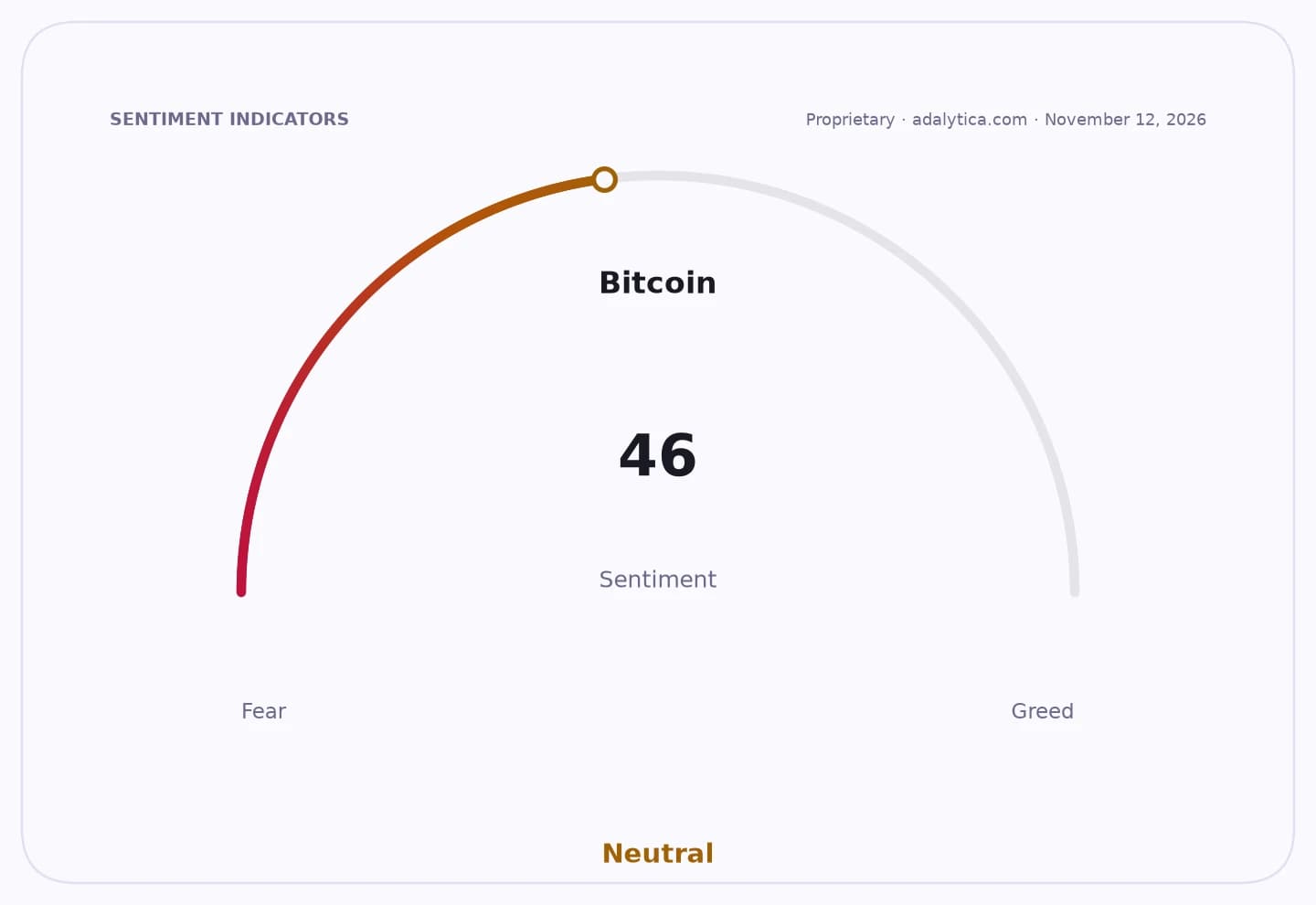
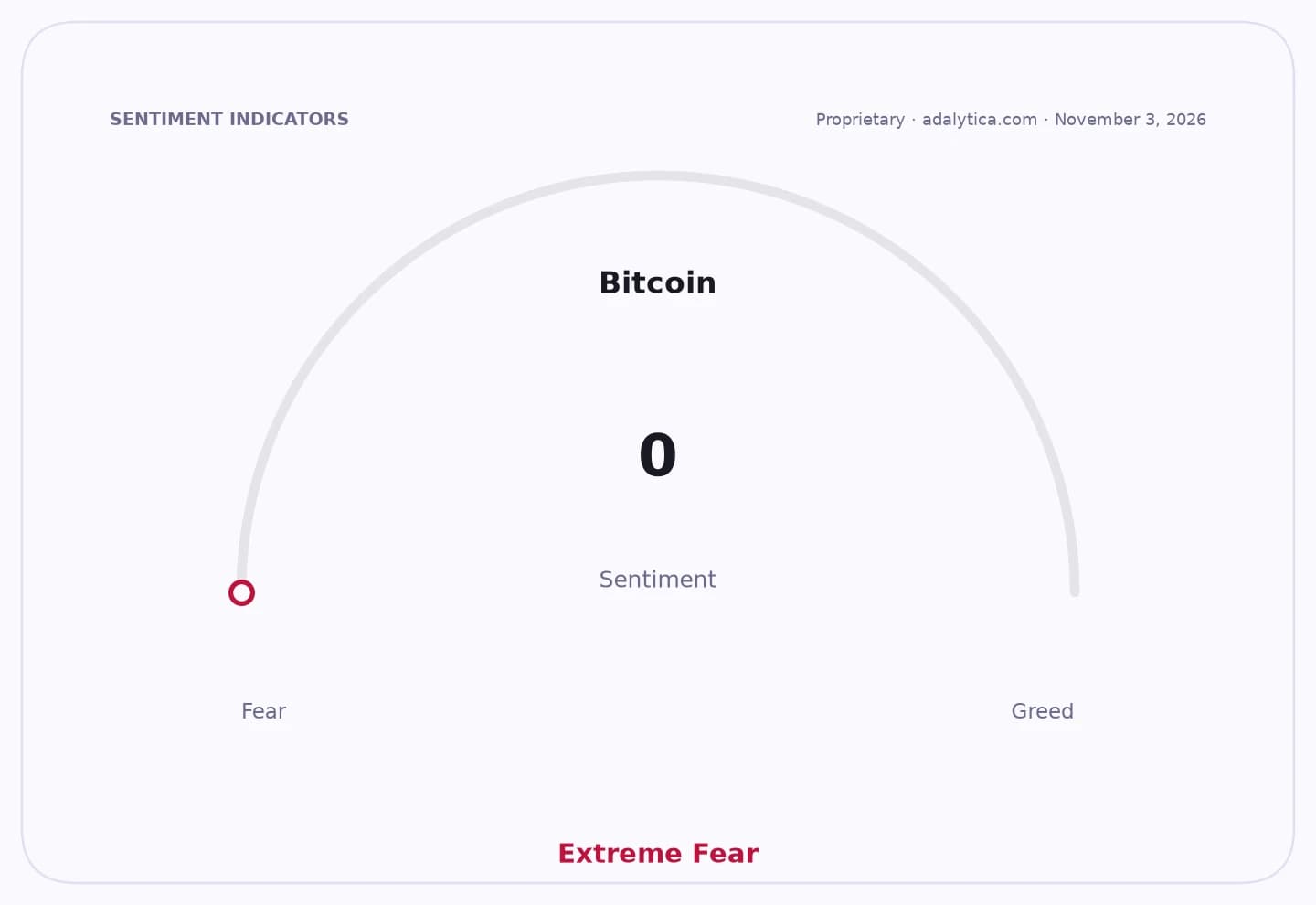
The immediate market verdict has been cautious rather than panicked. Bitcoin is holding around $73,135, well above its 200-day moving average of $73,133 but below its 50-day average of $81,351, suggesting the market has absorbed the shock without fully repairing sentiment. Adalytica’s Bitcoin fear-and-greed snapshot sits at 32, still neutral, while the 7-day change shows an improvement from recent lows. That fits a market that is stabilizing after the breach, but not yet willing to price away the structural lesson.
Sentiment Indicators
That lesson matters because the Binance incident goes to the heart of crypto’s business model. Centralized exchanges remain the dominant on- and off-ramp for retail and many institutional traders, but they also concentrate operational and cyber risk. Binance said the rebuilt wallet environment closed every entry point in the incident report, replaced devices and restored withdrawals quickly, with first-two-day outflows roughly matching the amount stolen. In other words, the platform has been able to prove operational continuity under stress. It has not been able to prove that the underlying custody model is no longer a single point of failure.
That is why the market reaction has been bifurcated. Coinciding with the rebuild narrative, buyers have continued to fund presale projects promising non-custodial infrastructure, including Pepeto, which says it has raised more than $11.2 million. The pitch is straightforward: if no operator holds the coins, there is no exchange wallet to drain. That is an appealing proposition after a theft that sent a shock through the sector and revived memories of prior exchange failures. It also explains why capital is still flowing into projects that promise bridges, swaps and listing access before the products are public.
Bitcoin — 30-day sentimentadalytica.com
Explore this data interactively — full history, time series and cross-market comparisons.
For Binance itself, the rebuilding effort is about restoring trust quickly enough to keep users from migrating to competitors. The exchange has also reportedly tightened AI permissions and brought in an independent security firm to review the incident. That is the right response from a reputational standpoint, but it does not eliminate the broader investor problem: every centralized venue now has to be judged not just on fees and liquidity, but on whether it can survive a breach large enough to force users into the exits.
For investors, the implications run beyond Binance. Coinbase, Robinhood and digital-asset treasury holders such as Strategy all trade in a market where custody, counterparty exposure and regulatory scrutiny are intertwined. Coinbase shares at $130.56 are near the lower end of their recent range, and Strategy shares at $119.59 remain far below earlier highs, reflecting the market’s preference for balance-sheet resilience over pure crypto beta as the sector digests the theft. The incident also reinforces the regulatory case for tougher controls around exchange reserves, wallet segregation and incident disclosure.
The bull case is that Binance contained the damage, preserved user confidence and avoided a deeper systemic freeze. The bear case is that the scale of the theft will keep shifting trading volume, deposits and developer attention toward non-custodial alternatives, compressing the long-term advantage of centralized exchanges. Either way, the attack has sharpened a familiar divide in crypto: convenience and liquidity on one side, custody risk on the other.
What happens next will depend on whether withdrawals and trading activity normalize after the rebuild, and whether other exchanges can demonstrate stronger defenses without sacrificing speed or cost. If confidence returns, Binance may regain volume quickly. If it does not, the bigger winner may be the next wave of protocols built around the premise that users should never have to trust an exchange with their coins in the first place.
| Entity | Gains | Losses |
|---|---|---|
| Binance | ▲Restored operations | ▼Custody credibility |
| Self-custody / non-custodial platforms | ▲Security narrative | ▼Simplicity and liquidity |
| Bitcoin | ▲Short-term stability | ▼Confidence premium |
| Coinbase / Robinhood | ▲Trust migration inflows | ▼Sector-wide scrutiny |