Bitcoin’s latest rally is increasingly being explained less by the old four-year halving script and more by the market’s interaction with debt, yields and liquidity, a shift that could matter more for investors than the next block reward cut.
Bitcoin rally tied to debt cycle, yields, liquidity

The core argument from on-chain analyst Annika Masrani is that bitcoin’s price premium may now be tracking a broader 6- to 8-year debt cycle rather than the traditional halving rhythm. That view fits a market in which US rates remain restrictive, credit conditions are still tight and risk assets are trading more on financing stress and liquidity expectations than on crypto-native supply mechanics alone.
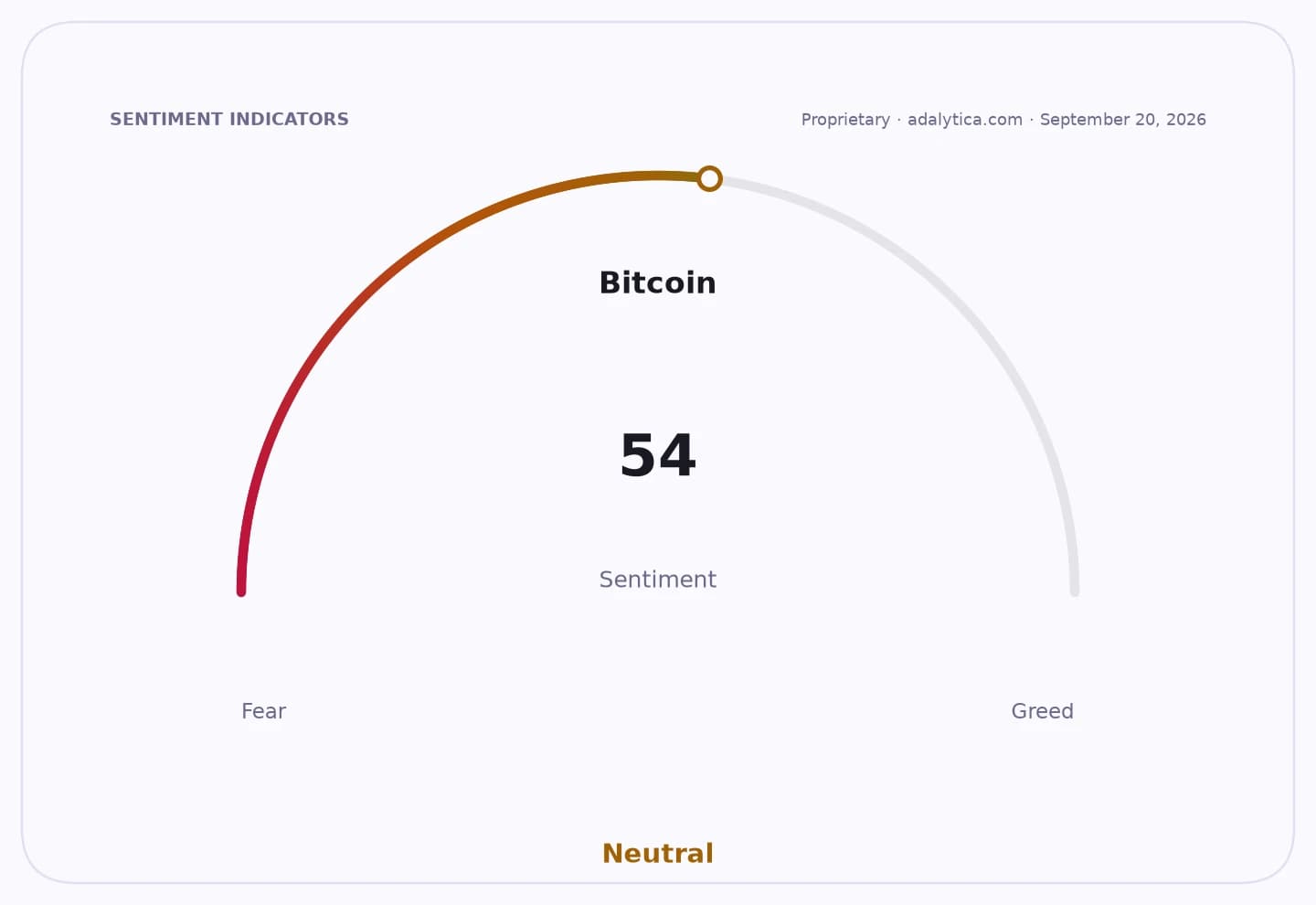
Sentiment IndicatorsⓘProprietary · adalytica.com · September 4, 2026
This is a snapshot — live sentiment, awareness and momentum for 130+ markets update continuously in the dashboard.Open AlphaPulse
That matters because the macro backdrop is no longer benign. The federal funds rate is at 3.63%, the 10-year Treasury yield is near 4.79% and US high-yield spreads have tightened to 2.66% after earlier bouts of stress, showing that capital is still expensive even as some risk appetite has returned. In that setting, bitcoin behaves less like a pure scarcity asset and more like a levered liquidity proxy: when money is easier and debt capacity expands, demand for scarce, non-yielding assets tends to improve; when refinancing costs rise, speculative excess often gets squeezed out.
Bitcoin’s own trading profile reinforces that reading. The token was last around $80,850, well above its 50-day moving average of $68,450 and 200-day average of $69,566, with an RSI near 69.9, which suggests a market that remains strong but no longer cheap. The conventional technical picture is constructive, but it also shows momentum has become extended enough that macro disappointment could trigger a sharper reset.
The move in Bitcoin-linked equities underlines how tightly the trade is now coupled to financing conditions. MicroStrategy, or Strategy, closed at $123.19, still above its 50-day average but well below its 200-day average, reflecting a high-beta balance-sheet bet that has recovered but not fully healed. Coinbase ended at $174.96, also below its 200-day average, signaling that crypto equities are still pricing in regulatory, volatility and liquidity risk rather than a simple one-way bull market.
Adalytica’s Bitcoin Fear & Greed Index was neutral at 49, while its quantitative tightening sentiment gauge sat in “extreme fear” at 15, even as awareness remained elevated. That combination points to a market that is watching macro liquidity closely: investors are aware of the narrative, but still nervous about the policy and funding backdrop that would be needed to sustain a longer cycle.
The bull case for Masrani’s thesis is that bitcoin’s biggest advances have often followed broad credit easing rather than a clean calendrical halving pattern. The bear case is that halving shocks still matter, especially when ETF demand, corporate treasury buying and structural scarcity intersect with strong technicals. In practice, the market may be moving toward a blended regime, where halvings set the supply backdrop but debt, rates and dollar liquidity determine the size and duration of each cycle.
For investors, that means the key question is not when the next halving happens, but whether the macro cycle turns supportive enough to extend bitcoin’s premium. If yields stay elevated and credit stays selective, bitcoin may remain volatile and headline-sensitive. If the Fed shifts toward easier policy and refinancing pressure builds into a broader liquidity response, the next leg could last far longer than four years.
| Entity | Gains | Losses |
|---|---|---|
| Bitcoin holders | ▲Longer liquidity cycle | ▼Halving-only narrative |
| Bitcoin miners | ▲Higher coin prices | ▼Higher financing costs |
| BTC proxies: MSTR, COIN | ▲Macro-led upside | ▼Deleveraging risk |
| Credit-sensitive investors | ▲Clearer cycle framework | ▼Timing uncertainty |