Bitcoin’s fifth anniversary as legal tender in El Salvador lands with the uncomfortable truth that the experiment has not meaningfully changed how most people pay, save or borrow. That matters because it shows the limits of top-down crypto adoption, even as Bitcoin itself trades near $80,000 and remains a powerful market asset for investors chasing the next wave of digital-money infrastructure.
Bitcoin in El Salvador Fails as Daily Money

The economic significance is bigger than one small country. El Salvador was supposed to be the proof of concept for Bitcoin as everyday money, a template that could push remittances, merchant payments and financial inclusion onto a decentralized rail. Instead, five years in, the population has not embraced it in size, underscoring that currency adoption is driven by trust, usability and volatility management, not just politics. The lesson is straightforward: legal status does not automatically create transactional demand.
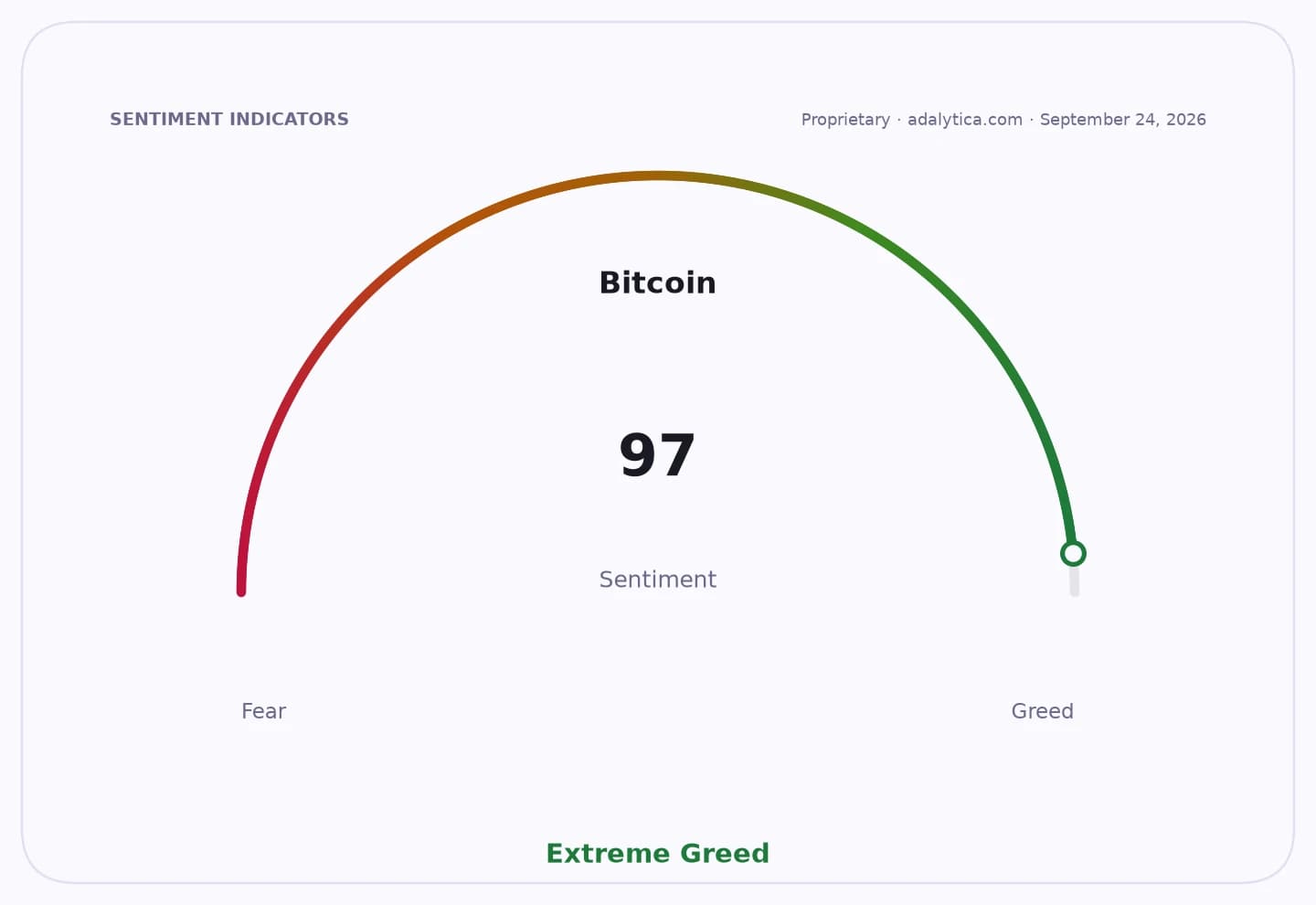
Sentiment IndicatorsⓘProprietary · adalytica.com · September 6, 2026
This is a snapshot — live sentiment, awareness and momentum for 130+ markets update continuously in the dashboard.Open AlphaPulse
For investors, that splits the Bitcoin story into two very different trades. Bitcoin the asset has still outperformed traditional money assets by a wide margin and continues to benefit from institutional flows, ETF access and a macro backdrop that includes a Federal Reserve rate path easing toward 3.626% and a 10-year Treasury yield still near 4.8%. Bitcoin the medium of exchange, by contrast, remains far from mainstream in places where governments tried to force the issue. That makes the better investment thesis less about retail adoption and more about the infrastructure built around Bitcoin’s scarcity — exchanges, custodians, payment rails, stablecoin platforms and regulated on-ramps.
The market is already telling that story. Bitcoin is holding around $79,925 after recovering from a sharp 2025 drawdown, with its 50-day moving average back above the 200-day moving average and RSI readings near the middle of the range, which suggests a market consolidating rather than breaking down. Sentiment from Adalytica’s Bitcoin Fear & Greed Index is neutral at 46, but awareness remains in extreme fear territory at 11, a combination that often reflects skepticism beneath a still-supported price. In other words, the asset is being priced for continued institutional demand, not for a grassroots spending revolution in El Salvador.
That is why the real winners are the picks-and-shovels names attached to crypto adoption, not the policy theater itself. Coinbase, the exchanges, payment processors and crypto custody providers benefit if Bitcoin keeps attracting capital even without becoming a daily currency. Strategy-like treasury buyers also gain from a world in which Bitcoin remains a balance-sheet reserve asset rather than a checkout tool. The losers are the governments and advocates who confused legal tender status with usage, and any investor still underwriting a mass consumer-payment breakthrough from state sponsorship alone.
The broader narrative is that Bitcoin’s investable future is being built on financialization, not adoption at the point of sale. El Salvador’s five-year result is a reminder that the best crypto trade is often the most unglamorous one: own the infrastructure, own the liquidity, own the intermediaries. If you want exposure to the secular trend, position for the toll roads around Bitcoin, not the dream that everyone will start spending it at the corner store.
| Entity | Gains | Losses |
|---|---|---|
| Bitcoin holders | ▲Asset scarcity narrative | ▼Everyday payments thesis |
| Coinbase and exchanges | ▲Trading and custody demand | ▼Direct consumer adoption story |
| El Salvador government | ▲Global visibility | ▼Policy credibility |
| Retail merchants | ▲Little frictionless upside | ▼Volatility and complexity |