Bitcoin’s slide to $64,415 on Nov. 14 is doing more than denting crypto portfolios — it is forcing a sharp reset in the market’s appetite for speculative risk, and that is pressuring altcoins, Coinbase and MicroStrategy alike.
Bitcoin Falls to $64,415, Pressuring Coinbase
Bitcoin
The move matters economically because bitcoin is still the collateral of the crypto complex. When it cracks, liquidity tends to drain first from smaller tokens, then from exchange volumes, and finally from the leveraged proxies that investors use to play the sector. That is exactly the kind of cascade investors fear: a weakening leader, thinner risk appetite and a market that suddenly has to reprice everything from transaction activity to treasury holdings.
Sentiment Indicators
Bitcoin is now down more than 20% from its Sept. 3 close of $81,272 and nearly 21% below its 50-day moving average of $80,143. The latest print also sits well under the 200-day moving average of $72,976, confirming the broader trend has turned decisively lower. Momentum is weak too, with the 14-day relative strength index at 22.7, a deeply oversold reading, while the MACD remains firmly negative. In plain terms, this is not just a routine pullback — it is a market under pressure.
The damage is already spreading beyond bitcoin itself. Coinbase closed at $127.65 on Nov. 13, down from $192.70 on Sept. 3 and below both its 50-day and 200-day moving averages. MicroStrategy, the market’s most direct bitcoin proxy, fell to $111.62 from $153.48 in late October. Both names are now trading like leveraged bets on crypto liquidity, not clean exposure to digital assets. If bitcoin keeps bleeding, these stocks can easily de-rate further as investors question the durability of trading revenue, custody demand and balance-sheet risk.
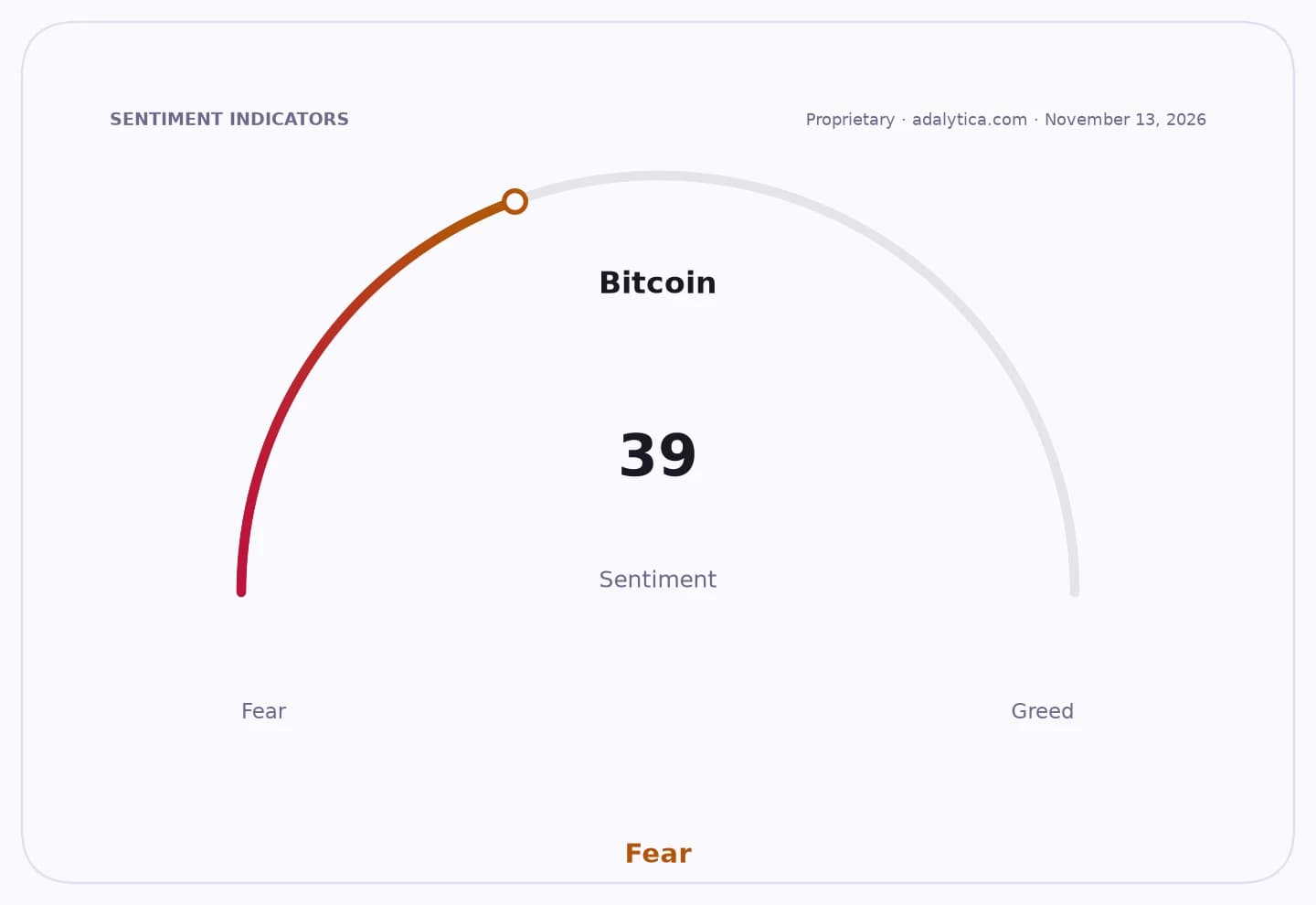
The bigger point is that this kind of selloff usually hits altcoins hardest. Smaller tokens depend on speculative inflows, and those inflows tend to vanish when the market becomes defensive. Bitcoin’s own fear gauge from Adalytica.com is at 36, neutral but sliding, while the broader equity backdrop remains euphoric, with the S&P 500 trade signal at 97. That contrast matters: capital is still aggressive in stocks, but crypto is losing its own bid, which tells you investors are no longer paying up for the most volatile corner of the risk spectrum.
For investors, the setup argues for discipline over heroics. This is not the moment to chase the dip in high-beta altcoins or assume a quick mean reversion will save levered crypto plays. If bitcoin stabilizes and reclaims key moving averages, the rebound in exchanges, miners and token proxies could be violent. But until that happens, the market is telling you that liquidity is leaving first, and winners in a crypto drawdown are usually the most obvious names: the strongest balance sheets, the lowest leverage and the businesses that can survive a prolonged freeze in speculative demand.
The actionable takeaway: stay selective, avoid broad altcoin exposure, and watch bitcoin’s ability to hold the low-$60,000s as the key signal for whether this is a shakeout or the start of a deeper crypto winter.
| Entity | Gains | Losses |
|---|---|---|
| Bitcoin bears | ▲lower entry levels | ▼risk of oversold bounce |
| Altcoin traders | ▲nothing for now | ▼worst liquidity crunch |
| Coinbase | ▲volatility spikes in volume | ▼weaker trading sentiment |
| MicroStrategy longs | ▲potential rebound leverage | ▼mark-to-market pain |