Bitcoin’s slow-moving governance model may soon face one of its most consequential technical tests: whether it can upgrade to post-quantum security before cryptography advances make today’s signatures vulnerable.
Bitcoin Post-Quantum Upgrade Debate Gains Urgency

Coinbase, which says it safeguards about 5% of all bitcoin for banks, asset managers and hedge funds, is pressing the network to begin preparing now rather than waiting for a crisis. The exchange’s case is straightforward from a market standpoint: Bitcoin may not face an immediate quantum attack, but the transition to quantum-resistant infrastructure could take years, and the cost of being late would be systemic.
Sentiment IndicatorsⓘProprietary · adalytica.com · October 15, 2026
This is a snapshot — live sentiment, awareness and momentum for 130+ markets update continuously in the dashboard.Open AlphaPulse

The concern centers on Bitcoin’s signature schemes, ECDSA and Schnorr, which are secure on today’s hardware but could be exposed if a cryptographically relevant quantum computer emerges. Coinbase cited Google researchers’ projection that such a machine could exist by 2029. If that timeline proves roughly right, the window for designing, testing and coordinating an upgrade is narrower than many in the market have assumed.
That matters because Bitcoin cannot simply push a software patch through a centralized operator. Any change to core transaction rules requires broad consensus across miners, wallet providers, custodians and developers. Coinbase is effectively arguing that coordination risk, not cryptography alone, is the main vulnerability. In practical terms, that means the network must solve the governance problem before the hardware problem becomes real.
For investors, the issue is not just whether Bitcoin survives a theoretical quantum attack. It is whether institutional Bitcoin rails can keep functioning without disruption. Coinbase’s emphasis on compatibility with multiparty computation suggests it is thinking beyond retail wallets to the treasury desks, custody platforms and funds that now sit at the center of Bitcoin liquidity. A post-quantum design that works for individual users but not institutions would force a fragmented migration and could slow adoption.
The exchange is also pushing for flexible transaction outputs that would let Bitcoin add, replace or combine signature methods without rewriting the transaction system each time the technology changes. It pointed to designs associated with P2MR, BIP-360 and P2TRv2, and favored staged protection over a single forced switch. That is notable because the market has tended to view quantum risk as binary: safe until suddenly unsafe. Coinbase is describing a more realistic path in which protection is layered in over time.
Implementation risk is another reason the debate matters to capital markets. Coinbase warned that some quantum-resistant schemes could create new wallet weaknesses if they rely on stateful key tracking, poor random-number generation or inconsistent verification across platforms. In other words, a rushed upgrade could replace one tail risk with another. For investors in Coinbase and other crypto infrastructure providers, that raises both opportunity and execution risk: firms that help manage the transition could gain relevance, but any misstep would hit trust and trading volumes.
The dormant-coin question adds a politically difficult layer. If Bitcoin eventually restricts older signature methods, some lost or inactive wallets could be stranded, while addresses with exposed public keys may become prime targets for a covert attacker with quantum capability. Coinbase is not taking a position on whether those coins should be rescued or left untouched, but it is clear that legacy-coin disputes could delay technical work if they are allowed to dominate the process.
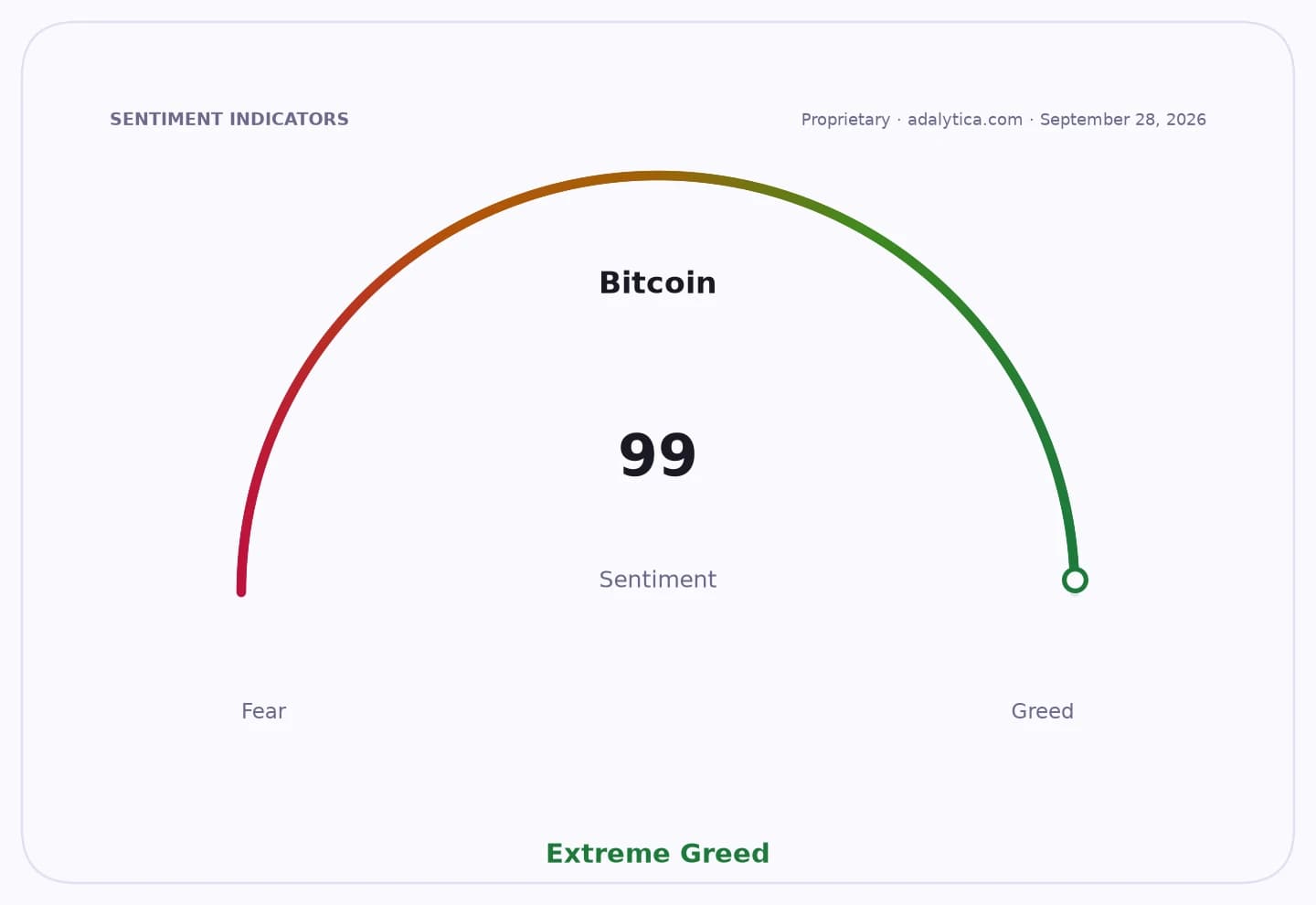
Markets are already pricing Bitcoin from a position of stress rather than exuberance. Adalytica’s Bitcoin Fear & Greed Index shows “Extreme Fear” at 14, while bitcoin itself has slipped to about $80,693 from more than $83,000 two days earlier. Coinbase shares were down to $172.89 on Oct. 14, with the stock under its 50-day moving average and its relative strength index near 29, a level often associated with oversold conditions. MicroStrategy, another heavily exposed Bitcoin proxy, fell to $143.24, also weak on standard momentum gauges.
The immediate investor takeaway is that Coinbase’s proposal is less about a near-term crypto trade than about infrastructure risk premium. If the industry begins treating quantum preparation as a build cycle rather than a hypothetical, it could favor exchanges, custodians and wallet providers with serious engineering depth. The bear case is that the issue opens another round of governance friction for Bitcoin, raising questions about timing, compatibility and who bears the cost of migration. The bull case is that early coordination reduces the odds of a disorderly scramble later and reinforces Bitcoin’s long-term institutional credibility.
| Entity | Gains | Losses |
|---|---|---|
| Coinbase | ▲Institutional credibility | ▼Near-term governance clarity |
| Bitcoin holders who migrate early | ▲Stronger security | ▼Upgrade complexity |
| Legacy/dormant wallet owners | ▲Potential protection | ▼Risk of stranded coins |
| Quantum-exposed attackers | ▲Fewer targets if migration succeeds | ▼Opportunity if Bitcoin delays |