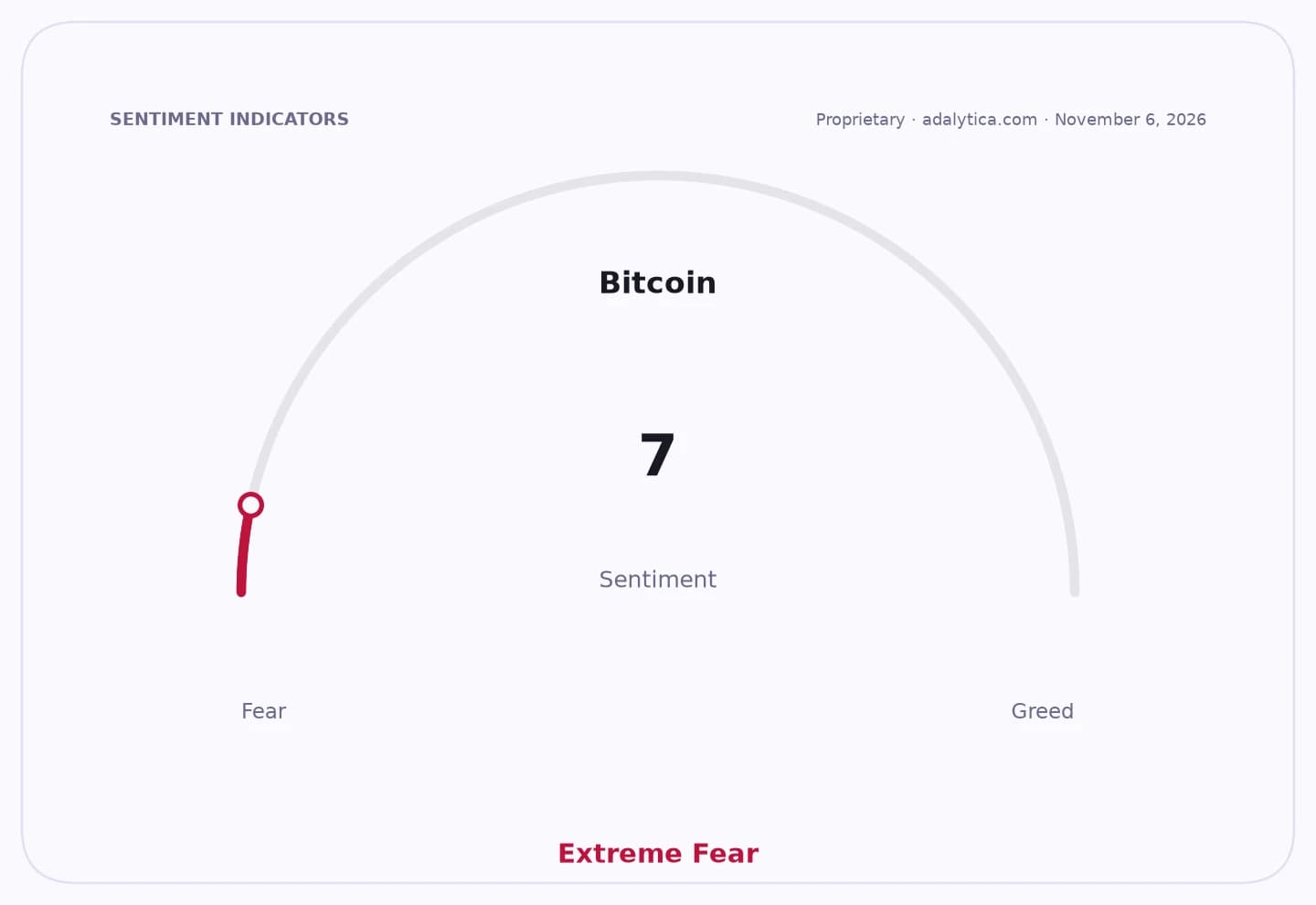
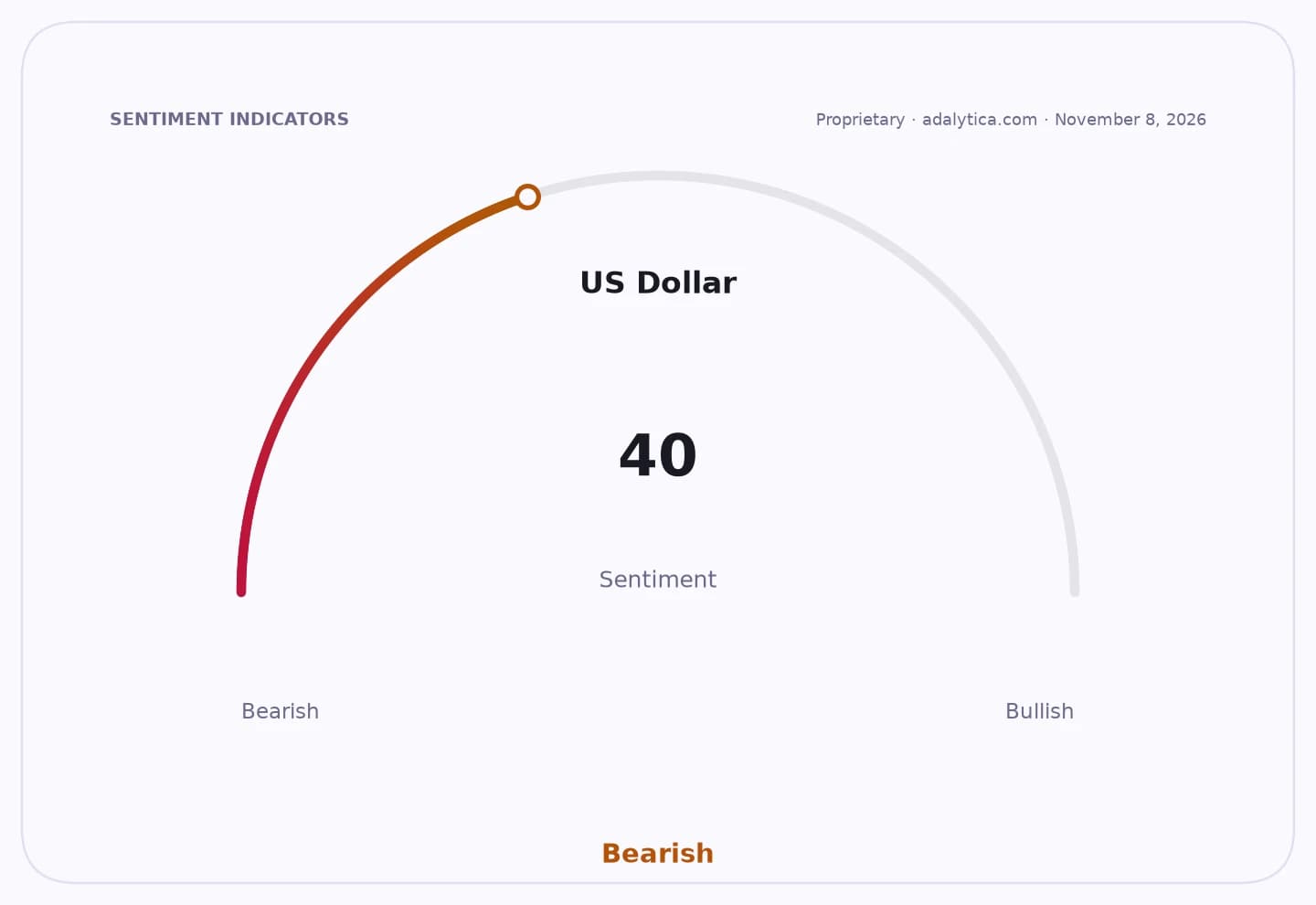
Bitcoin is trading less like digital gold and more like a high-beta bet on U.S. interest rates, and that shift matters because it is pulling the world’s largest cryptocurrency into the same macro crosscurrents that move Treasuries, the dollar and risk assets.
Bitcoin tied to rates as yields and dollar rise
The immediate catalyst is the Federal Reserve’s hawkish tone, which has driven a jump in real yields and kept the dollar firm. Bitcoin has been unable to shrug that off. On Oct. 7, as the Fed published minutes from its September meeting, more than $713 million of crypto positions were liquidated in 24 hours, including about $651 million of longs, according to CoinGlass-based data cited by CryptoTicker. The same day, U.S. spot bitcoin ETFs saw $487.1 million of outflows, the biggest since June 2026, according to CoinDesk, underscoring that the marginal buyer in this market is now an institution that compares bitcoin not with gold, but with the yield on Treasuries.
Sentiment Indicators
That is why the inflation narrative is losing force. The problem for bitcoin is not simply that prices are sticky; it is that the market is demanding a higher real return from cash and bonds. Ten-year TIPS yields have climbed to 2.94%, while the nominal 10-year Treasury yield briefly pushed above 5.35%, the highest since 2002, according to the data cited in the source article. When real yields rise, an asset that offers no coupon or dividend becomes harder to justify on a relative basis. In other words, bitcoin is being repriced as a liquidity asset, not a hedge against debasement.
The dollar is doing its own damage. The dollar index has hovered near its strongest level in about a year and a half, tightening global financial conditions just as speculative money is being tested. That matters because bitcoin has increasingly acted as a proxy for excess liquidity. When the dollar firms and the Fed stays restrictive, the easiest money in crypto is the first to leave. The volatility is amplified by leverage: the October selloff triggered forced liquidations, which have little to do with fair value and everything to do with crowded positioning.
FEDFUNDS vs DGS10 — macro contextadalytica.com
Explore this data interactively — full history, time series and cross-market comparisons.
The price action in the ETFs shows the market is still searching for a direction rather than exiting permanently. After the Oct. 7 outflows, about $176 million flowed back into U.S. bitcoin ETFs on Oct. 13, followed by another $261 million of withdrawals on Oct. 14, according to Farside Investors data cited in the report. That seesaw pattern is important for investors because it says the institutional bid is alive, but conditional. This is not a wholesale abandonment of the asset; it is a market waiting on the next macro signal.
That signal may come from the Fed’s Oct. 28 decision. Mary Daly, president of the San Francisco Fed, said in a Reuters interview on Oct. 14 that the central bank probably still needs to raise rates further, even if it can take its time this month. September U.S. consumer prices rose 3.7% from a year earlier, above expectations, briefly pushing the market-implied probability of an October hike to about 47% from 22% before it eased back. For bitcoin, that leaves the near-term trade squarely tied to real yields and ETF flows.
Investors should read this as a regime change, not a one-off shakeout. Bitcoin is no longer behaving primarily as an anti-inflation asset; it is behaving like a leveraged expression of monetary easing expectations. That is a tougher trade in a world of stubborn inflation, elevated bond yields and a firm dollar, but it also creates an asymmetric setup if the macro backdrop turns. If real yields roll over, bitcoin could reprice sharply higher. Until then, the market is pricing bitcoin as an interest-rate bet first and a store of value second.
| Entity | Gains | Losses |
|---|---|---|
| U.S. Treasury yields | ▲Attract capital | ▼Crypto demand |
| U.S. dollar | ▲Benefits from tighter conditions | ▼Risk assets and bitcoin |
| Spot bitcoin ETFs | ▲Capture institutional interest | ▼When flows turn negative |
| Bitcoin longs | ▲Win on a dovish Fed | ▼Face liquidation risk |