Bitcoin climbed back toward $83,000 as oil prices eased, a reminder that lower energy costs can quickly improve the mood for risk assets when investors are looking for a cleaner inflation picture and a little less pressure on global growth.
Bitcoin Rises as Oil Prices Ease
That matters because oil still sits at the center of the macro story. When crude falls, it can ease the squeeze on consumers, reduce inflation expectations and make it easier for central banks to stay patient. That combination often helps assets like Bitcoin, which tend to benefit when liquidity conditions are improving and investors are more willing to own higher-volatility bets.
Sentiment IndicatorsⓘProprietary · adalytica.com · October 23, 2026
This is a snapshot — live sentiment, awareness and momentum for 130+ markets update continuously in the dashboard.Open AlphaPulse
The move also fits the broader rotation in markets. West Texas Intermediate crude was hovering just above $100 a barrel, down from recent spikes, after a run that had kept energy inflation in focus. At the same time, the 10-year U.S. Treasury yield was holding around 5.13%, showing that borrowing costs are still elevated even as the oil market cools. For crypto investors, that mix is important: lower oil can ease one source of macro stress, but high rates still cap enthusiasm and keep traders selective.
Bitcoin’s own chart shows the market is still repairing from a volatile stretch. The token closed at $84,011.97 on Oct. 21 after touching $82,941 the day before, and it remains above both its 50-day and 200-day moving averages, a constructive long-term setup. But momentum is not yet exuberant: RSI readings around the low-50s point to a market that has recovered, not one that is overheated. Ethereum, by contrast, has lagged, trading near $2,400 and still well below its recent highs, underscoring that investors are favoring Bitcoin over the rest of the crypto complex.
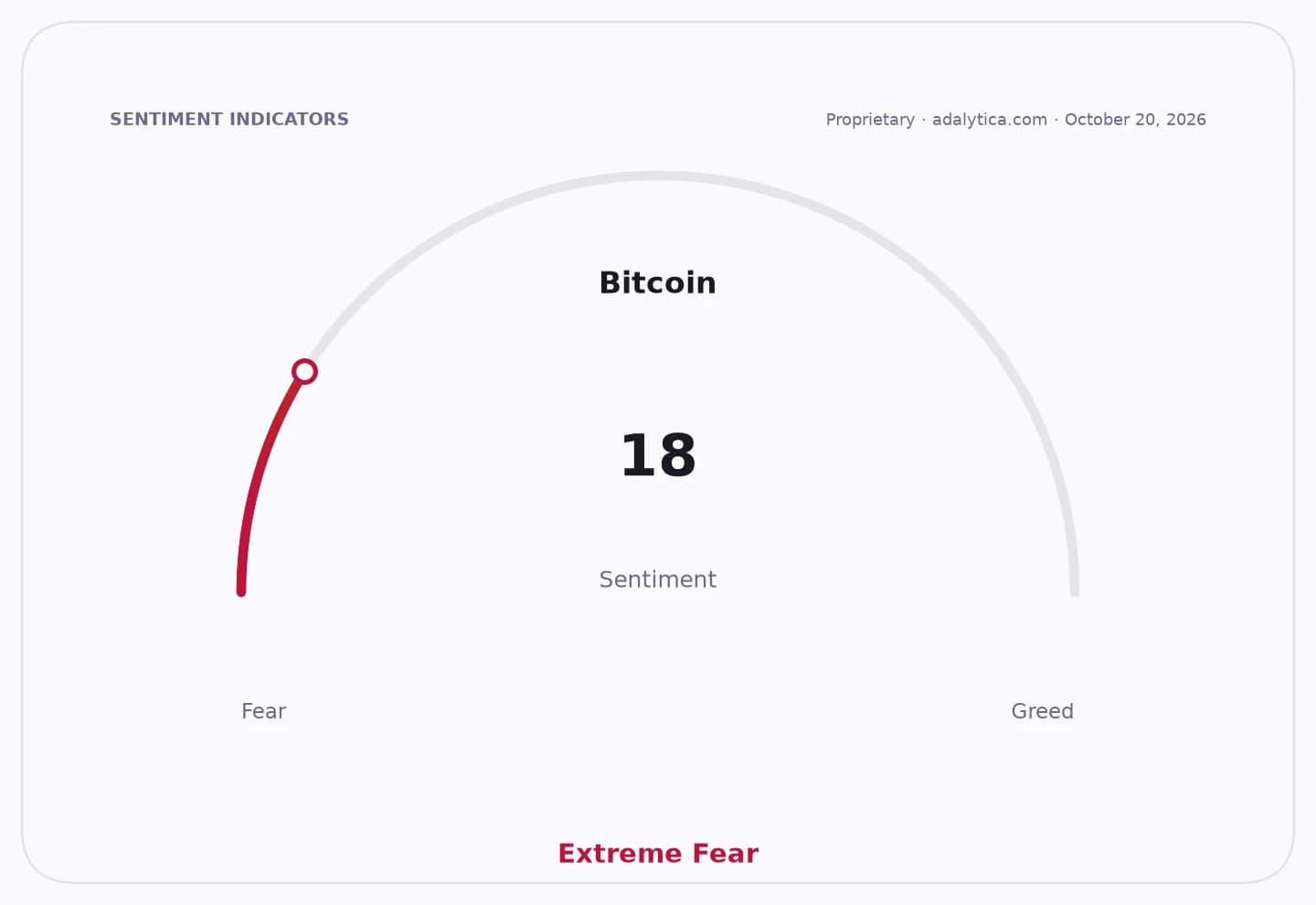
Adalytica’s Bitcoin Fear & Greed Index is still only at 23, in fear territory, even after improving over the past week. That is the kind of backdrop long-term investors often like more than euphoric conditions. Fear can be uncomfortable, but it also tends to leave room for upside if the macro picture continues to stabilize and liquidity improves.
For investors, the real question is not whether Bitcoin can bounce a few thousand dollars on a softer oil tape. It is whether the combination of easing energy pressure, a still-resilient dollar backdrop and a Bitcoin price that is holding above key long-term averages can support another multi-quarter advance. If inflation cools further and rates eventually follow, crypto could have a cleaner runway. If oil re-accelerates, the market could quickly relearn how tightly digital assets still trade to macro sentiment.
For now, Bitcoin looks like a high-beta beneficiary of falling oil, not a standalone story. Long-term investors should keep it on the watchlist, but size it within a diversified portfolio and think in years, not days.
| Entity | Gains | Losses |
|---|---|---|
| Bitcoin | ▲Better risk appetite | ▼Still volatility-sensitive |
| Crypto buyers | ▲Lower entry anxiety | ▼Miss if macro worsens |
| Oil producers | ▲Higher-revenue backdrop | ▼Softer crude prices |
| Inflation-sensitive investors | ▲Easier policy outlook | ▼Energy-heavy portfolios |