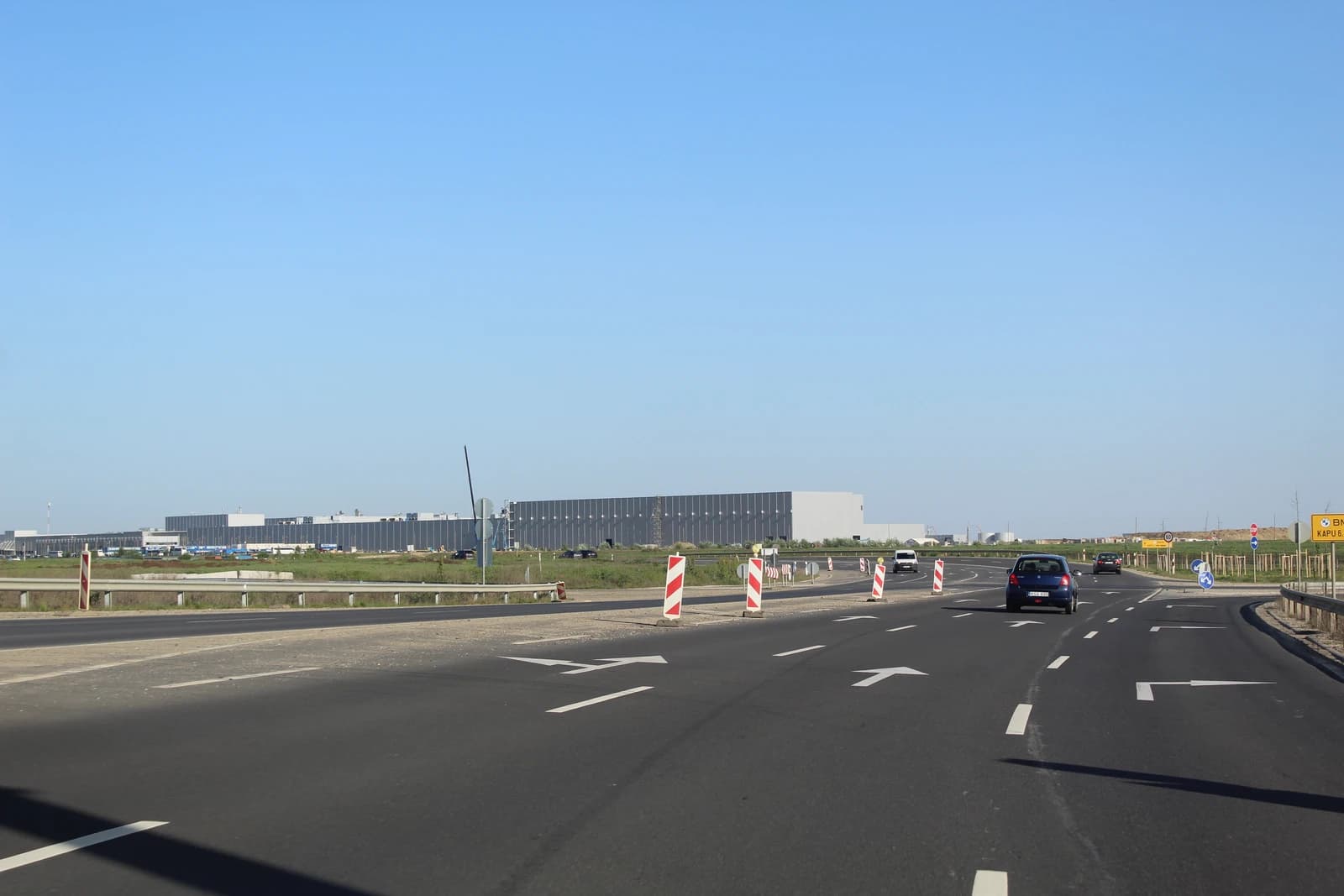
BMW is increasingly relying on German staff to keep its new Debrecen plant running, underscoring how Europe’s carmakers are shifting production east for lower costs even as they struggle to find enough skilled workers to operate the factories.
BMW Debrecen Plant Needs German Staff
The Munich-based group has been flying employees from Munich, other Bavarian plants and Leipzig to Hungary several times a week because the company cannot yet ramp output at its flagship Debrecen site without them, according to people familiar with the matter cited by Handelsblatt. The plant, which builds BMW’s iX3 electric SUV and is the company’s first site for the Neue Klasse architecture, has become a test case for how far cost savings in Hungary can offset a tight labour market.
Sentiment IndicatorsⓘProprietary · adalytica.com · October 14, 2026
This is a snapshot — live sentiment, awareness and momentum for 130+ markets update continuously in the dashboard.Open AlphaPulse
That matters well beyond BMW’s own production schedule. Hungary offers wages, taxes and energy costs far below those in Germany — Eurostat data cited in the report puts labour costs at nearly three times higher in Germany than in Hungary — which is why German carmakers have poured billions into the country. But the model only works if companies can staff up quickly enough. BMW’s need to import workers highlights a structural bottleneck: the move east lowers unit costs, yet it does not solve Europe’s shortage of trained automotive labour.
For investors, the issue cuts to the heart of BMW’s electric transition. Debrecen is central to the company’s biggest product offensive in years, and the iX3 already has more than 100,000 preorders and over 30,000 deliveries, according to the report. A smooth ramp-up would support volumes, margins and BMW’s attempt to recover from a difficult period in battery-electric demand and manufacturing disruption. Any delay, by contrast, would risk pushing out revenue recognition on a strategically important model while adding cost through training, travel and dual staffing.
BMW says the temporary deployment of international staff is standard practice when new plants or products are launched, and that the transfers are meant both to train local workers and to transfer know-how back into the wider production network. The company says more than 5,000 people now work in Debrecen. Even so, the scale of German support suggests the plant is still in an industrial apprenticeship phase despite having begun series production about a year ago and adding three shifts in just nine months, a record pace for a BMW plant.
The broader narrative is one of a European auto industry reorganizing around Central and Eastern Europe. Volkswagen, Mercedes and BMW have all been cutting jobs or reducing activity in Germany while expanding in Hungary, where the labour market is thinner but costs are lower. Mercedes has invested about €1 billion in its Hungarian operation over the past four years, while BMW has invested more than €2 billion in Debrecen, according to the report.
That shift may still favour margins if the new sites can run at scale. BMW says Debrecen is designed for annual output of 150,000 cars and could theoretically double that on the available land. But the longer the company depends on German experts to bridge the gap, the more the economics of offshoring are exposed as a trade-off rather than a clean advantage.
The pressure is likely to intensify as Chinese rivals such as BYD expand in Hungary to avoid tariffs and gain a foothold in Europe. That will deepen competition for scarce skilled workers and could raise wage pressure in a market that originally appealed because of its low labour costs. For BMW, the near-term question is whether Debrecen can transition from a German-supported start-up site into a self-sustaining production hub before the Neue Klasse rollout broadens across the group.
| Entity | Gains | Losses |
|---|---|---|
| BMW | ▲Lower-cost production base | ▼Dependence on German staff |
| German workers | ▲Temporary travel demand | ▼Domestic labour drain |
| Hungary | ▲Factory investment and jobs | ▼Tight labour market pressure |
| BMW investors | ▲New-model growth optionality | ▼Ramp-up and margin risk |