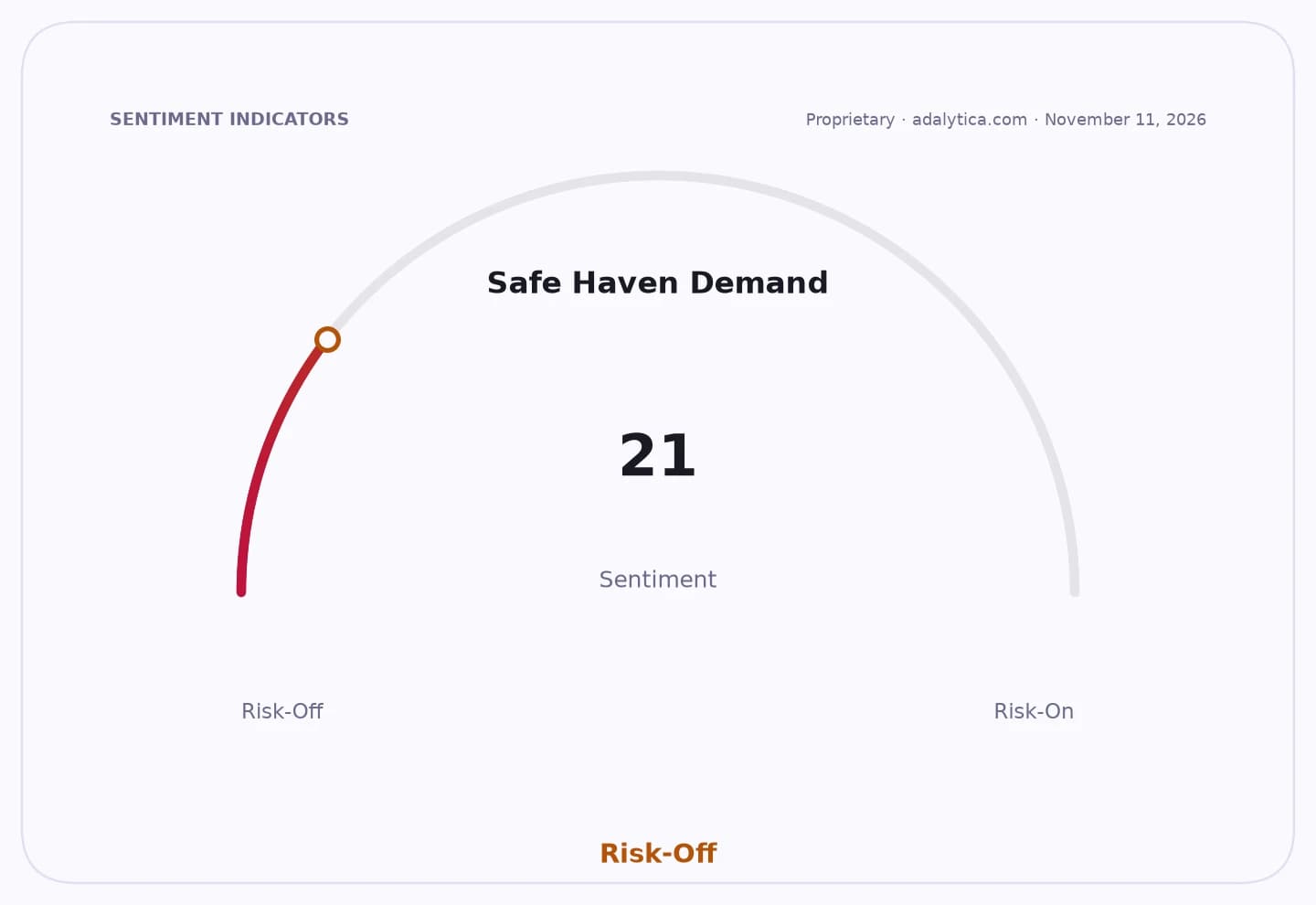
The Bank of Japan is signaling that inflation risks are tilting to the upside even as Governor Kazuo Ueda keeps policy steady for now, a shift that strengthens market expectations for another rate increase in December and keeps pressure on the yen.
BOJ Inflation Risks Point to December Rate Hike

That matters because Japan’s central bank is trying to escape decades of deflation without choking off a fragile recovery. Ueda’s warning that underlying inflation could surprise to the upside suggests the BOJ is becoming more comfortable with the idea that price gains are no longer just a temporary import-driven shock. A move toward a more durable 2% inflation regime would justify tighter policy, but it also raises the risk of cooling demand just as firms are only gradually starting to invest and raise wages.
Sentiment Indicators

The macro backdrop is increasingly supportive of a hike. Japan’s inflation has remained at or above the BOJ’s 2% target, while wholesale prices are accelerating and bond yields have climbed as traders price in a tighter path ahead. The central bank is also grappling with a weaker yen, which has amplified import costs and fed through to consumer prices. In that environment, the BOJ’s reluctance to move immediately looks less like hesitation and more like an effort to avoid tightening before it is sure inflation is being powered by domestic demand rather than currency pass-through and energy prices.
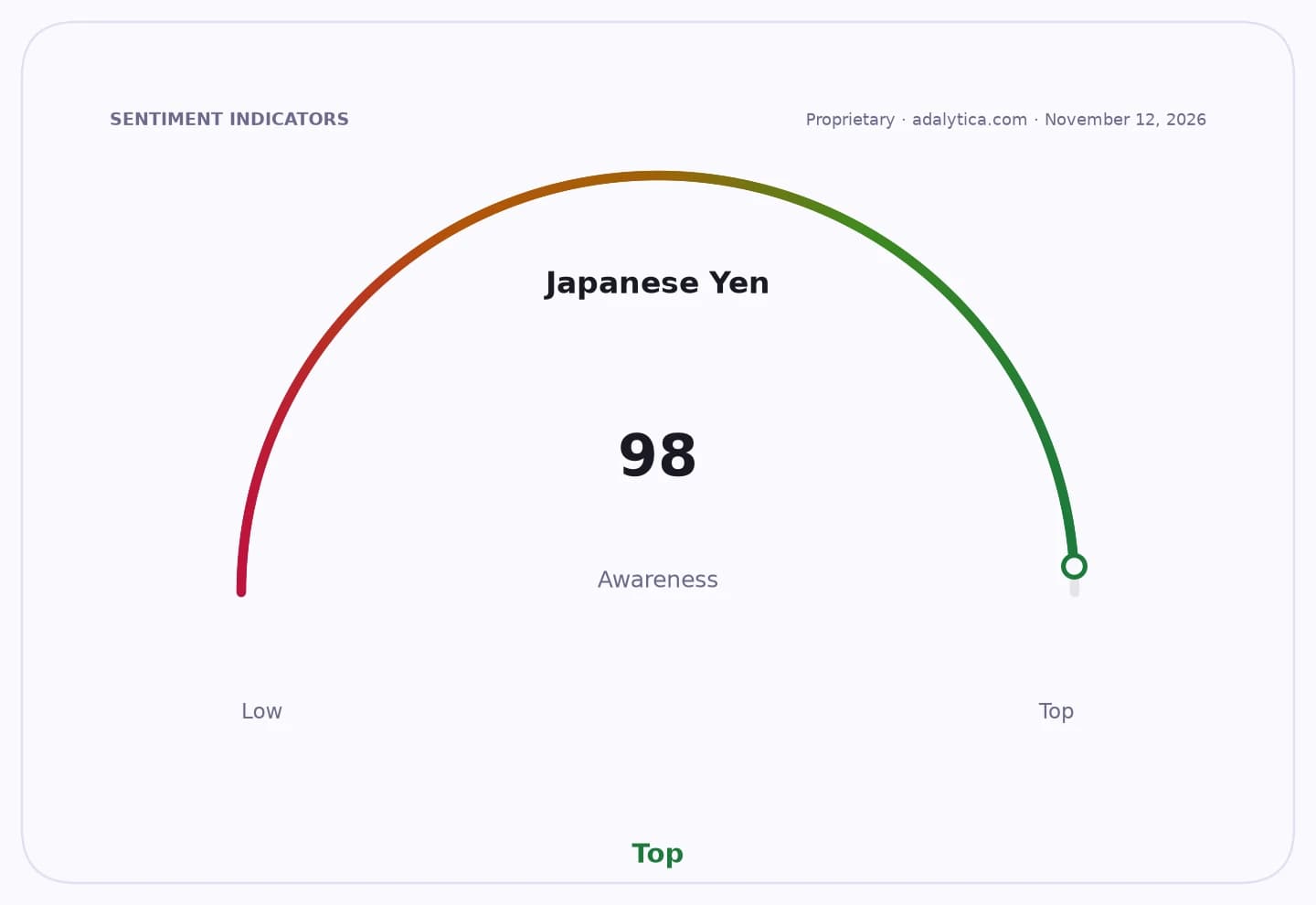
For investors, the implications are immediate. A December hike would reinforce a gradual normalization cycle that has already lifted Japanese government bond yields and supported the yen intermittently, even as U.S. rates remain well above Japan’s. That makes the currency outlook highly sensitive to the BOJ’s next communication and to any confirmation that wage growth is broadening. The yen has been one of the clearest beneficiaries of tighter BOJ expectations, though the move has been uneven as U.S. yields continue to anchor the dollar’s advantage.
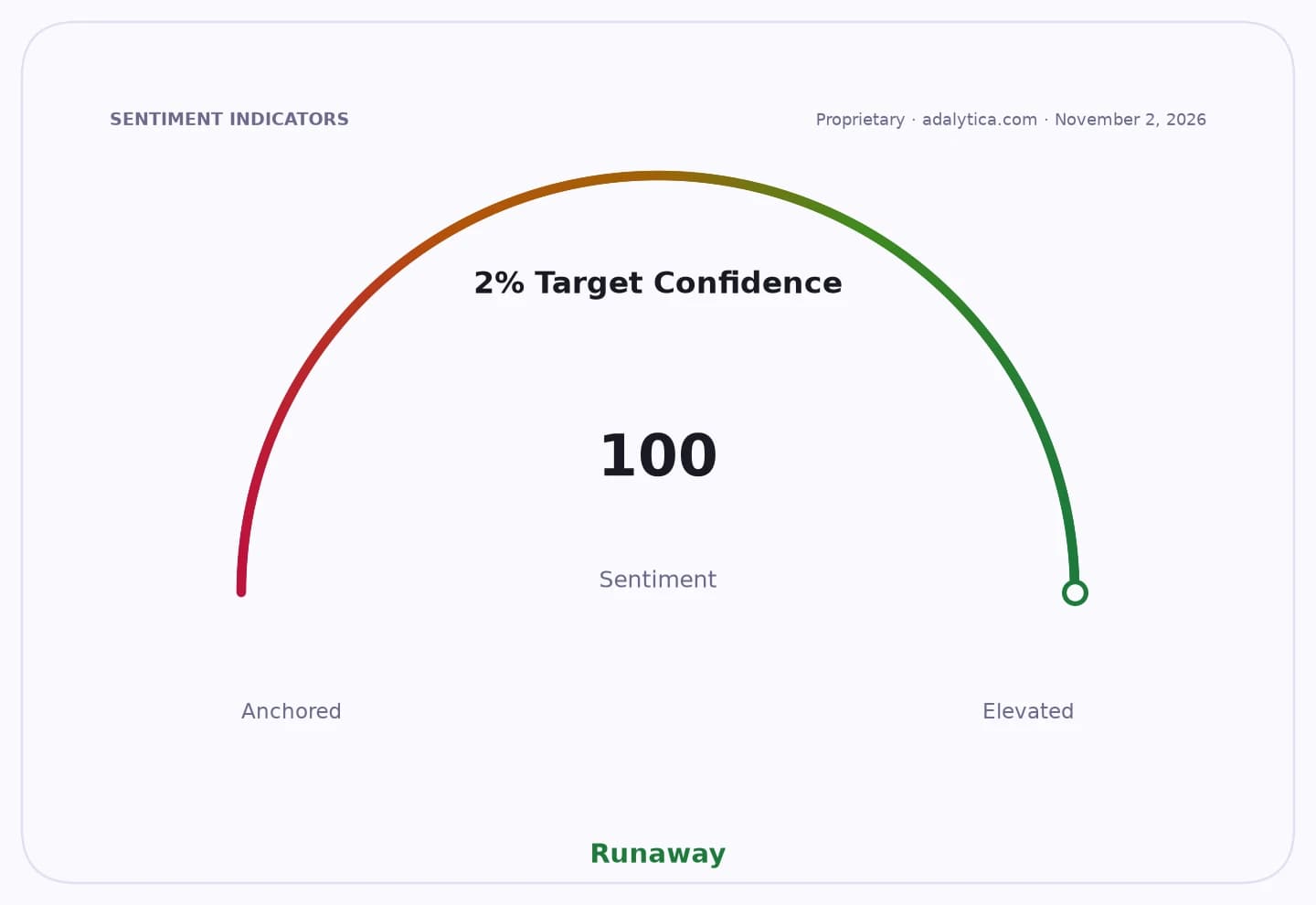
2% Target Confidence — 30-day sentimentadalytica.com
Explore this data interactively — full history, time series and cross-market comparisons.
2% Target Confidence
The currency market has already started to price in the policy shift. The FXY yen fund has been trading close to its 50-day moving average, with recent price action showing a drop below that level as momentum weakened, while the broader technical picture remains mixed rather than decisively bullish. Adalytica’s confidence gauge for the BOJ’s 2% inflation target has also fallen sharply in recent weeks, reflecting investor unease over the policy path even as long-term inflation expectations have stabilized around neutral levels.
The bull case for the yen is that Japan is finally moving into a phase where inflation is self-sustaining enough to allow more rate hikes. The bear case is that price pressures remain too dependent on imported costs and a weak currency, forcing the BOJ to tighten just as growth loses steam. For global investors, the key question is whether December becomes the point at which the BOJ confirms a durable exit from ultra-loose policy — or simply another pause in an uneven normalization process.
| Entity | Gains | Losses |
|---|---|---|
| Japanese yen bulls | ▲Higher-rate expectations | ▼Risk of delayed BOJ action |
| BOJ credibility | ▲More 2% inflation confidence | ▼Pressure if inflation proves temporary |
| Japanese savers | ▲Higher domestic yields | ▼Short-term market volatility |
| Exporters and equity exporters | ▲Weaker yen support fades | ▼Currency strength and tighter financial conditions |